
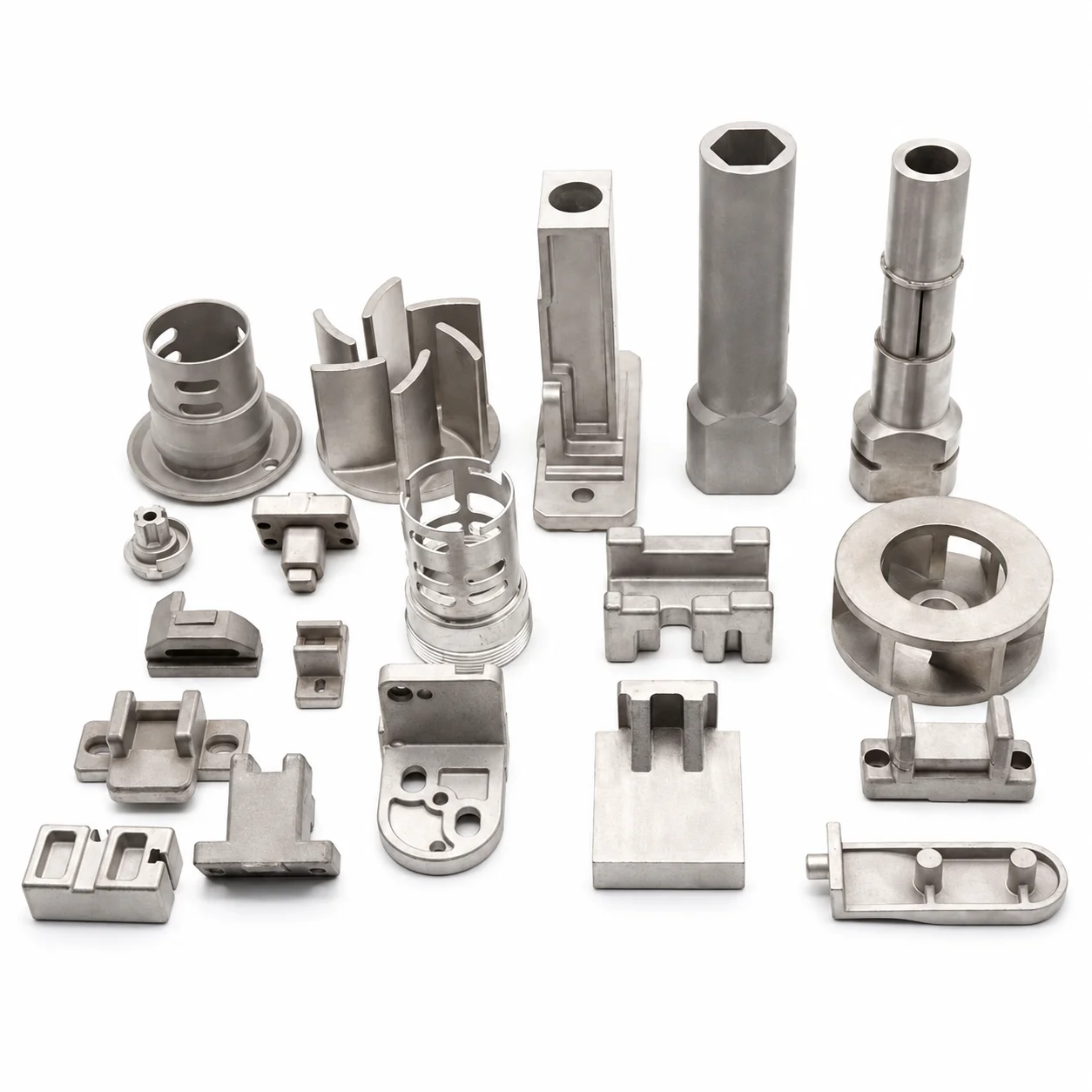
OEM Aluminum/Stainless Steel Precisiegieten Parts | Investment & Lost Wax Casting
Let’s define your requirement
Send a product link, drawing or short brief. We’ll work through the details with you.
- Confirm the specificationGrade or model, size and intended use.
- Define your orderQuantity, finish or configuration, and samples.
- Agree the quotation scopeIncluded work, key checks and delivery needs.
-
Product nameinvestment casting
-
ProcessCasting. Deburring .Drilling .threadingCertificationISO9001/TS16949/RoHS
-
ServiceCustomized OEMSizeCustomer's 3D Drawing
-
Surface treatmentCustomers' DemandToleranceCustomer's Drawing Request
-
StandardClient SpecificationColorCustomized Color
-
Quality ControlStrictly 100% Inspection
OEM aluminum or stainless steel parts are made through investment and lost wax casting, also described as Precisiegieten. The customer's 3D drawing defines the size, while tolerances, surface treatment and color follow the requirements of the particular component.
Precisiegieten from a 3D component drawing
Select aluminum or stainless steel for the custom casting and connect that choice to the 3D geometry. Dimensions and tolerances should follow the drawing request, with the client's specification establishing the applicable standard. This gives the part a defined technical requirement that covers both the material direction and the dimensional details needed for the OEM work.
Deburring, drilling and threading
The processing direction includes casting, deburring, drilling and threading. Identify the locations of the drilled and threaded features in the component design and relate their requirements to the rest of the casting. These operations can then be discussed against the customer's drawing instead of assigning an unspecified numerical tolerance to every feature.
Custom surfaces, color and final checks
Surface treatment follows customer demand and color can be customized. Specify the surfaces concerned and the required color alongside the dimensional criteria, keeping the finished appearance tied to the same part definition. Strict 100% inspection applies to these OEM parts; agree the acceptance points for the chosen design, and confirm any relevant ISO9001, TS16949 or RoHS documentation scope when the project requires it.








