
CUSTOM MANUFACTURING · PROJECT REVIEW
Custom Stainless Steel Pump Impellers with Finish Machining
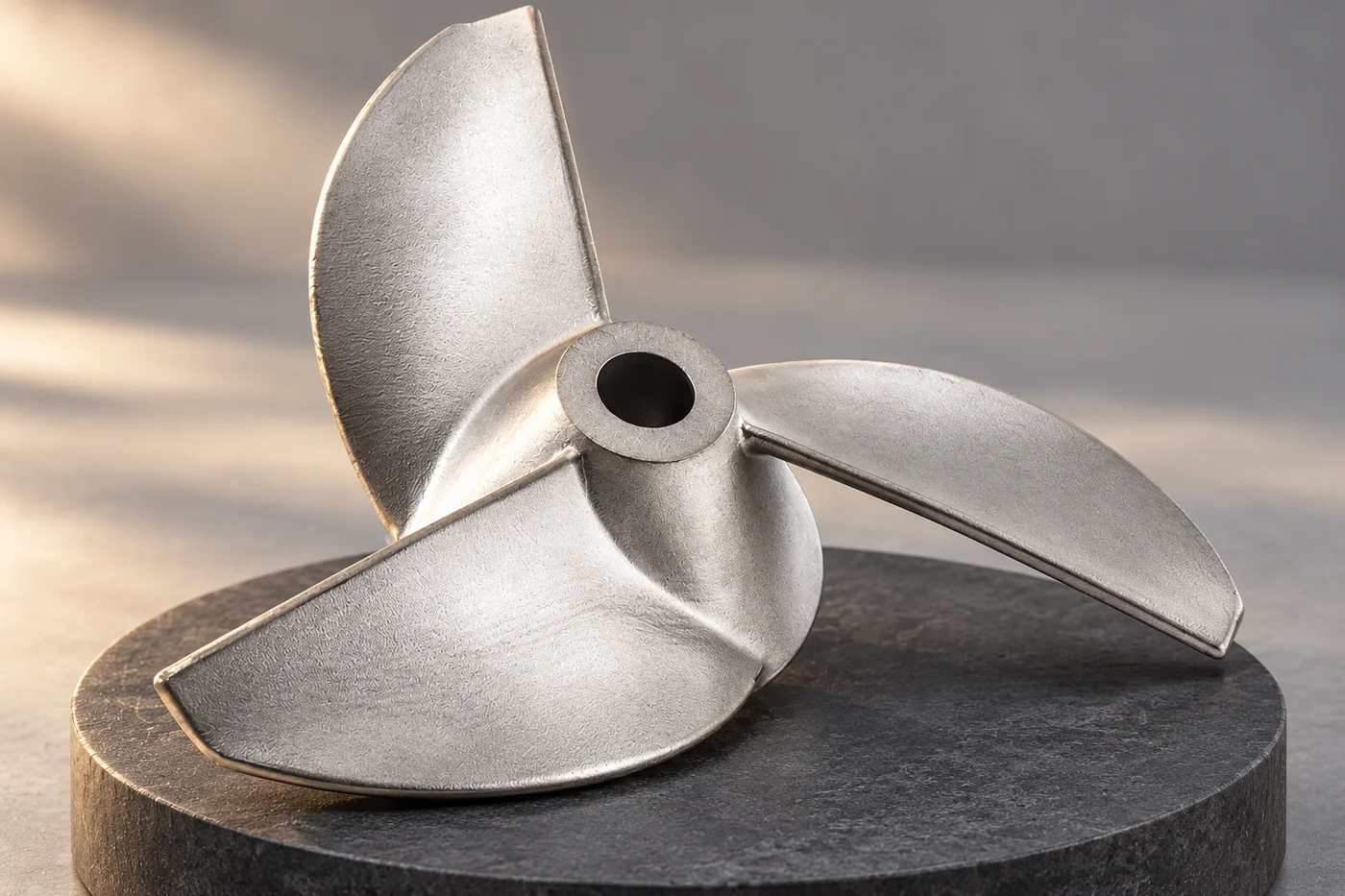
Relia offers custom stainless pump impellers with lost-wax casting and finish machining. Define the blade geometry, CF8-series material, shaft connection and required balance checks together, so the quotation covers the rotating component your pump needs.
RELIA · PRODUCT AND MANUFACTURING SUPPORT
Define the impeller inside the pump assembly
Relia's pump-impeller references combine custom geometry with lost-wax casting and CNC machining. The CF8-series grade choices let the enquiry start from a casting material, while the hub bore, attachment and axial faces define the finished shaft connection. Relia's manufacturing scope brings those requirements together so your team can assess the impeller as a rotating component within its intended pump.
| Your requirement | Relia product and service scope |
|---|---|
| Grade options | CF8 / CF8M / CF3 / CF3M |
| Manufacturing reference | Lost-wax casting plus CNC machining |
| Critical interfaces | Shaft bore, keyway, axial faces and blade clearance |
| Functional review | Rotation, fluid duty and specified balancing scope |
02 · MATERIAL REVIEW
Match the casting grade to the requirement
- Casting grade
- Specify CF8, CF8M, CF3 or CF3M with its standard.
- Service conditions
- Match the agreed grade to the fluid and temperature.
The CF8-series references provide a useful starting range, but the exact grade and applicable standard need to be stated. Keep a casting-grade requirement separate from a general stainless description. We review the material condition and any proposed alternative against the specification your project will approve.
Technical notes
Keep cast-grade names on the specification. CF8M and CF3M are molybdenum-bearing casting grades, with CF3M the low-carbon variant; a casual reference to wrought 316 or 316L is not the complete casting requirement. Corrosion suitability still depends on the actual fluid and temperature.
MANUFACTURING ROUTE · FEATURES AND CONTROL
Cast the Blade Form and Machine the Shaft Interface
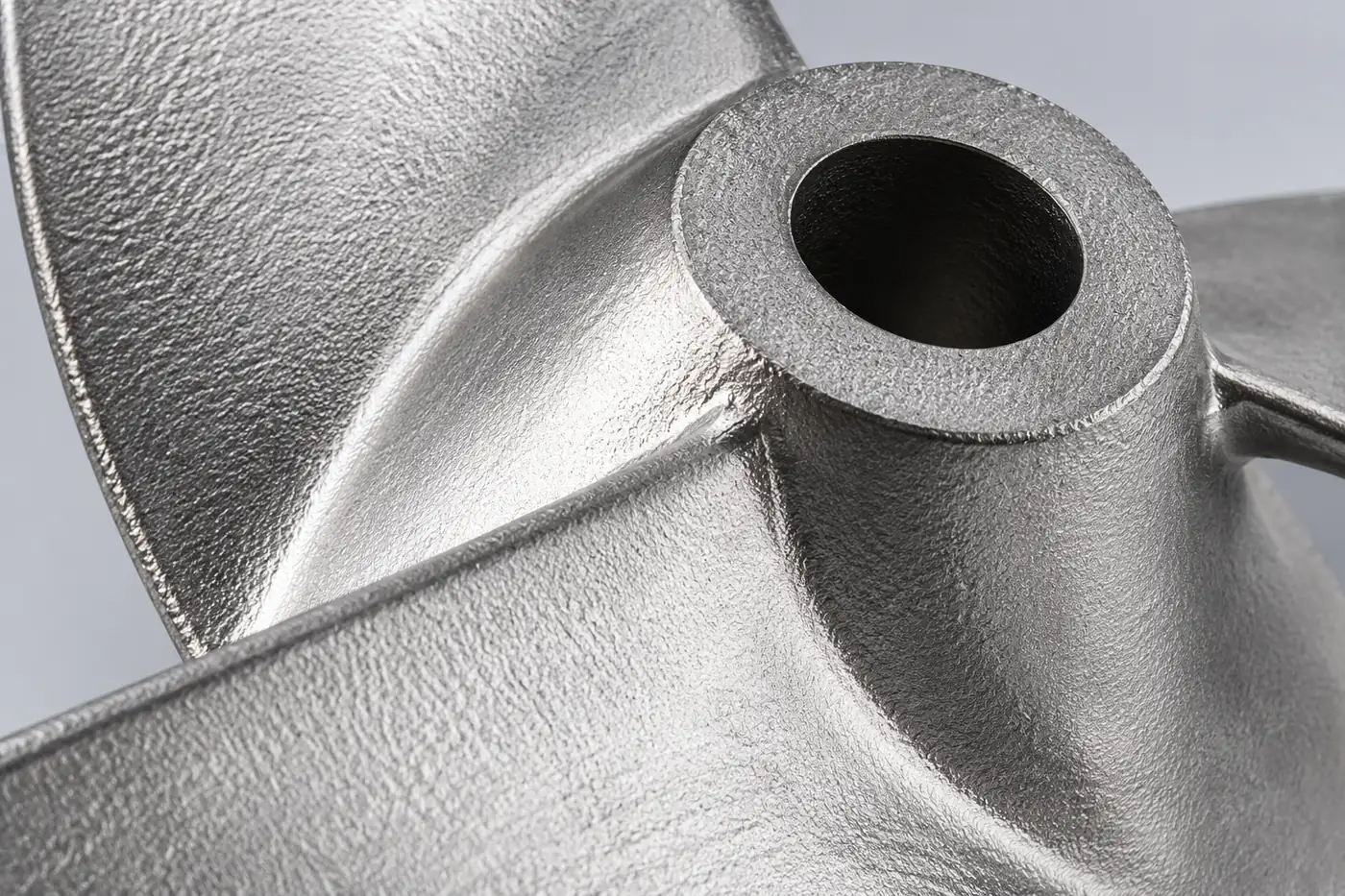
The investment pattern carries the blade and hub geometry into a ceramic-shell mould. Pattern removal leaves the cavity for the selected stainless alloy; after casting, shell removal and gate cleaning expose the blade roots and hub for finishing. Relia's CNC scope establishes the specified bore, keyway or other shaft attachment from nominated datums. Blade clearance, edge condition and any required balancing are reviewed on the finished configuration, because extra polishing or asymmetric material removal can alter the rotating part.
- Pattern and shellBlade geometry, hub stock and controlled mould formation
- Cast and cleanSelected stainless grade; gates and shell removed
- Machine the hubBore, axial faces and attachment relationship
- Approve the rotorGeometry, finish and specified balance/fit checks
04 · ROTATING-PART REVIEW
Agree balance and finishing requirements explicitly
- Balance basis
- State the method, configuration and acceptance requirement.
- Finished rotor
- Review the part after machining, deburring and finishing.
If your pump requires balancing, define the method, acceptance basis and configuration used for the check. Deburring and surface treatment also need a clear scope around the blade and hub. We discuss these requirements with the enquiry rather than applying an assumed speed, balance grade or efficiency claim.
05 · ACCEPTANCE RECORDS
Select evidence that follows the impeller features
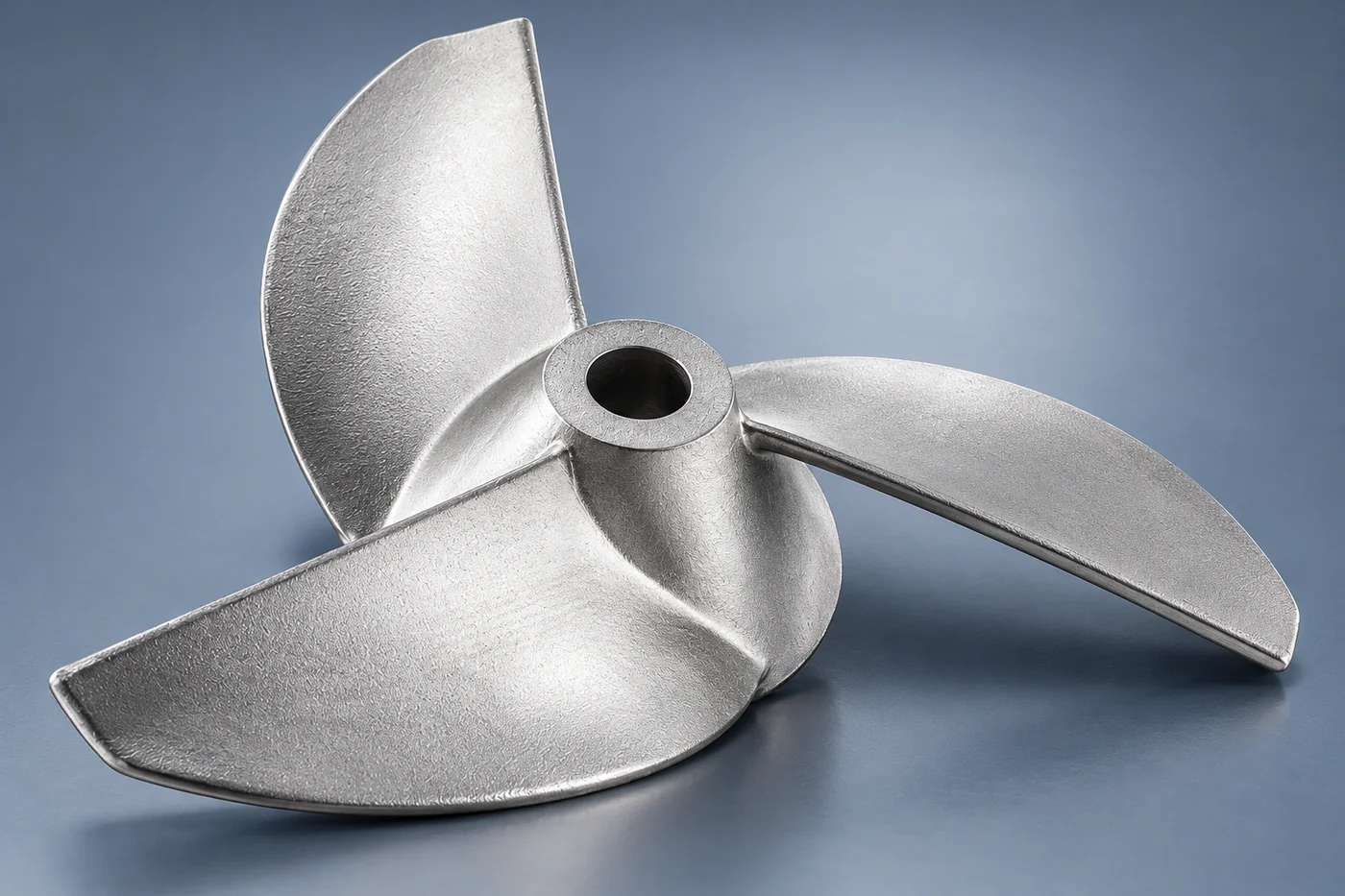
Measure the shaft bore, keyway and axial face relationships from the nominated datum. If balancing is required, name the method, speed/configuration and acceptance basis. A catalogue 0.2 mm tolerance field does not establish bore fit, permissible unbalance or complete-pump efficiency.
06 · SAMPLE APPROVAL
Use the first part in the intended assembly review
- Trial fit
- Check the shaft connection and required blade clearance.
- Release record
- Retain the accepted drawing and sample-review results.
A sample review should connect the measured impeller to the shaft and pump geometry it will serve. Your team can assess trial fit and the required functional checks against its design. Keep any accepted correction visible before the drawing and route become the reference for repeat parts.
07 · SUPPLY BOUNDARY
Keep the quotation tied to the finished impeller
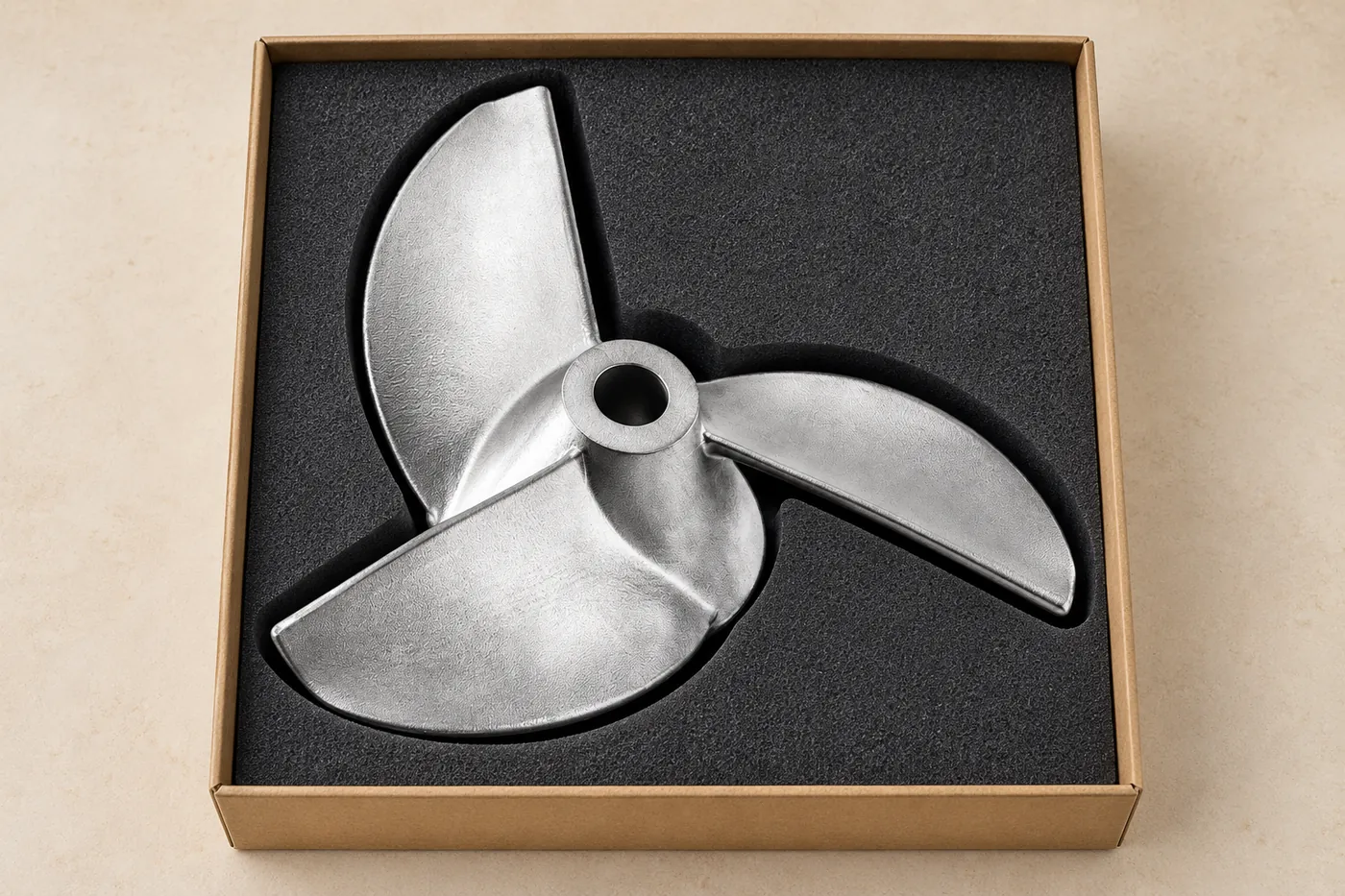
The quotation should identify the casting, machining, finishing and verification work included. State whether associated hardware or other pump parts are part of the enquiry. That lets us review a defined component package while keeping complete-pump performance and application approval in the correct project scope.
Technical notes
Describe the fluid, temperature, solids, rotational speed and intended duty alongside the 3D blade geometry. These inputs affect material choice and the surfaces that matter. Blade clearance, rotation direction and bore/keyway details connect the manufactured impeller to the pump it must fit.
- Cast shapeBlade and hub geometry
- Finished featuresBore, faces and attachment
- VerificationAgreed records and checks
- DeliveryDefined component and protection
RELIA · YOUR NEXT PROJECT
Share the blade model and shaft-interface drawing
Send the 3D blade geometry, 2D finished-interface drawing, material standard and quantities. Add the liquid, duty context and any balancing or approval requirements. We can review the impeller casting and machining scope with your team before a quotation is agreed.
Start with these project details
- Blade model and rotation
- Hub and shaft-interface drawing
- Fluid, temperature and speed
- Quantity and balance requirements
Shuyuan Road, Qingdao, Shandong, China
