
CUSTOM MANUFACTURING · PROJECT REVIEW
Custom Cast Exhaust Manifolds for Defined Engine Duty
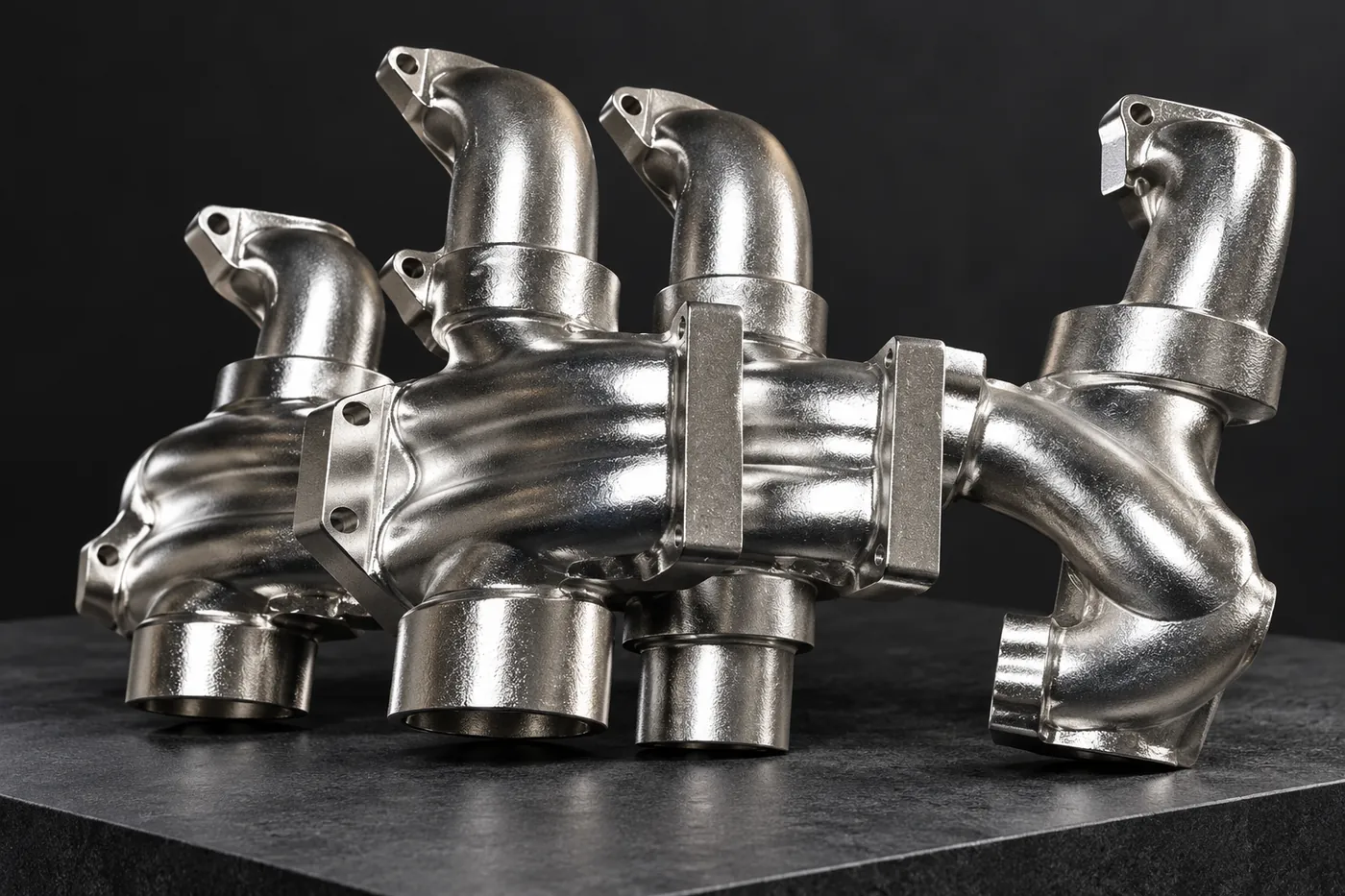
An exhaust manifold must connect its engine interfaces under a defined thermal duty. Relia reviews the specified casting alloy, runner geometry and finished joints, with the required material condition and validation work included in the enquiry.
RELIA · PRODUCT AND MANUFACTURING SUPPORT
Define the manifold within the exhaust arrangement
Relia's relevant casting range lists stainless, alloy steel, iron and CA15 references with machining and selected finishing. Relia's manifold enquiry connects the actual material condition to the cylinder-head ports, outlet and available installation space. This helps engine and equipment buyers define a component that follows their thermal and assembly requirements instead of choosing from a general metal name.
| Your requirement | Relia product and service scope |
|---|---|
| Material references | Stainless, alloy steel, iron and CA15 options |
| Interfaces | Head ports, mounting flange and exhaust outlet |
| Design conditions | Temperature, cycling, restraint and installation envelope |
| Acceptance focus | Port geometry, flange condition and specified leakage checks |
02 · MATERIAL
State thermal duty and exact material requirements
- Thermal conditions
- Provide operating temperatures and cycling requirements.
- Material definition
- State the exact grade and required supplied condition.
Share the operating and thermal-cycle requirements established by your design. Specify the exact grade and supplied condition so a material proposal can be reviewed against the intended duty.
Technical notes
Review wall transitions and the machining relationship between the ports and flange. Bolt access, gasket lands and any welded or attached features must be included. The catalogue's material options are enquiry starting points, not a statement that all grades are interchangeable at exhaust temperatures.
MANUFACTURING ROUTE · FEATURES AND CONTROL
Form the Runners and Finish the Hot-Joint Interfaces
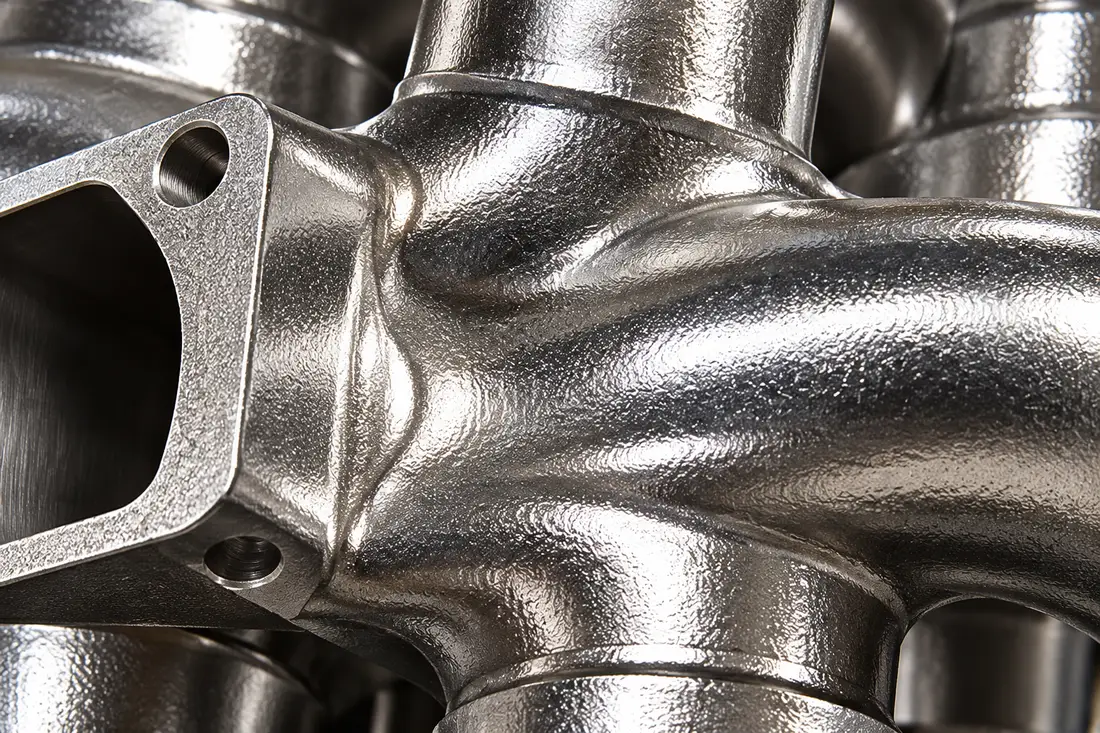
The pattern and mould arrangement must reproduce the runners, transitions and flanges with appropriate allowance. After casting, cleaning and any specified treatment, Relia's machining scope establishes port faces, bolt positions and the outlet interface. Thick junctions, sharp section changes and restraint at the mounting points need a connected design review because thermal cycling affects the complete geometry. The finish plan keeps gasket lands and connection features usable. Dimensional and leakage acceptance are then paired with any application-specific thermal validation required by the design.
- Define engine interfacesPorts, flange, outlet and installation envelope
- Review the cast geometryRunner sections, transitions and material condition
- Machine the jointsGasket lands, bolt pattern and outlet relationship
- Validate the supplied scopeFit, specified leakage and required thermal assessment
04 · FINISHED FEATURES
Control sealing faces and fastening interfaces together
- Engine interfaces
- Relate connection faces, ports and bolt patterns.
- Finished joints
- Define machining datums, surface condition and inspection.
Identify the connection faces, bolt patterns and datums that locate the manifold. Keep the required surface condition and relationships on the drawing for machining and acceptance.
05 · EVIDENCE
Agree component checks and thermal validation
Define flange flatness, port position, leak-test scope and the required thermal or durability validation. Keep engine-emissions approval separate from the manufactured manifold's dimensional acceptance. A 15–35-day listing reference needs review with the selected alloy, tooling and test requirements.
06 · RELEASE
Retain sample and production revisions clearly
- First-part review
- Check engine interfaces and required application tests.
- Released revision
- Record accepted corrections and affected validation.
Review the first part with the required engine-interface and application checks. Record accepted corrections and any affected validation before the manufacturing definition is released for repeat orders.
07 · ORDER PACKAGE
Keep the quotation tied to the specified manifold
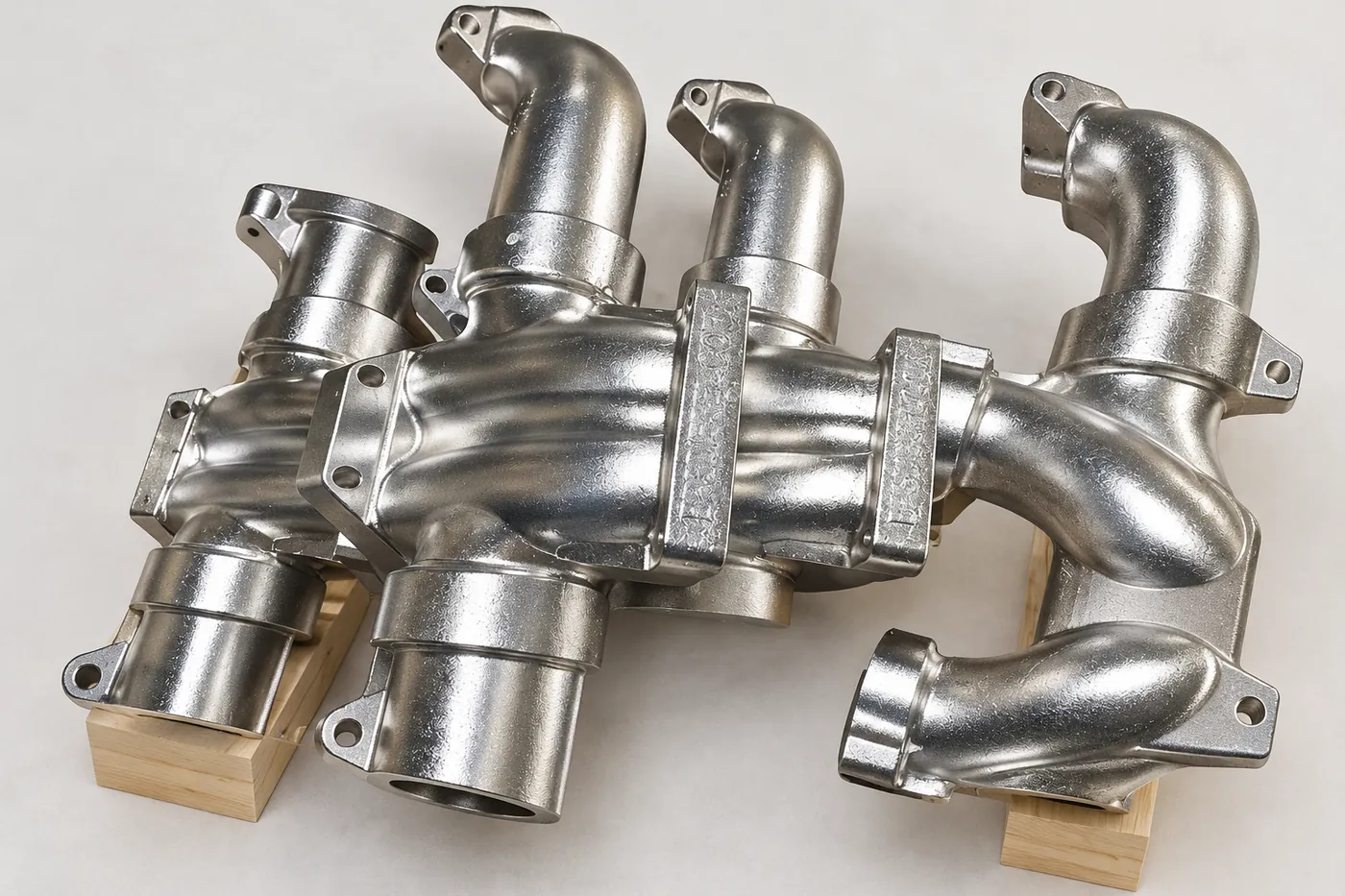
Bring the exact material, internal model, finished-interface drawing and required evidence together. Make assumptions visible so the manufacturing and approval scope describe the same delivered component.
Technical notes
Provide port spacing, cylinder-head interface, outlet connection and the available engine-bay envelope. Include operating temperature and thermal-cycle information from the engine design. A manifold that fits at room temperature can still impose unwanted stress when the assembly heats and expands.
| Package | Retain |
|---|---|
| Design | Current model and interfaces |
| Manufacture | Casting, machining and supplied state |
| Acceptance | Required records and validation scope |
RELIA · YOUR NEXT PROJECT
Send the internal model and engine-interface drawing
Share the manifold geometry, exact material, quantities and relevant thermal-duty requirements. Add the required machining and validation records. We can review the component manufacturing scope with those inputs available.
Start with these project details
- Manifold model and port geometry
- Exact alloy and thermal duty
- Quantity and finished joints
- Machining and validation records
Shuyuan Road, Qingdao, Shandong, China
