
CUSTOM MANUFACTURING · PROJECT REVIEW
Hot-Chamber Die-Casting Equipment for a Defined Alloy and Die
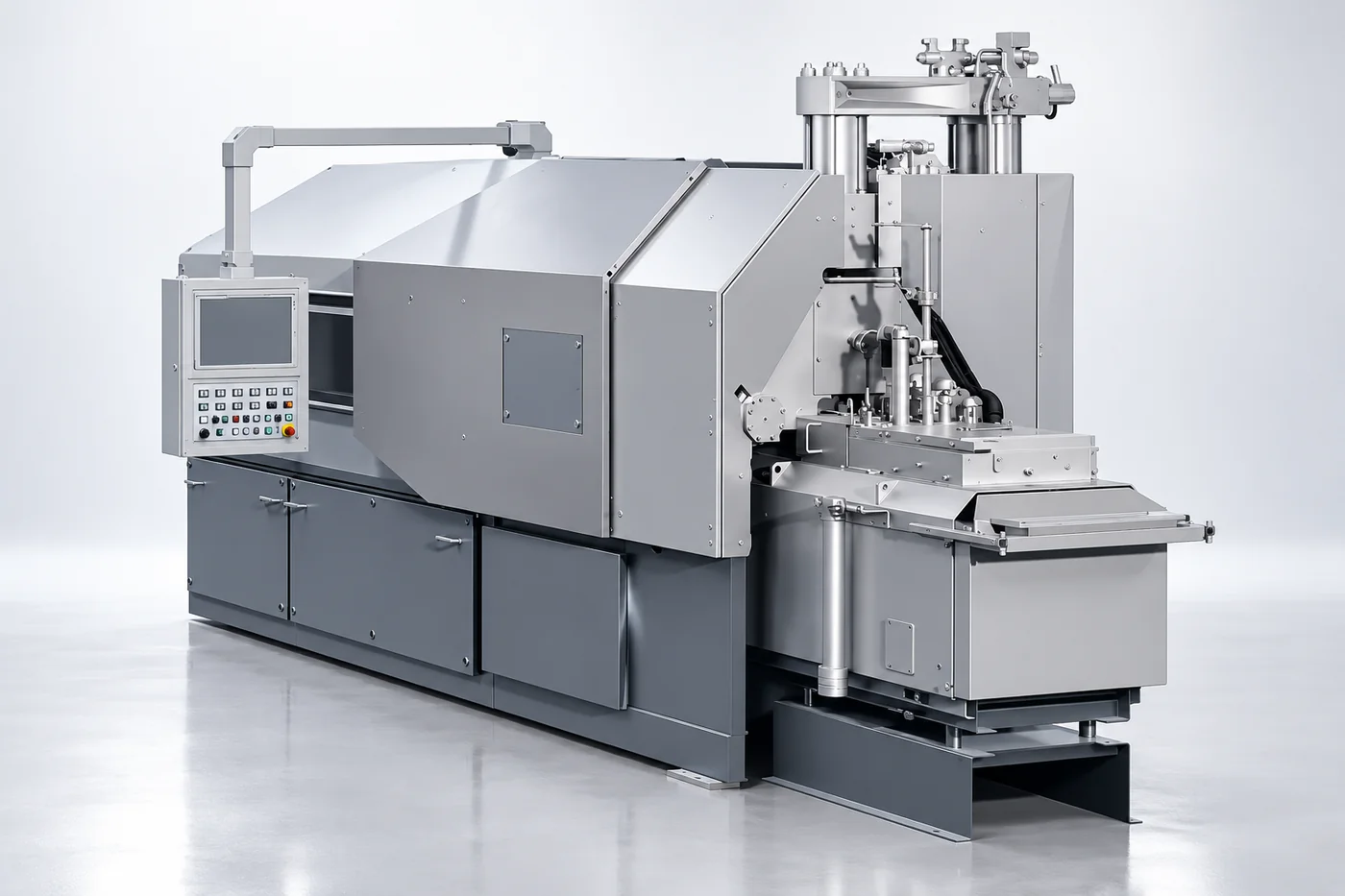
A hot-chamber machine must be reviewed with the selected alloy and die. Relia connects die interfaces, shot requirements, utilities and auxiliaries to the actual equipment configuration, then defines a relevant acceptance trial.
RELIA · PRODUCT AND MANUFACTURING SUPPORT
Define the alloy and die programme
Relia's PLC hot-chamber reference lists 147 kN injection force, 380 V and an 8 kW power field. Relia's enquiry uses the actual alloy, casting mass and die information to define the missing configuration details. Injection force, clamping force, shot capacity and total installation loads remain separate specifications in the proposed package.
| Your requirement | Relia product and service scope |
|---|---|
| Machine type | PLC hot-chamber die-casting reference |
| Listed injection force | 147 kN; not a clamping-force declaration |
| Electrical fields | 380 V and 8 kW reference |
| Essential missing selections | Alloy, shot basis, die envelope, clamping and utilities |
02 · COMPATIBILITY
Check die interfaces before machine selection
- Existing die
- Provide mounting, opening, ejection and service interfaces.
- Machine compatibility
- Review the die envelope against the offered configuration.
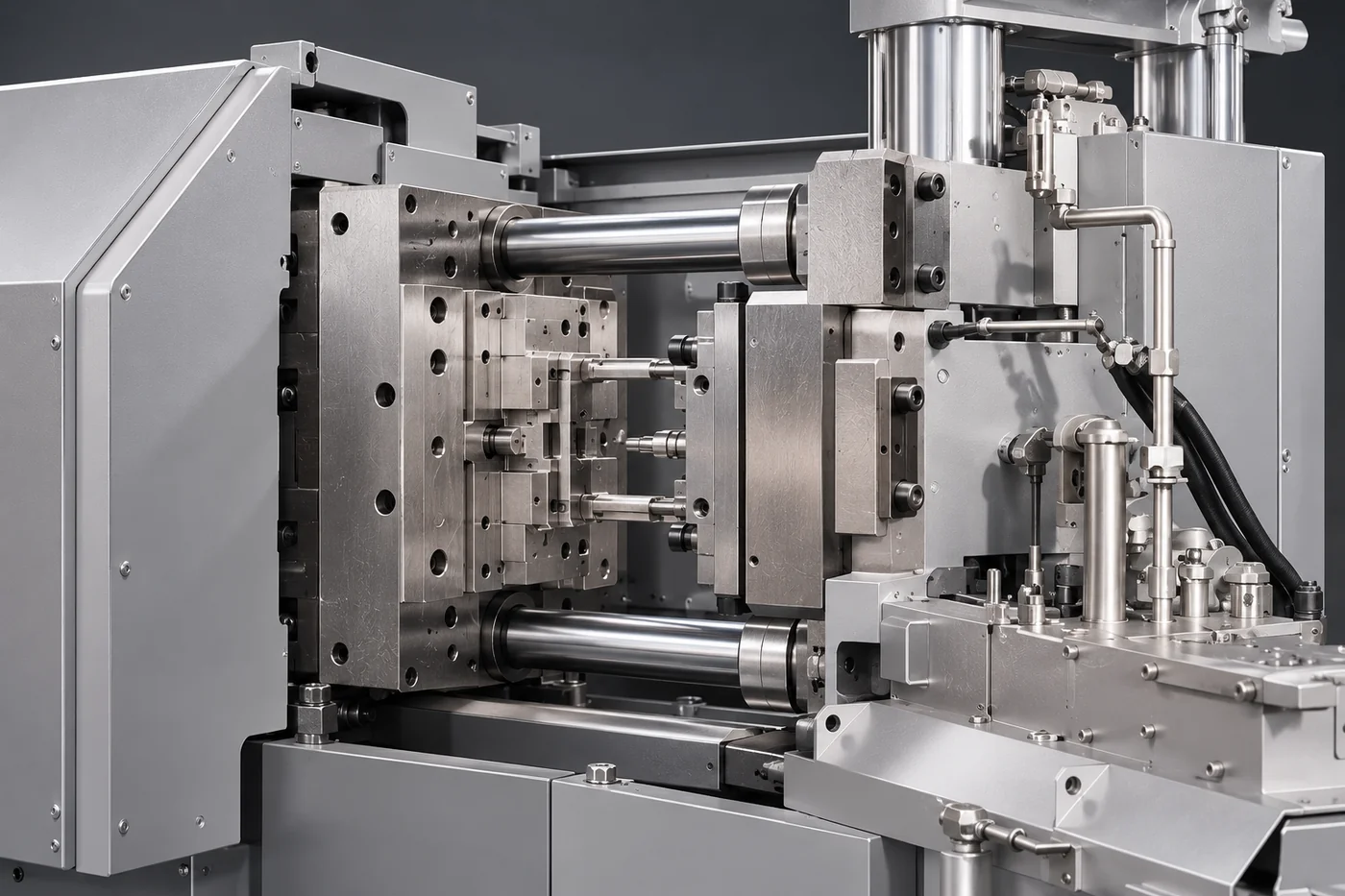
Identify the mounting, opening, ejection and service interfaces needed by your die. A similar machine photograph does not establish that the existing die can be installed and operated in the proposed configuration.
Technical notes
Request the configuration sheet covering clamping, shot capacity, die envelope, tie-bar spacing and opening/ejection stroke. These determine whether the actual die can be used. Include furnace and thermal-load requirements separately from the listing's electrical power field.
MANUFACTURING ROUTE · FEATURES AND CONTROL
Connect the Hot-Chamber Cycle to the Die Requirements
In the hot-chamber route, the injection mechanism works with metal in the furnace; the suitable alloy must match that machine design. The cycle fills the closed die, allows solidification and opens/ejects the casting before the next shot. Relia's selection review connects this sequence to die dimensions, projected area, clamping and opening/ejection needs. Zinc and suitable alloys differ from aluminium cold-chamber requirements. A die-and-alloy trial therefore provides more useful evidence than a single force or nominal cycle-rate figure.
- Identify alloy and dieCasting mass, projected area and tool envelope
- Define machine configurationClamping, shot, opening and ejection
- Match installation servicesFurnace/auxiliaries and electrical scope
- Run the agreed trialActual die/alloy and acceptance conditions
04 · UTILITIES
Review the complete installation package
- Site installation
- Confirm supply, footprint and service connections.
- Complete package
- List ancillary systems and installation documents.
Confirm the exact electrical supply, machine footprint and required service connections. Include installation documents and any ancillary systems in the enquiry rather than assuming they are part of the machine price.
05 · SUPPLY SCOPE
Keep die and machine responsibilities clear
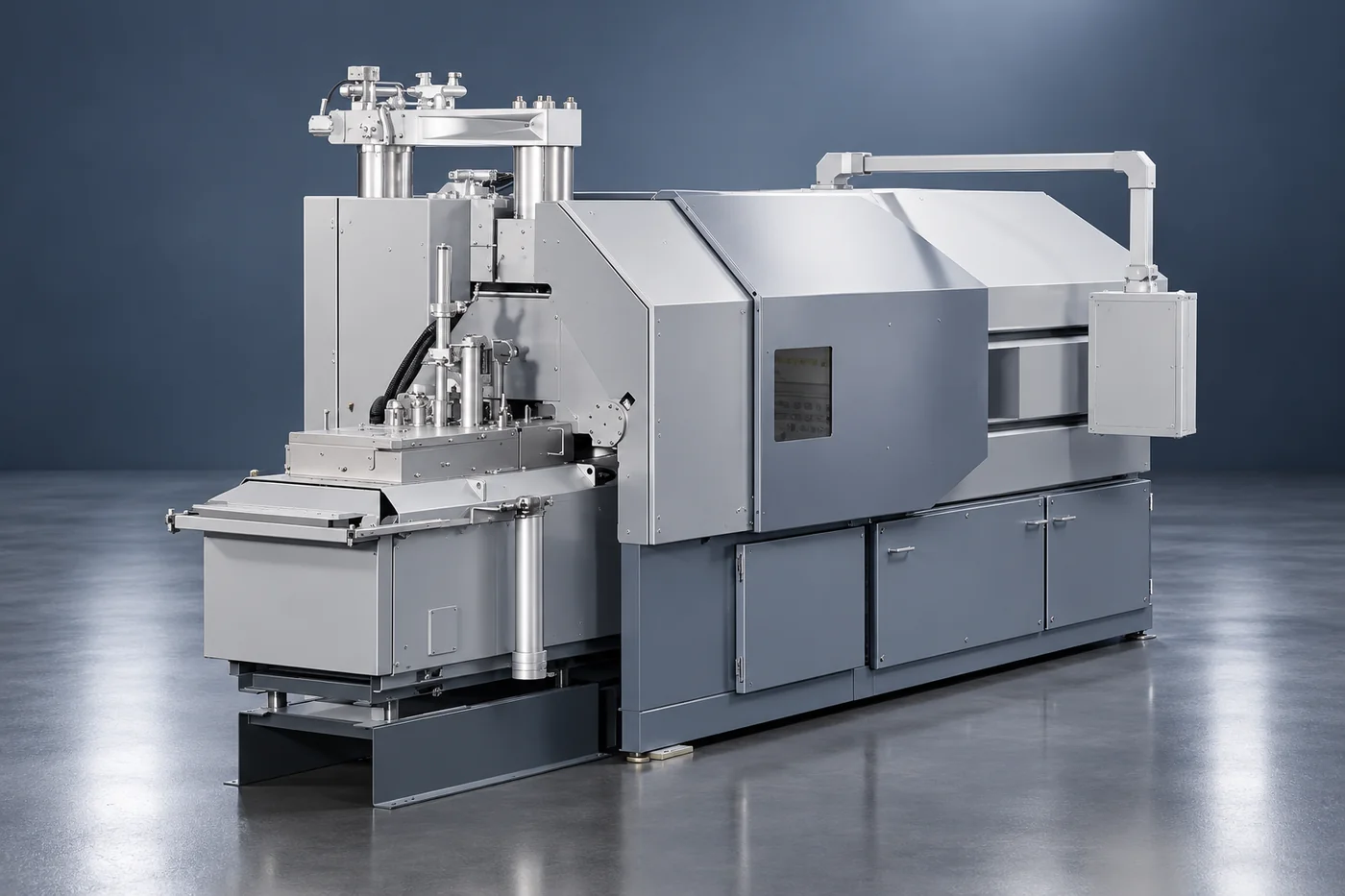
Identify who supplies the die, machine, fixtures and supporting equipment. Agree the interface review and any commissioning work so the quotation covers the intended production system.
- Your briefAlloy, part and die information
- Technical reviewMachine and die interfaces
- Supply scopeIncluded equipment and services
- AgreementConfiguration and responsibilities
06 · HANDOVER
Agree a relevant acceptance demonstration
- Production task
- Define the alloy and die used for acceptance.
- Evidence package
- Agree the actual unit's trial and available records.
Define a die-and-alloy-based acceptance trial, utilities and included auxiliaries. Review the offered machinery test report and inspection video for the actual unit. A single injection-force number cannot establish cycle rate, casting quality or compatibility with a customer's existing die.
07 · PURCHASING
Compare quotations on one configuration basis
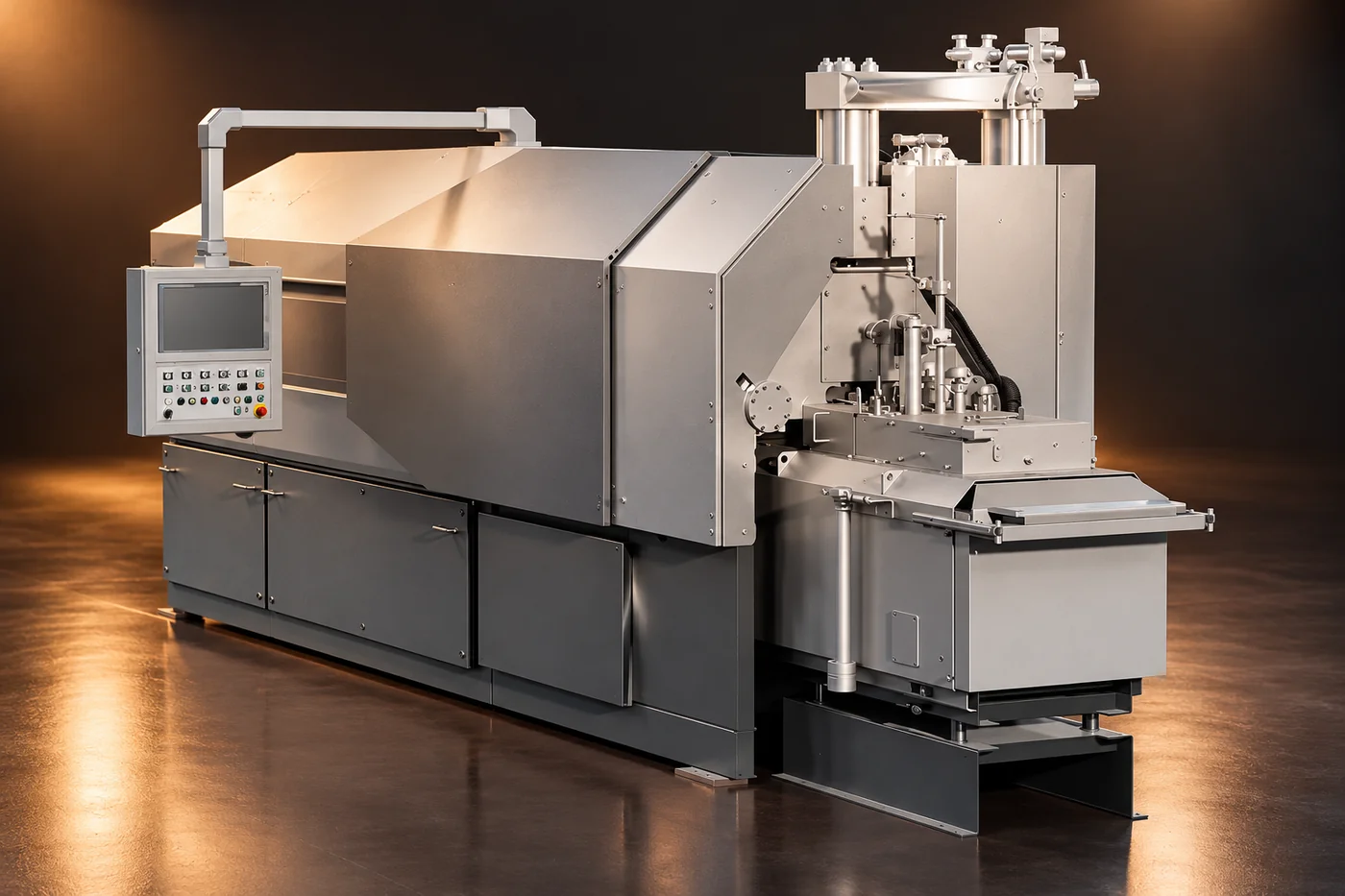
Retain the alloy, die interfaces, machine fields and supporting work together. Clarify open capacity or service inputs before comparing prices for equipment packages with different boundaries.
Technical notes
Provide alloy, casting mass, projected area, die dimensions and production targets. Hot-chamber process suitability depends on the metal and machine design; it should not be assumed for aluminium merely because aluminium products appear elsewhere in the catalogue.
RELIA · YOUR NEXT PROJECT
Share the alloy, casting and die requirements
Send the part drawing, alloy, die details and available utilities. Add required ancillary equipment and acceptance work. We can review the machine package with its technical fields and supply boundaries clear.
Start with these project details
- Part drawing and selected alloy
- Die envelope and interfaces
- Shot requirements and utilities
- Auxiliaries and acceptance scope
Shuyuan Road, Qingdao, Shandong, China
