
CUSTOM MANUFACTURING · PROJECT REVIEW
Custom Brass Pipe Components: Casting or Machining from Solid
Relia reviews custom brass pipe components from the finished connection requirement. Compare casting and machining from solid while keeping the alloy, threads, sealing geometry, order quantities and acceptance basis consistent.
RELIA · PRODUCT AND MANUFACTURING SUPPORT
Define the nonstandard connection
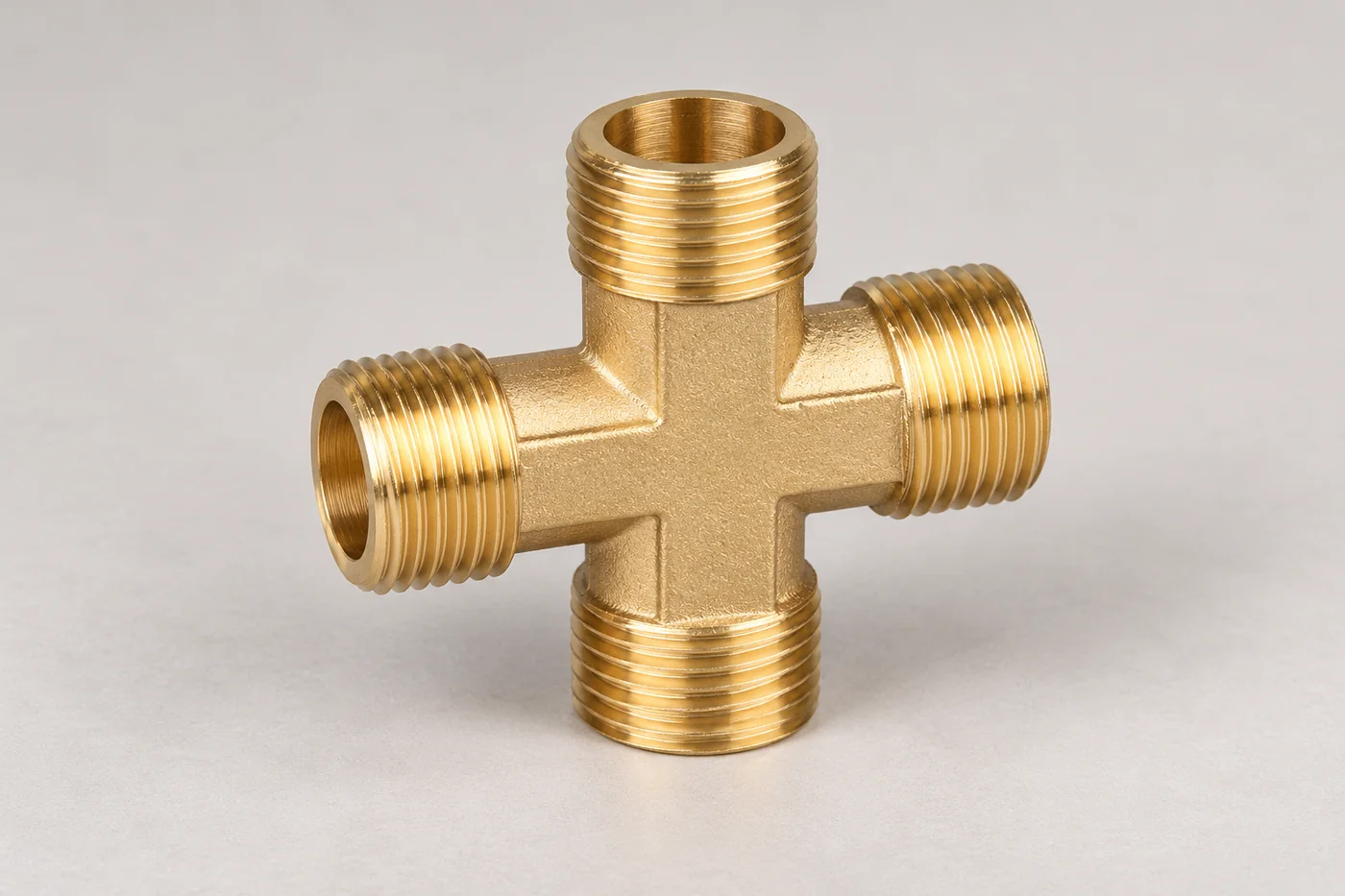
Relia's brass-component reference supports custom casting, CNC milling/turning and PDF/CAD or IGES/STEP files, with a one-piece enquiry reference. Relia connects the chosen route to the finished connection and quantity. Your team can compare tooling and material removal while keeping the actual brass grade and mating geometry clear.
| Your requirement | Relia product and service scope |
|---|---|
| Processes | Custom casting, CNC milling and turning |
| Files | 2D PDF/CAD and 3D IGES/STEP |
| Order reference | One-piece minimum on the listed item |
| Choice basis | Complexity, material removal, quantity and finished interfaces |
02 · MATERIAL
Specify the brass alloy before comparing routes
- Exact brass grade
- State the alloy and required material condition.
- Use requirement
- Include any project-specific service or material restriction.
Provide the exact alloy and required material condition. Any use-specific requirement belongs in the project specification; the colour or shape of a reference fitting does not establish it.
Technical notes
Identify thread standard, sealing style, bore and wrench access. The listed 0.01 mm field is relevant only where a defined machined feature requires it. Specify lead-content or water-contact requirements when applicable instead of assuming every brass grade meets them.
MANUFACTURING ROUTE · FEATURES AND CONTROL
Choose the Blank Route and Finish the Connection
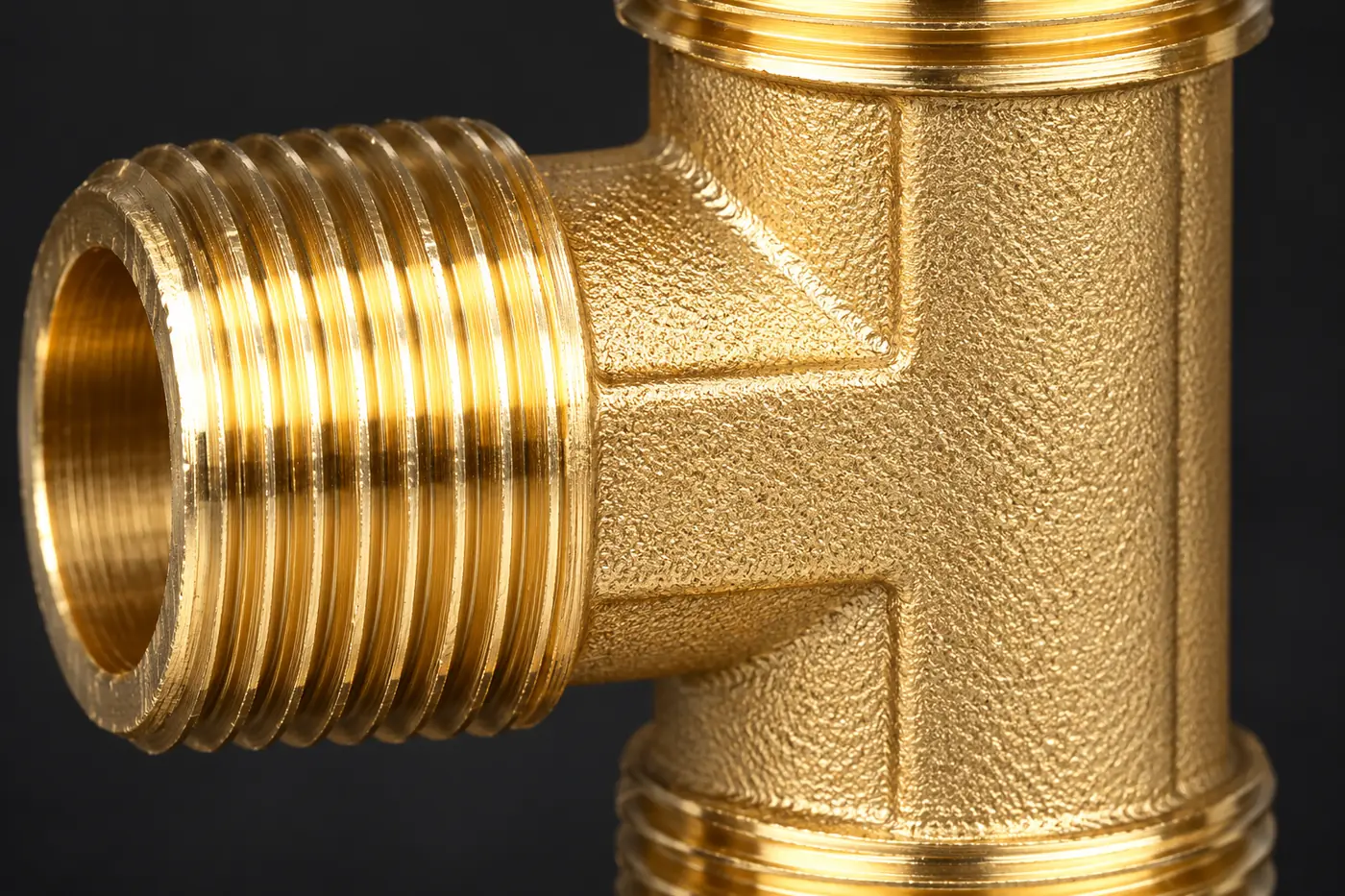
For a simple rotational part, turning from solid can produce the body, bore and thread with a short route. A complex cast body needs the moulded shape cleaned and the connection features machined afterward. Relia's comparison considers geometry, material removal, tooling and repeat volume. In either case, thread standard, sealing style, tool access and burr removal control the finished connection. A specified pressure or leakage check is then tied to the purchased component and its test conditions.
- Compare starting routesSolid stock versus cast near-net body
- Define the brass gradeService and any material-compliance requirement
- Machine connectionsBore, threads, sealing faces and wrench access
- Check the finished partGauges, dimensions and specified leakage acceptance
04 · FINISHING
Plan the turning and milling interfaces
- Machined connection
- Define threads, bores, faces and locating datums.
- Consistent acceptance
- Use the same finished requirements for both starting routes.
Mark threads, faces, bores and locating surfaces that need controlled machining. Keep their datums and finish requirements visible for either proposed starting route.
05 · CHECKS
Agree material and connection acceptance
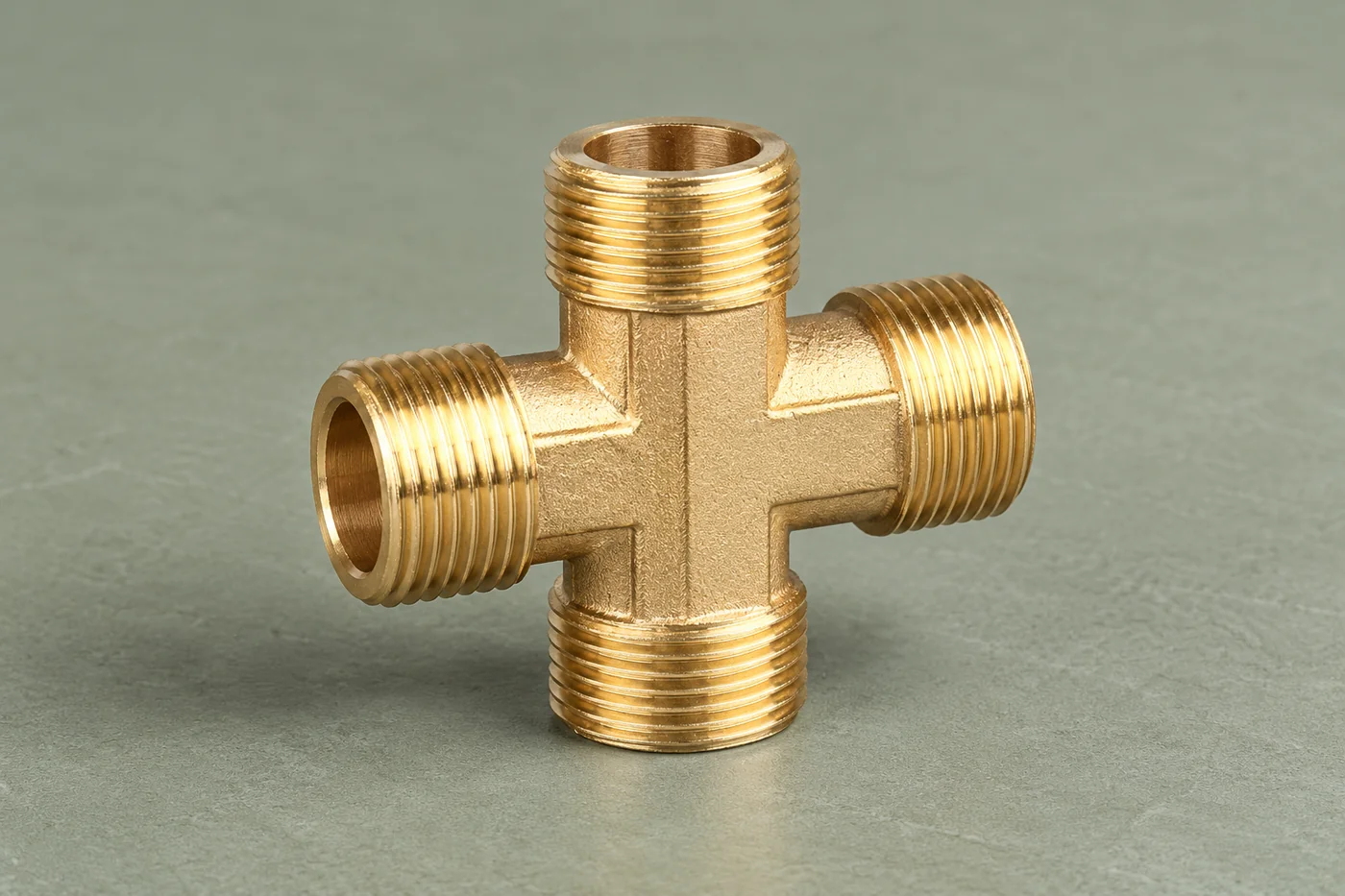
Check threads with the agreed gauges and inspect sealing faces and bores. If pressure or leak testing is required, state the conditions and limit. The 15–35-day listing is a reference for that item and should be reconfirmed with tooling, quantity and finish.
06 · QUOTATION
Separate sample preparation from repeat parts
- Trial preparation
- Separate tooling, setup and sample parts.
- Repeat production
- Compare the defined scope at the expected quantities.
Keep tooling or setup, sample parts and production quantities as distinct scope items. A clear comparison shows which assumptions apply to the trial and which apply to repeat orders.
07 · DECISION
Use one brief for both proposals
Retain the same drawing, alloy, finish and required checks across the route comparison. Your team can then assess the complete delivered component with the differences visible.
Technical notes
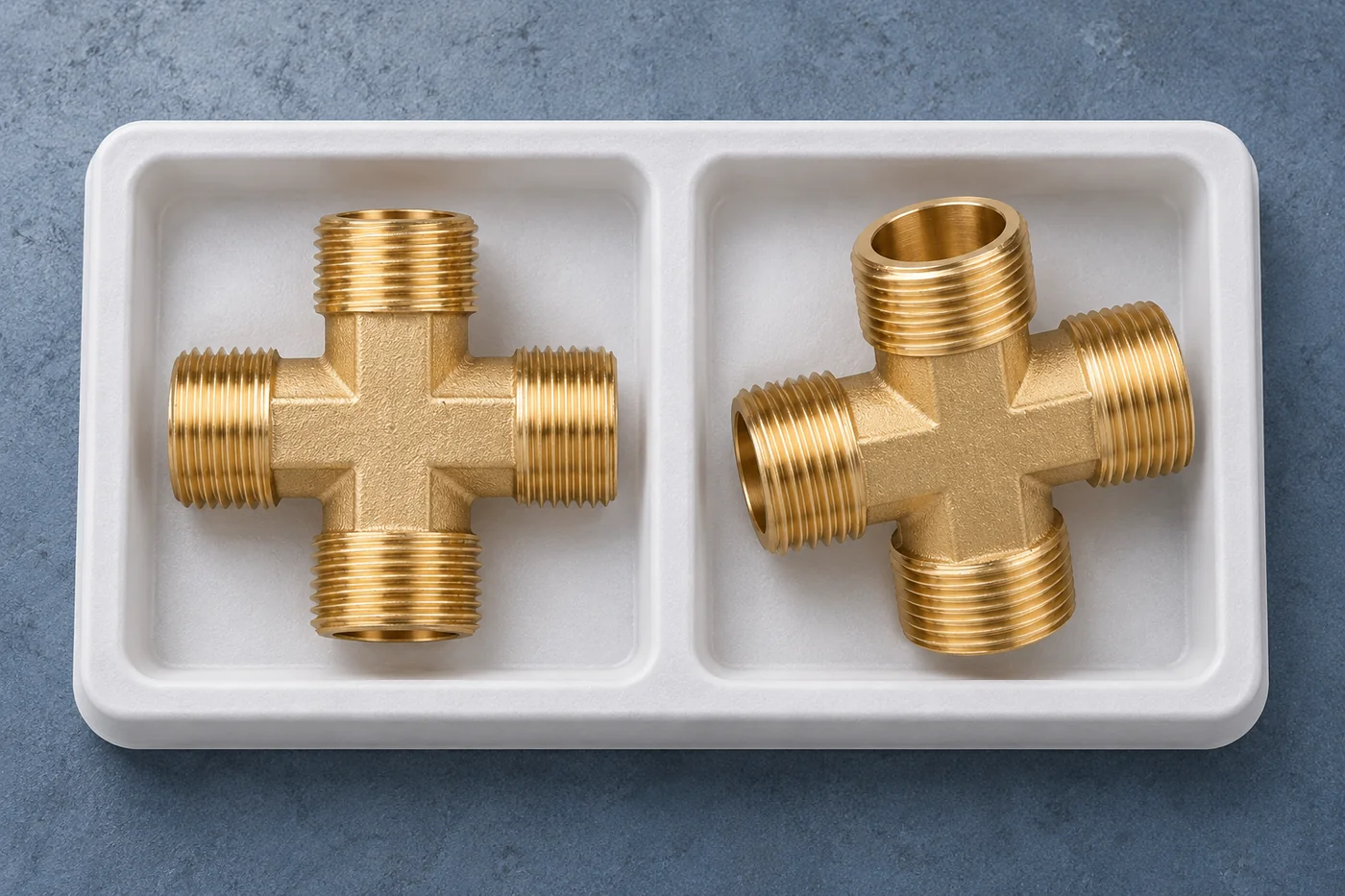
Compare an intricate body with internal shape against a simple turned adapter. Near-net casting can reduce machining on complex repeat parts, while machining from solid can suit simple shapes or early quantities. The comparison needs material grade, batch size and the finished-feature drawing.
- Common requirementDrawing and selected material
- Route optionsPreparation and manufacturing scope
- DecisionAccepted quotation assumptions
CONNECTED BUYING GUIDES
Continue with the next project decision
Follow the related component and purchasing guides, or open the catalogue reference to carry this requirement into a specific project enquiry.
RELIA · YOUR NEXT PROJECT
Send one connection drawing for the route review
Share the model, exact alloy, thread requirements and quantities. Add the relevant fluid context and acceptance checks. We can review the casting or machining proposal against the same finished-component requirement.
Start with these project details
- Model and thread requirements
- Exact brass alloy
- Sample and repeat quantities
- Fluid context and acceptance checks
Shuyuan Road, Qingdao, Shandong, China
