
CUSTOM MANUFACTURING · PROJECT REVIEW
Custom Aluminum Electronic Enclosures with CNC Interfaces
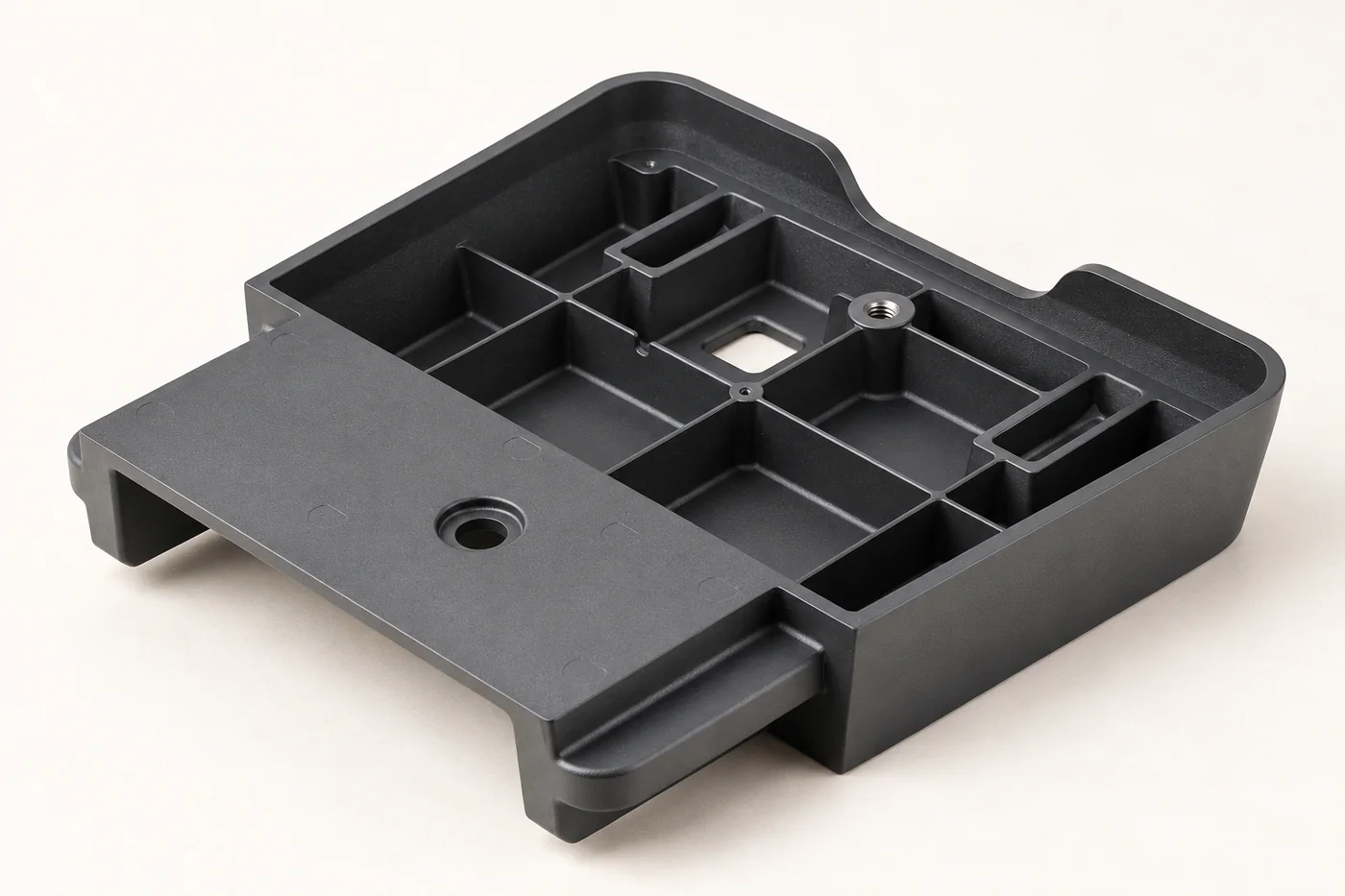
An electronic enclosure must locate boards, connectors and covers as one assembly. Relia reviews aluminium casting and CNC interfaces, connecting the alloy, finish and sealing requirements to your equipment geometry.
RELIA · PRODUCT AND MANUFACTURING SUPPORT
Build the enclosure around the equipment envelope
Relia's chassis references include ADC12, A380 and A383 aluminium, with painting, powder coating, anodizing and machining options. Relia's enquiry combines the outer housing with standoffs, lid fasteners, connector cutouts and contact faces. A small machined enclosure and a repeat die-cast housing can therefore be reviewed against the same finished assembly while using different starting routes.
| Your requirement | Relia product and service scope |
|---|---|
| Cast alloy options | ADC12 / A380 / A383 |
| Machining inputs | STEP/STP model plus PDF/DWG critical dimensions |
| Finished interfaces | Gasket land, connectors, standoffs and threaded bosses |
| Environmental review | Complete enclosure seals and assembled test configuration |
02 · ALLOY AND FORMING
Review the cast shape before fixing the route
- Cast geometry
- Review wall thickness, ribs and tooling features.
- Alloy selection
- Agree the material and route for the actual enclosure.
Our aluminum enclosure references include ADC12, A380 and A383 material directions. The selected alloy and process still need to suit the actual walls, ribs and tooling geometry. We review those features with your drawing, keeping the casting proposal and its assumptions visible before the manufacturing scope is agreed.
Technical notes
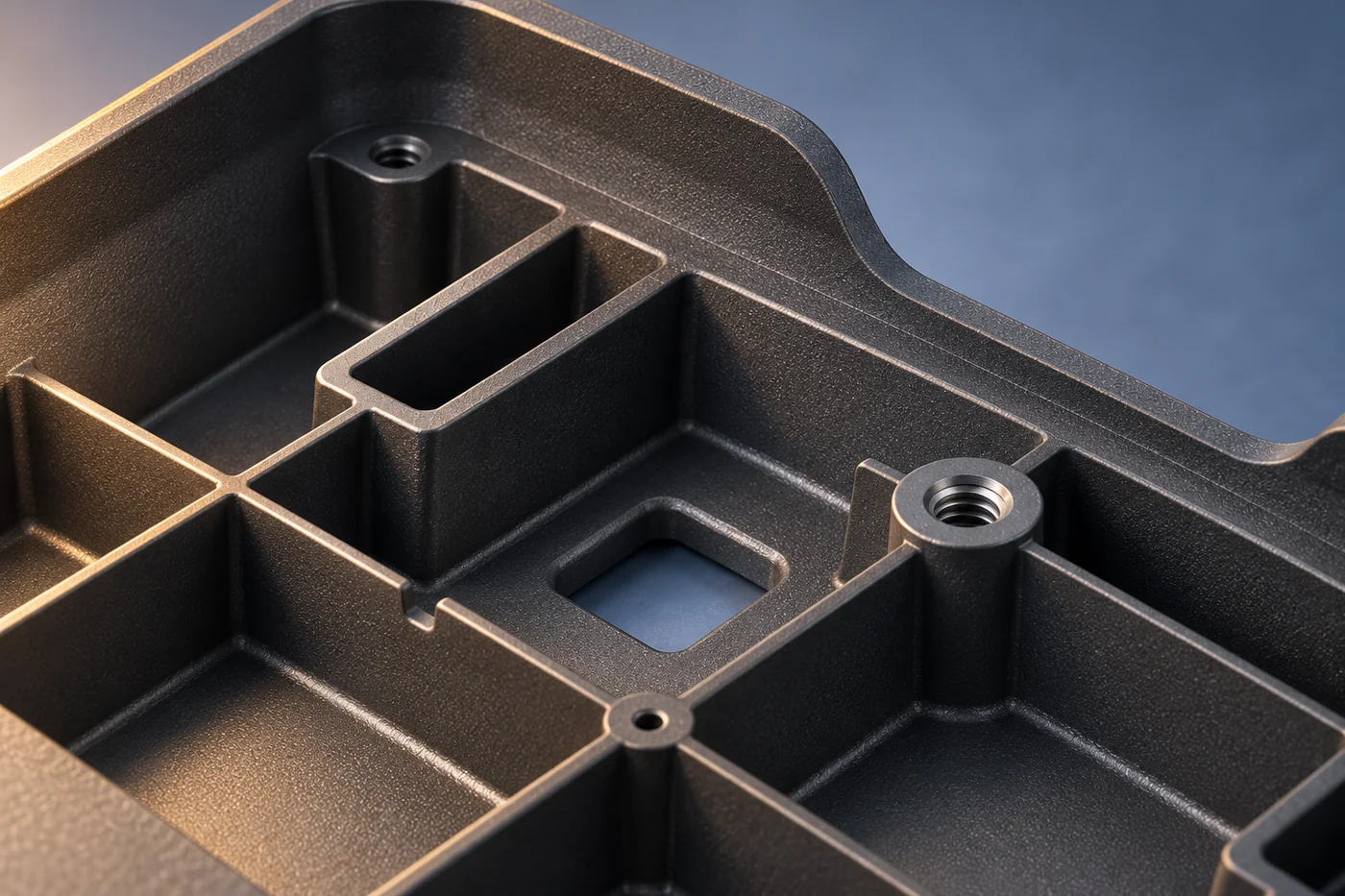
Cast ribs and bosses can reduce machining, but connector faces, gasket lands and screw threads may still need finishing. Select paint, powder coating or anodizing with masking for grounding and electrical contact areas. Coating every surface indiscriminately can interfere with fit or conductive contact.
MANUFACTURING ROUTE · FEATURES AND CONTROL
Form Ribs and Bosses Without Losing Assembly Datums
For a pressure die-cast enclosure, reusable tooling forms the walls, ribs and bosses; filling, venting, cooling and ejection must suit the geometry. After trimming and deburring, CNC operations finish connector interfaces, threaded bosses and gasket or contact lands. Relia's finish plan identifies areas to mask for grounding, heat transfer or sealing. The resulting component is then checked against the lid and board arrangement. Any ingress-protection target belongs to the defined assembled enclosure, including its seals and penetrations.
- Design the tool shapeWalls, ribs, bosses and release direction
- Cast and prepareFill, solidify, trim and deburr
- Machine and finishConnectors, fixings, gasket lands and masking
- Approve the assemblyBoard/lid fit and specified enclosure tests
04 · SURFACE FINISH
Separate appearance from the functional surfaces
- Visible finish
- Define colour, texture and the appearance reference.
- Functional surface
- Mark masking and fit-sensitive contact areas.
Share the colour, texture and visible-surface reference your product needs. Identify areas to mask and any interfaces where a finish could affect fit. The actual treatment depends on the alloy and manufacturing route, so we review appearance and dimensional requirements as connected but separate parts of the enquiry.
05 · VALIDATION SCOPE
Keep environmental requirements specific
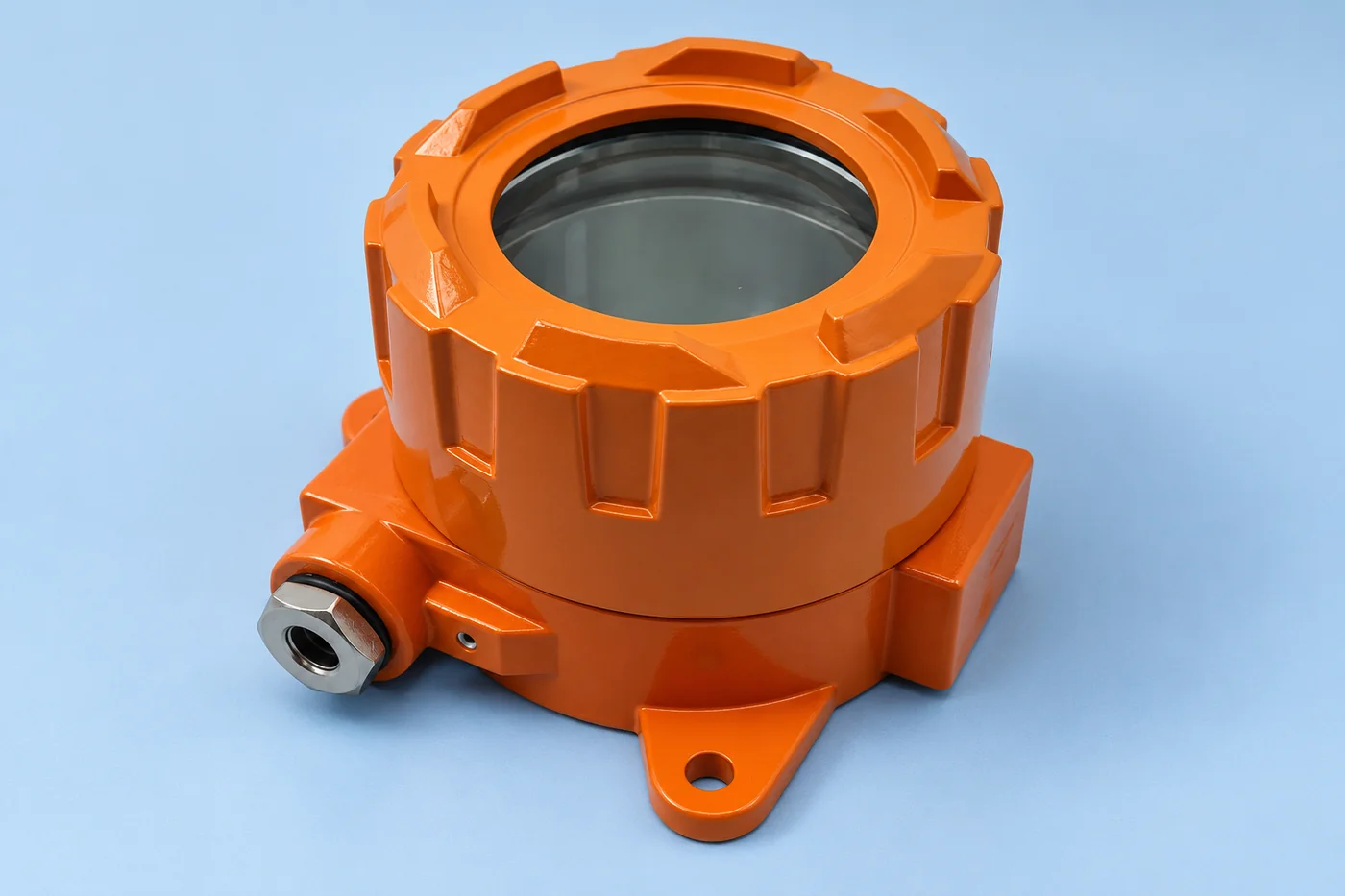
If the enclosure needs sealing, electrical or environmental checks, include the relevant requirement and test scope. A housing shape alone does not establish an ingress rating or complete-equipment compliance. We review the component work and the evidence your approval process needs, with responsibility for the finished system made clear.
| Review level | Requirement to define |
|---|---|
| Housing component | Material, dimensions and finish |
| Sealed assembly | Mating cover, seals and specified checks |
| Finished equipment | Relevant system-level validation |
| Approval record | Object, revision and accepted results |
06 · FIRST-PART REVIEW
Use samples to check assembly and appearance together
- Assembly features
- Check lid, bosses, connectors and thread engagement.
- Environmental approval
- Define the complete sealed configuration and test basis.
Check lid flatness, boss height, connector positions and thread engagement against the assembly model. Where ingress protection is required, define the assembled configuration and test basis. Avoid using an unrelated general standard field as the dimensional acceptance specification for a custom casting.
07 · ORDER CONTROL
Retain one clear enclosure specification
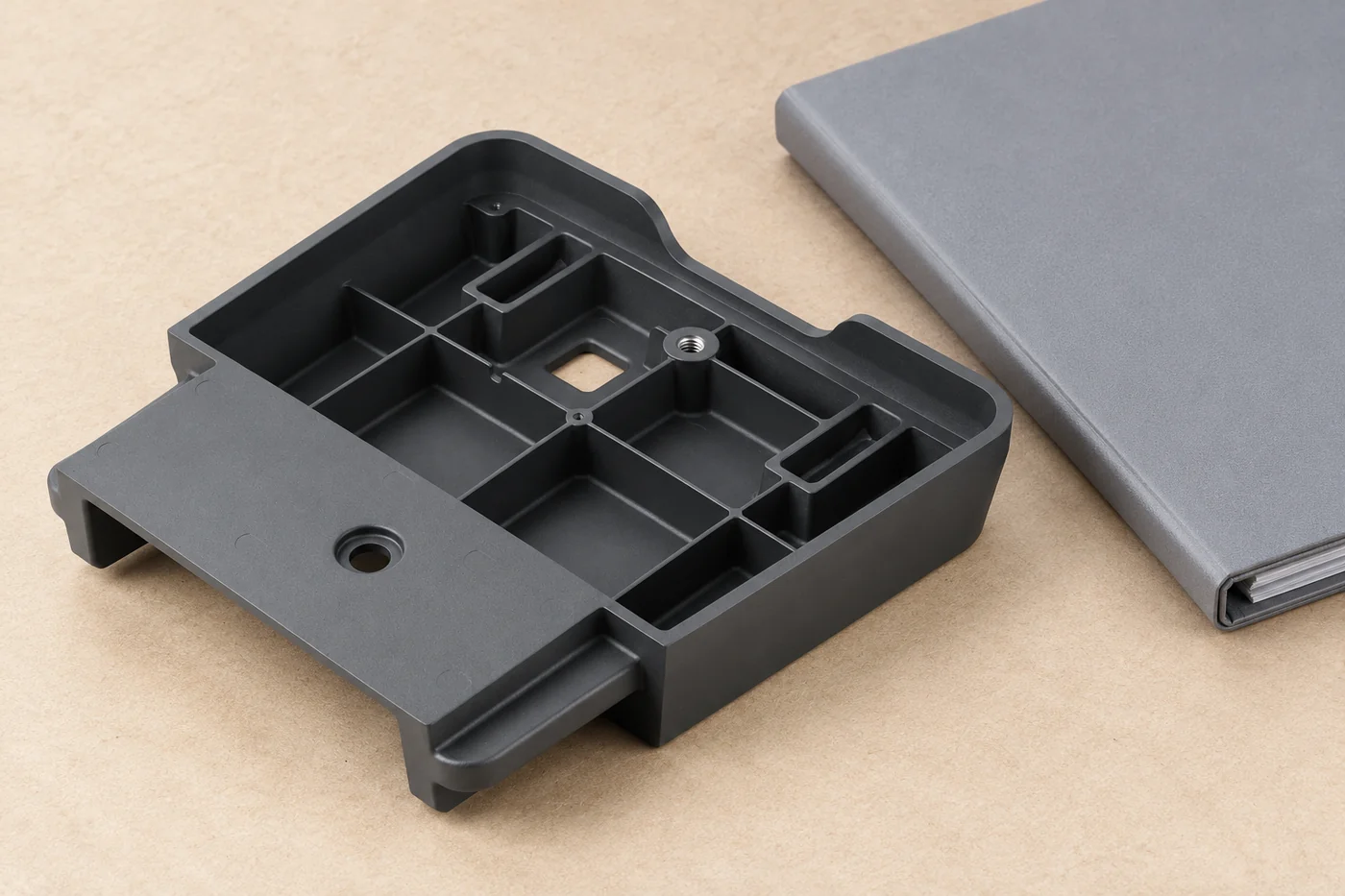
Keep the model, machined-opening drawing, selected finish and accepted sample details together. The quotation can then identify the delivered housing and any included accessories precisely. Later changes should point to the affected opening, surface or interface so that repeat orders follow the current accepted design.
Technical notes
Map PCB standoffs, connector cutouts, lid fasteners and any heat-transfer contact area. State the complete enclosure's environmental requirement and the gasket or seal design. A raw cast housing cannot establish an assembled IP rating without the lid, seals, penetrations and relevant test.
RELIA · YOUR NEXT PROJECT
Send the model, openings and appearance requirements
Share the enclosure model, equipment envelope, connector-opening drawing and quantities. Add the alloy, finish and any required assembly or environmental checks. We can review the casting and CNC scope with the equipment interfaces and delivered condition in view.
Start with these project details
- Enclosure model and envelope
- Connector and mounting drawing
- Alloy, finish and quantities
- Assembly and environmental checks
Shuyuan Road, Qingdao, Shandong, China
