
CUSTOM MANUFACTURING · PROJECT REVIEW
Resin-Sand Iron Castings for Machine Beds and Bases
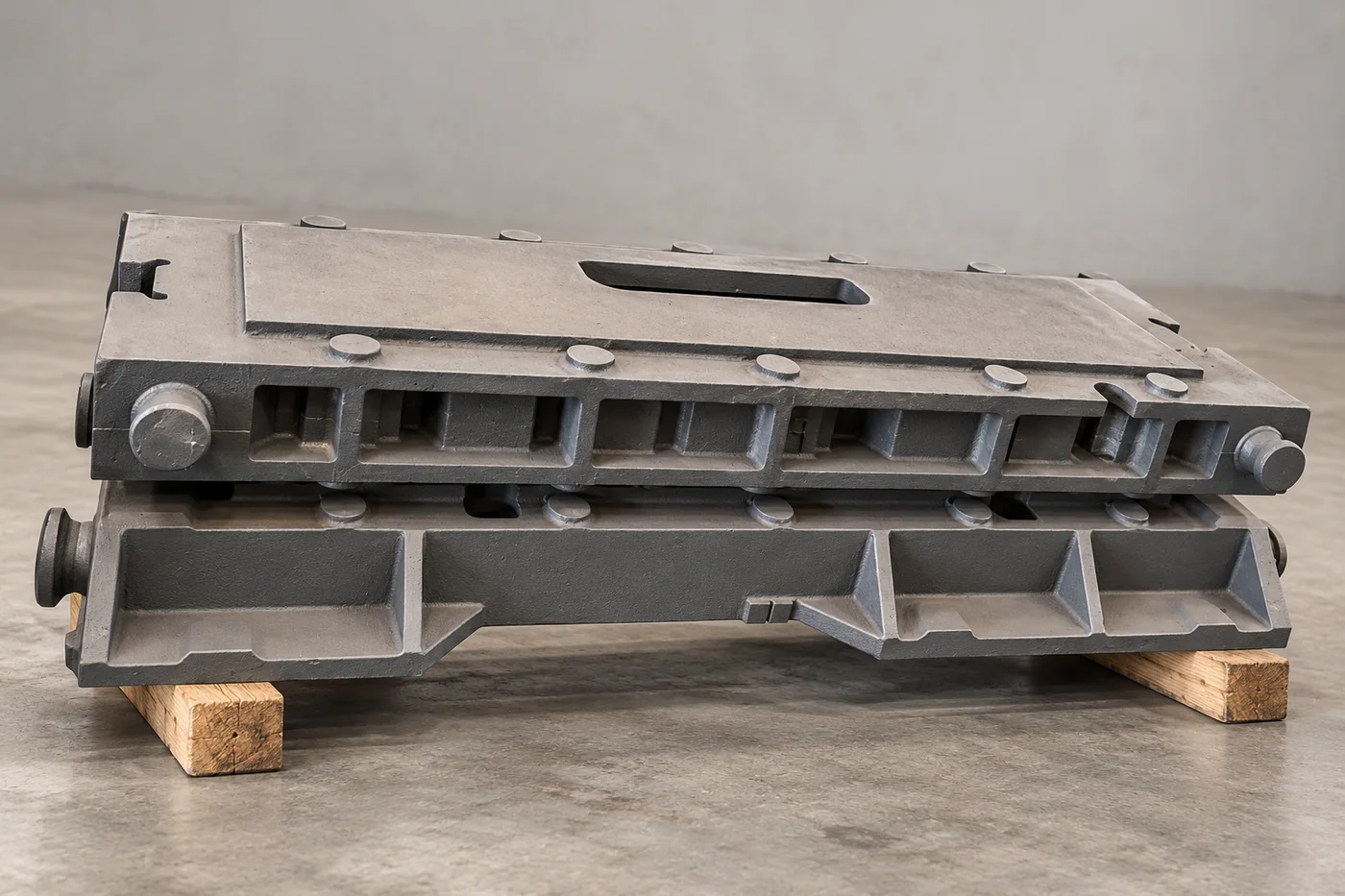
A machine bed must provide the structure and finished datums your equipment needs. Relia reviews resin-sand iron casting, applicable treatment and machining around the rail pads, support faces and anchor interfaces on your drawing.
RELIA · PRODUCT AND MANUFACTURING SUPPORT
Define the bed as a structural component
Relia's large-structure reference includes iron and steel descriptions, CNC machining and anticorrosive painting options. Relia's scope review focuses on your selected grade, structural sections and rail or bearing pads. The useful proposal identifies the actual casting route and finished features rather than applying a broad catalogue weight range to every machine bed.
| Your requirement | Relia product and service scope |
|---|---|
| Application | Machine beds, bases and industrial cast structures |
| Material selection | Specified iron or steel grade, not a generic metal label |
| Finished zones | Rail pads, support faces and anchor interfaces |
| Supply scope | Casting, agreed treatment, machining and anticorrosive protection |
02 · MATERIAL
Specify the iron grade and supplied condition
- Material definition
- Specify the exact grade and supplied condition.
- Relevant records
- Agree treatment and material evidence for the casting.
Bring the exact grade, governing requirement and material condition into the enquiry. We review any treatment and relevant records against the actual casting specification.
Technical notes
Review section transitions and machining allowance around the pads. State any required treatment or stabilization sequence and when final machining occurs. Applying an unqualified generic aging claim would not establish long-term accuracy for your particular geometry.
MANUFACTURING ROUTE · FEATURES AND CONTROL
Build the Mould Around Structural and Machining Needs
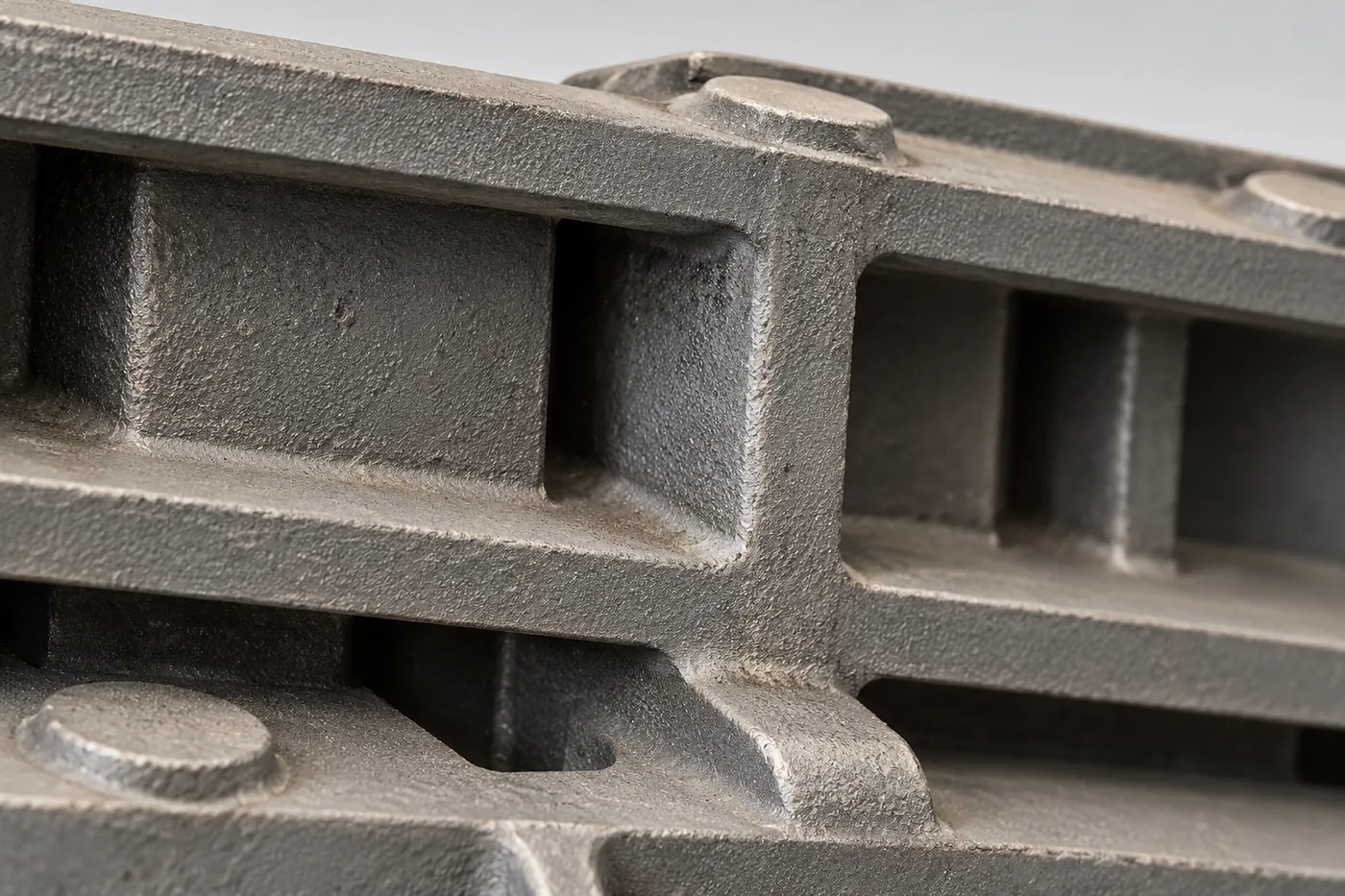
In a resin-bonded sand route, a pattern creates the mould shape and cores form internal spaces where needed. Mould preparation, metal feeding and section transitions influence the resulting structure. After pouring, cooling and shakeout, the casting is cleaned and proceeds through the agreed treatment and machining sequence. Relia's base enquiry identifies stock on rail pads, mounting faces and anchor interfaces. Rough machining, any specified stabilization step and final machining are placed in a route appropriate to the material and accuracy requirement.
- Pattern and coresBody shape, cavities and machining stock
- Mould and castBonded sand, feeding and controlled geometry
- Prepare and machineClean casting, agreed treatment and datum pads
- Inspect the baseFunctional face map and specified material checks
04 · FINISHED FEATURES
Plan the foundation surfaces from common datums
- Common datums
- Relate locating faces, rail pads and mounting points.
- Machining allowance
- Define stock and finished inspection requirements together.
Mark the locating faces, mounting points and other areas requiring machining. Keep their relationships and stock allowance visible so the finished bed can be inspected consistently.
05 · INSPECTION
Agree the records needed for acceptance
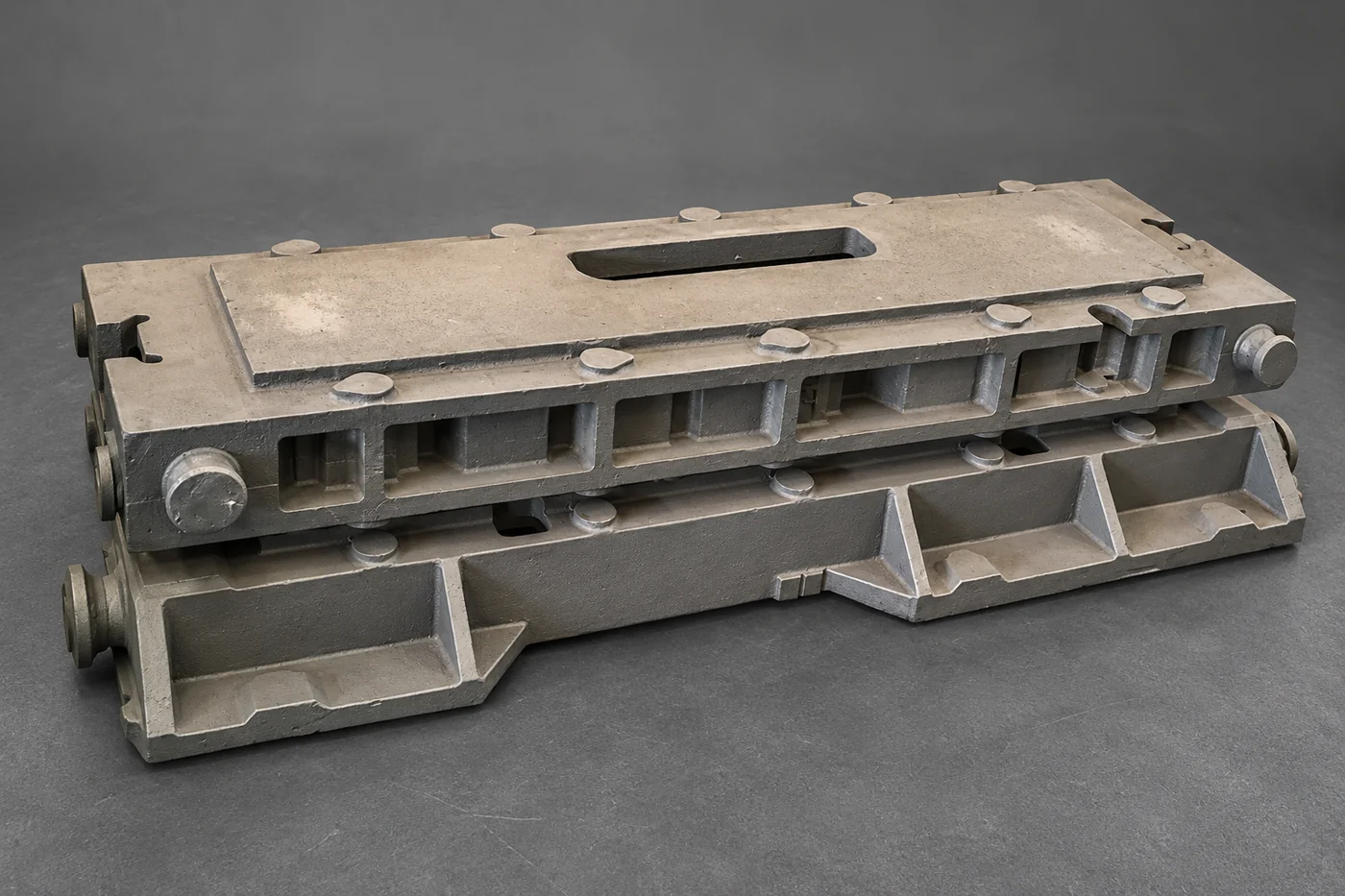
Agree a dimensional map using the machine's functional datums, plus material and internal-soundness checks where specified. The product description mentions coordinate measurement and laboratory testing; identify the actual features and records required. Protect finished pads and lifting interfaces during transport.
06 · DELIVERY
Plan transport around the actual bed
- Actual envelope
- Provide dimensions, destination and handling constraints.
- Transport protection
- Agree supports, surface protection and order responsibilities.
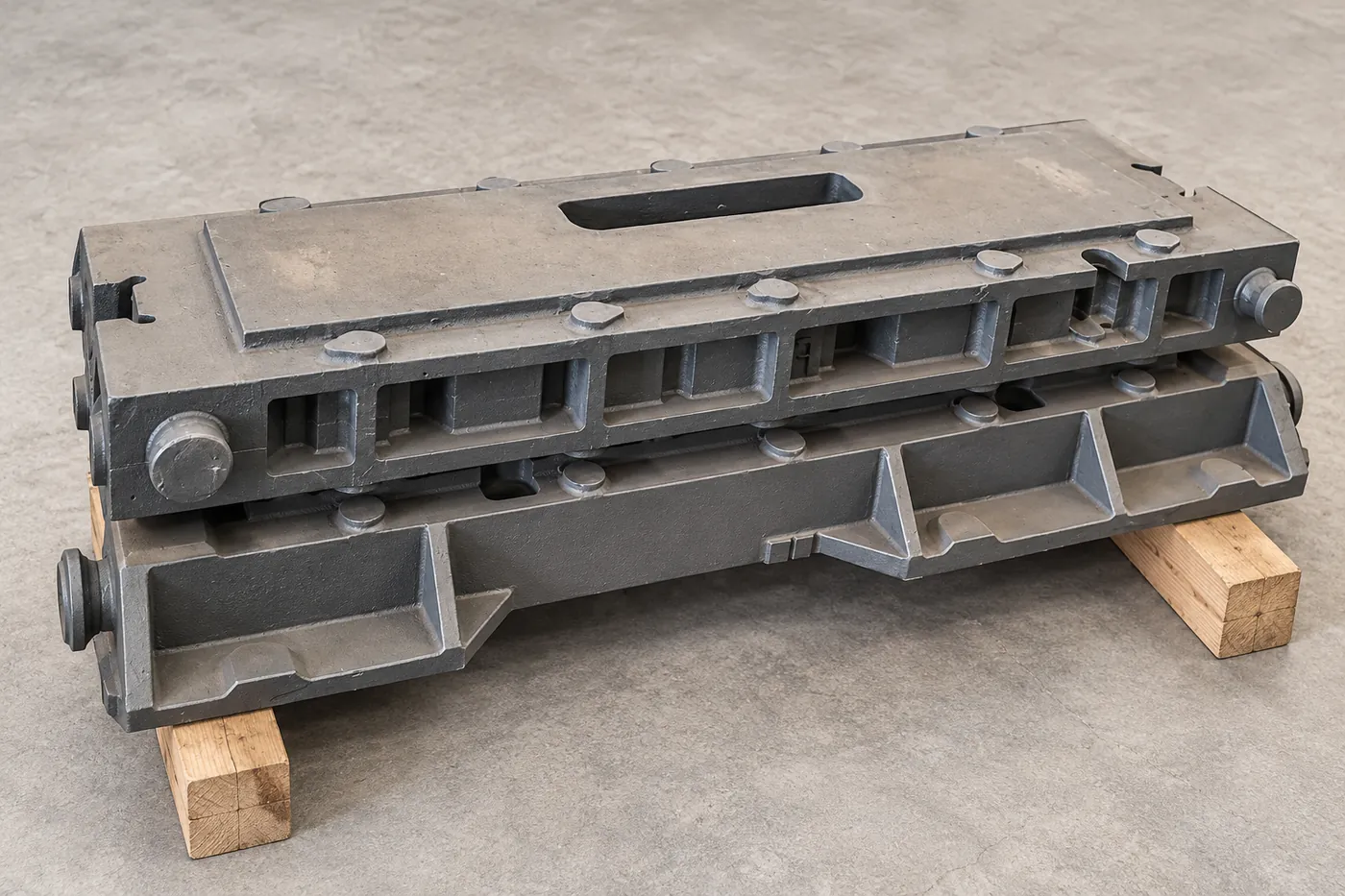
Share the dimensions, destination and handling constraints. We can discuss protection and supports for the component, with packing and transport responsibilities agreed for the order.
07 · QUOTATION
Keep the casting and machining boundary visible
State the delivered condition and operations included. A raw bed and a finish-machined base need different quotation and acceptance packages, even when their outer form is similar.
Technical notes
Identify rail pads, bearing supports, anchor locations and lifting or handling points. The service loads and accuracy relationships help separate structural sections from machined mounting zones. A base should be evaluated as a stable machine interface rather than only a heavy casting.
| Deliverable | Scope to establish |
|---|---|
| Casting | Material, form and surface condition |
| Machined base | Finished datums and interfaces |
| Delivery | Protection and agreed handling terms |
RELIA · YOUR NEXT PROJECT
Send the bed model and required delivered condition
Share the model, iron specification, finished-datum drawing and quantity. Include the acceptance and handling requirements. We can review the resin-sand casting and machining scope for the actual machine bed.
Start with these project details
- Bed model and iron specification
- Finished datums and machining zones
- Quantity and acceptance records
- Handling and destination requirements
Shuyuan Road, Qingdao, Shandong, China
