
CUSTOM MANUFACTURING · PROJECT REVIEW
Move a Machined Housing to Casting as Production Grows
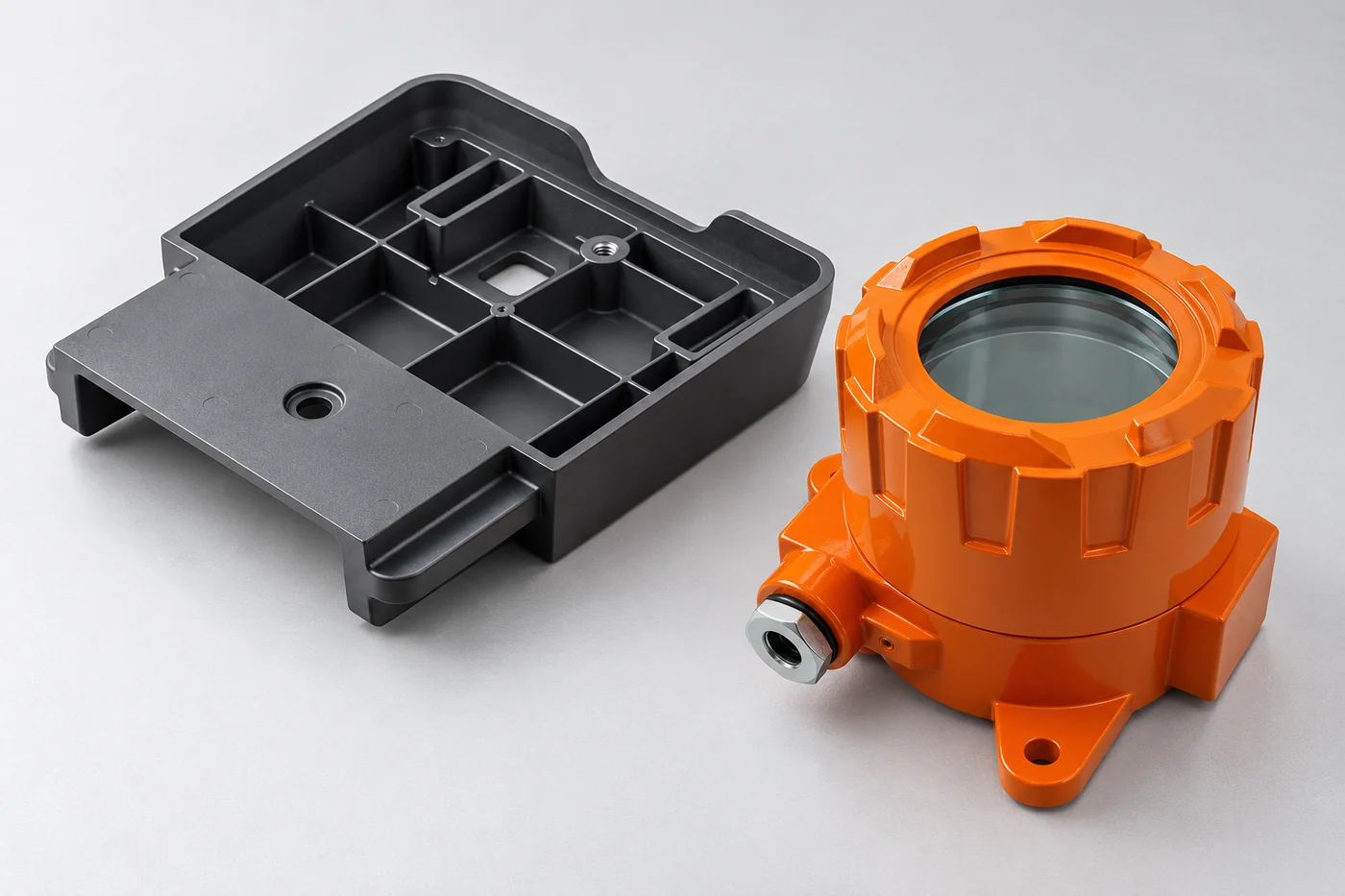
Relia reviews a cast alternative when a machined housing moves toward repeat production. The decision combines design maturity, tooling, order pattern and the bores, faces or threads that still need machining after the shape is cast.
RELIA · PRODUCT AND MANUFACTURING SUPPORT
Retain the current housing as the comparison baseline
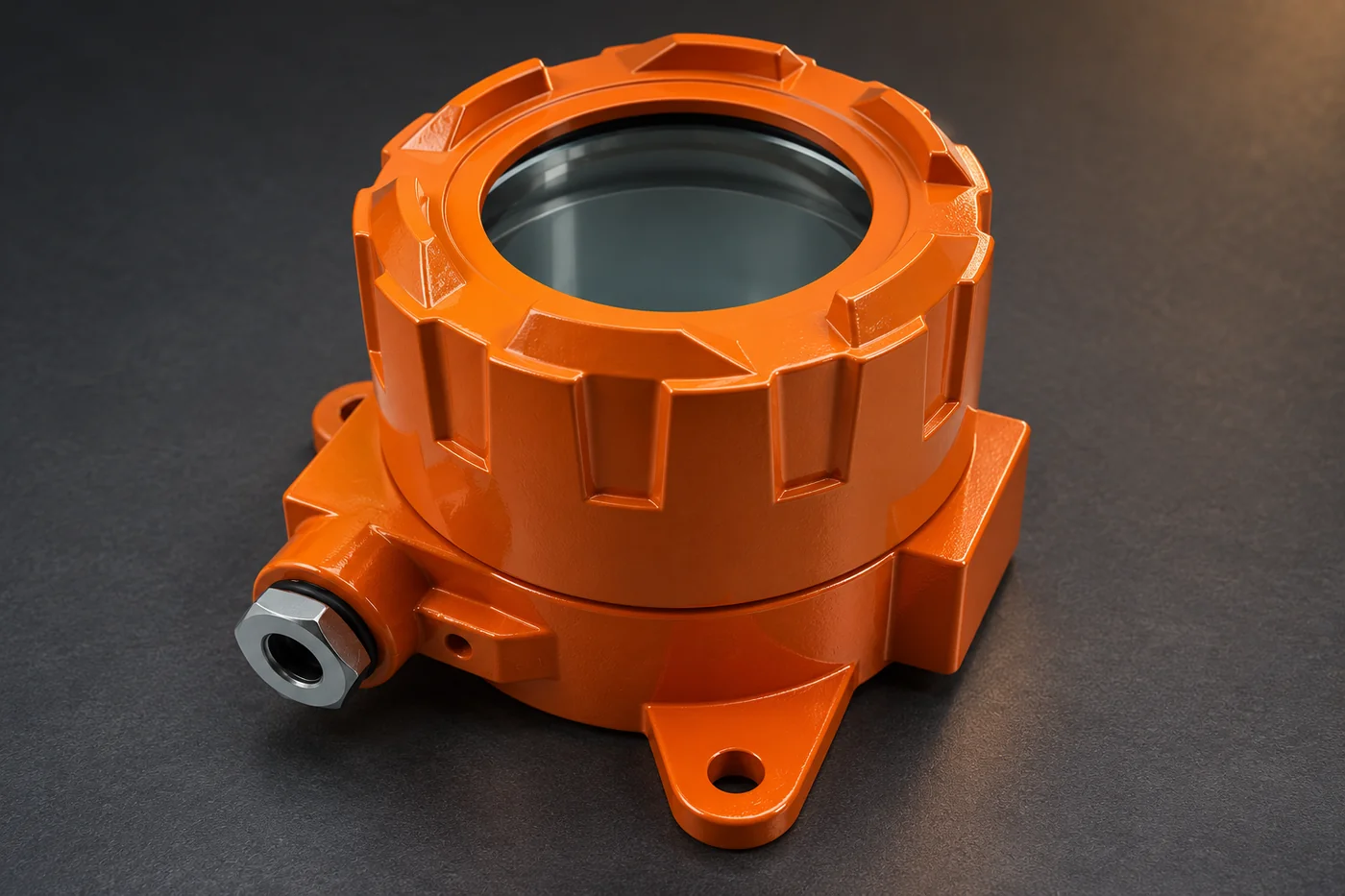
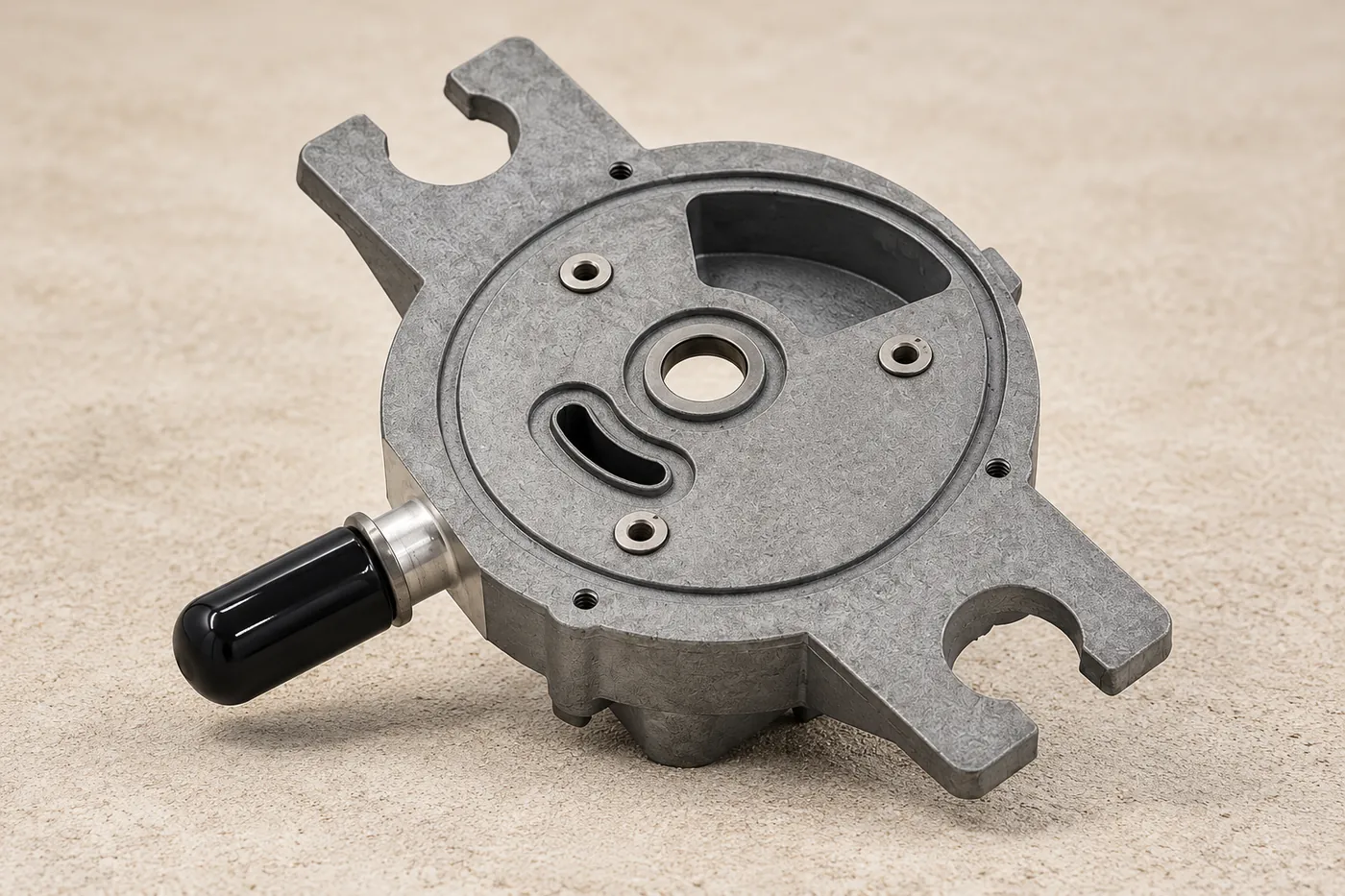
Relia's aluminium housing range includes ADC12/A380/A383 enclosure references and pressure die-cast gearbox housings with machining. Relia's review combines the repeat quantity, expected design changes and finished interfaces. This gives your engineering and buying teams a clearer basis for deciding whether production tooling is useful for this housing.
| Your requirement | Relia product and service scope |
|---|---|
| Alloy references | ADC12, A380 and A383 aluminium enclosure options |
| Business input | Stable design, batch size and annual demand |
| Cast features | External form, ribs and bosses |
| Finished features | Datumed bores, mating faces, holes and threads |
02 · TOOLING READINESS
Check design maturity before committing to tooling
- Stable geometry
- Identify frozen features before tooling is committed.
- Order pattern
- Include expected batches and likely design changes.
A stable design and a changing prototype create different tooling decisions. Tell us which features are frozen and where revisions remain likely. The enquiry should include expected order patterns as well as the initial quantity, so the route review reflects the work still needed before repeat manufacture.
Technical notes
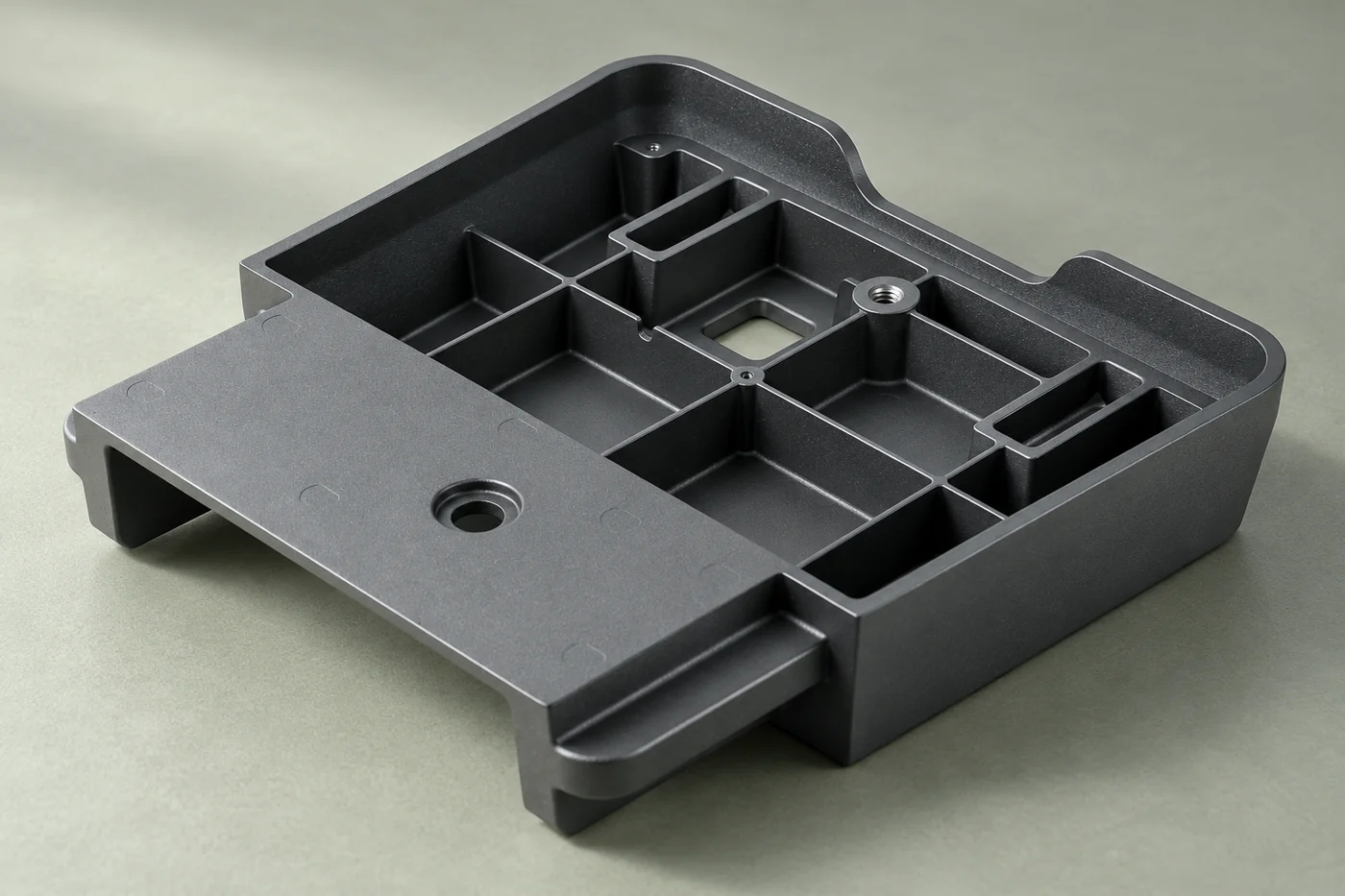
Redesign for the chosen casting process: ribs and bosses need practical transitions, tool access and ejection. Keep critical faces and holes tied to datums that can be used during machining. The enclosure's wall thickness and draft should follow the reviewed geometry rather than a universal minimum-wall claim.
MANUFACTURING ROUTE · FEATURES AND CONTROL
Turn a Machined Block Into a Cast Near-Net Body
Casting is most useful when the tool creates meaningful shape that would otherwise be removed from solid material. For pressure die casting, the reusable die needs a filling, venting, cooling and ejection arrangement suited to the enclosure. Relia's machining review reserves stock on the locating bores and sealing faces and checks access around ribs or bosses. Moving those features into the cast design also requires practical draft and transitions rather than copying every square machined corner.
- Retain the finished modelAssembly geometry and critical dimensions
- Design the cast shapeWalls, ribs, bosses and tool-release features
- Plan CNC finishingDatums, stock and tool access
- Compare the trialFinished cost, fit, finish and repeat demand
04 · FINISHED FEATURES
Keep precision interfaces in the machining plan
- Near-net shape
- Review ribs, bosses and the main housing form.
- Finished geometry
- Keep critical bores, faces and threads in the machining scope.
Moving the starting shape to casting does not remove the need for precise finished interfaces. Identify the faces, bores, threads and datums that control the housing in service. We review their machining access and allowance alongside the cast form, with inspection planned for the finished condition.
05 · COMMERCIAL REVIEW
Compare the total delivered scope
Tooling, casting, machining, finishing, inspection and packing can move differently between the two routes. Keep their assumptions explicit, including demand and any allowance for development. A route-comparison quotation gives your team a usable basis for assessment without promising a universal break-even quantity or saving.
| Cost area | Align between proposals |
|---|---|
| Preparation | Tooling and development scope |
| Manufacture | Blank plus required machining |
| Acceptance | Finish and verification requirements |
| Delivery | Packing and agreed destination basis |
06 · DESIGN CONFIRMATION
Validate the cast housing before release
- Trial housing
- Check the material, dimensions and assembly fit.
- Production baseline
- Retain the accepted route and drawing revision.
Use the trial cast version to check the material, dimensions and assembly requirements that matter to the housing. Add leakage or functional tests only where they apply to the project. Retain the accepted route and drawing revision so the successful review becomes a clear production reference.
07 · PROJECT DECISION
Keep the route decision open until the evidence is clear
Check the first casting before and after machining, and inspect again where finishing affects the assembly. For sealed housings, define the assembled leak test separately. Our housing listing's general tolerance field is not a substitute for the final casting and machining requirements on your drawing.
Technical notes
Compare expected repeat volume with tooling cost, material removal and design stability. Include annual demand, batch sizes and anticipated revisions. Casting is harder to justify when the geometry changes frequently or when most of the surface will still need extensive machining.
CONNECTED BUYING GUIDES
Continue with the next project decision
Follow the related component and purchasing guides, or open the catalogue reference to carry this requirement into a specific project enquiry.
RELIA · YOUR NEXT PROJECT
Bring the current drawing and expected demand
Share the existing housing specification, order quantities and the interfaces your assembly relies on. Include the design changes still expected and the checks required for a cast version. We can review the proposed route and its quotation assumptions alongside your current manufacturing scope.
Start with these project details
- Existing housing specification
- Stable and changing features
- Batch and annual quantities
- Critical interfaces and approval checks
Shuyuan Road, Qingdao, Shandong, China
