
CUSTOM MANUFACTURING · PROJECT REVIEW
Custom Bronze Crusher Bushings and Flanged Sleeves
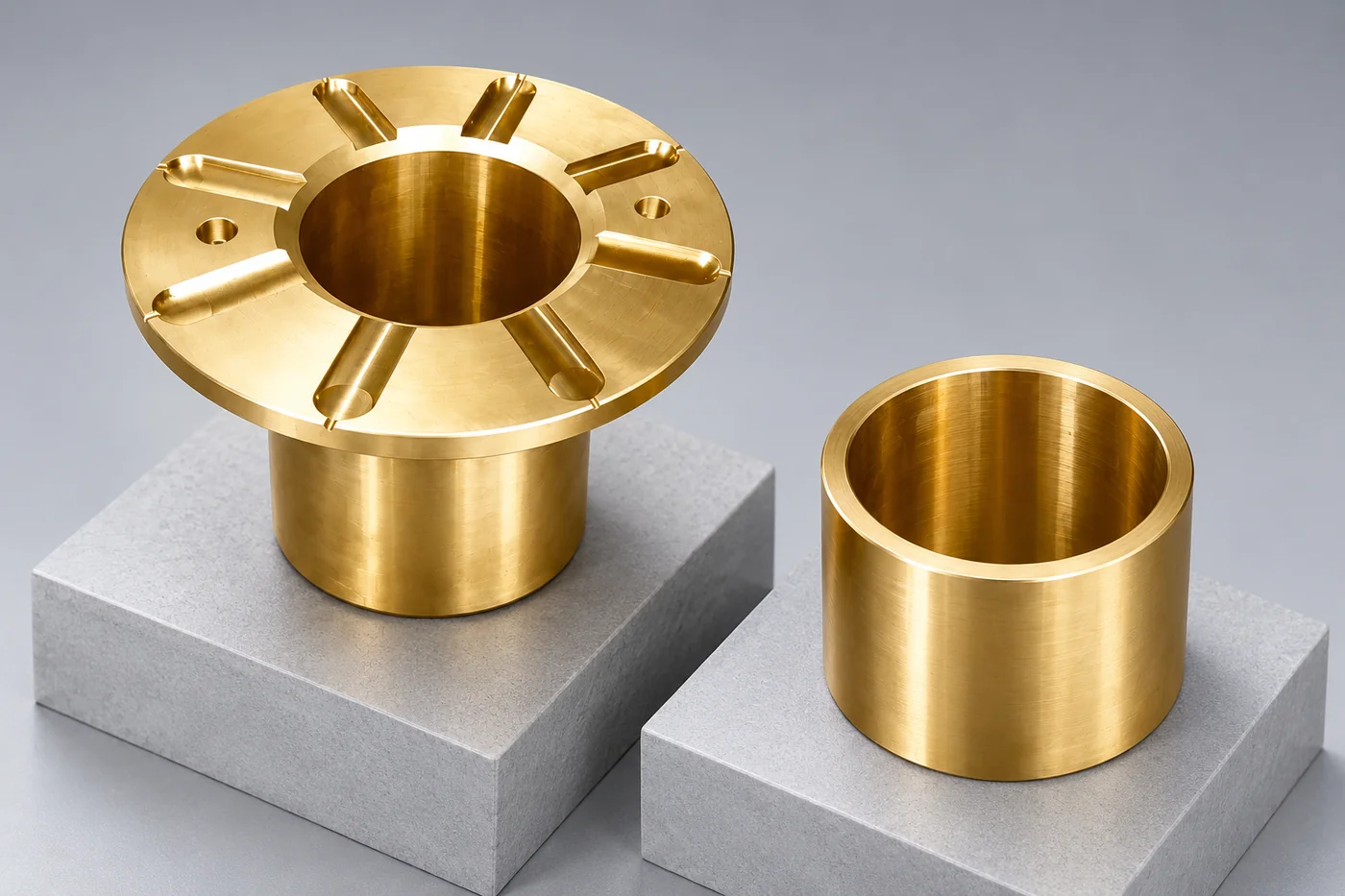
A crusher bushing must match the shaft, housing and lubrication conditions. Relia reviews the specified copper alloy, casting blank and finish-machined diameters, using the actual drawing and duty information to define a practical replacement enquiry.
RELIA · PRODUCT AND MANUFACTURING SUPPORT
Identify the existing bushing and its wear
Relia's flanged-sleeve reference specifies ZCuSn6Zn6Pb3, centrifugal casting and oil lubrication, with ±0.05 mm inside/outside diameter fields. Relia connects these item-level facts to the actual crusher fit and wear duty. The alloy is lead-containing, so a different material requirement must be identified explicitly rather than assumed from the general bronze name.
| Your requirement | Relia product and service scope |
|---|---|
| Sleeve reference | ZCuSn6Zn6Pb3; centrifugal casting |
| Lubrication | Oil on the referenced sleeve |
| Dimension reference | ±0.05 mm ID/OD fields; 103 mm listed length |
| Selection inputs | Fit, load, speed, temperature and lubrication |
02 · MATERIAL
Select the exact copper alloy
- Exact alloy
- Identify the required copper-alloy grade and condition.
- Service suitability
- Review alternatives against load, lubrication and operating duty.
Bronze and brass descriptions cover different alloys. Provide the required grade and material condition, with any proposed alternative reviewed against your application rather than visual appearance.
Technical notes
Retain the specified copper-alloy grade and its applicable standard. ZCuSn6Zn6Pb3 contains lead; it is not a lead-free bronze option. Bronze families differ in strength, conformability and lubrication needs, so changing to a harder alloy is not automatically an improvement.
MANUFACTURING ROUTE · FEATURES AND CONTROL
Create a Sleeve Blank and Machine the Mating Diameters
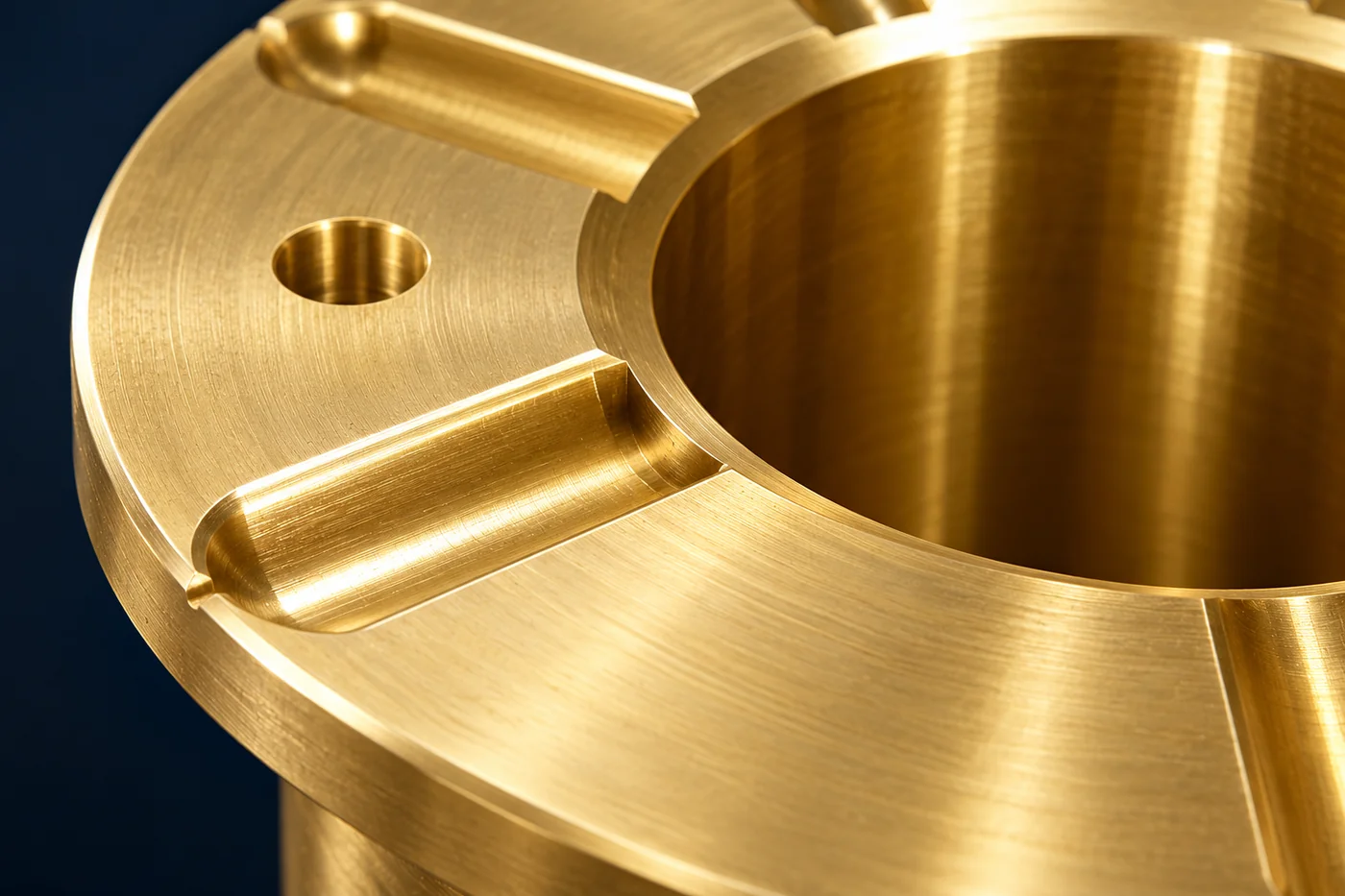
A centrifugal-casting route forms the annular blank in a rotating mould, after which machining establishes the required bore, outside diameter and faces. Relia's sleeve enquiry keeps allowance for the finished dimensions and any flange, holes or lubrication features. Bore and outside-diameter relationships matter because both the shaft and housing constrain the installed part. Clearance, oil supply and the mating shaft condition are reviewed together; simply making the bore closer or the alloy harder does not solve every wear problem.
- Define service and fitsLoad, speed, lubrication and mating dimensions
- Cast the annular blankSpecified copper alloy and centrifugal route
- Turn the working geometryID, OD, faces, flange and drawing features
- Approve the sleeveMaterial identity and installed-fit requirements
04 · MANUFACTURE
Review the blank and finish-machining route
- Casting blank
- Allow stock for the required finished diameters.
- Usable bushing
- Define bores, outside fits, flange and lubrication grooves.
A casting reference and a finished bushing have different dimensional requirements. We review stock allowance, machining and any specified grooves against the actual part drawing.
05 · ACCEPTANCE
Check material and fit before release
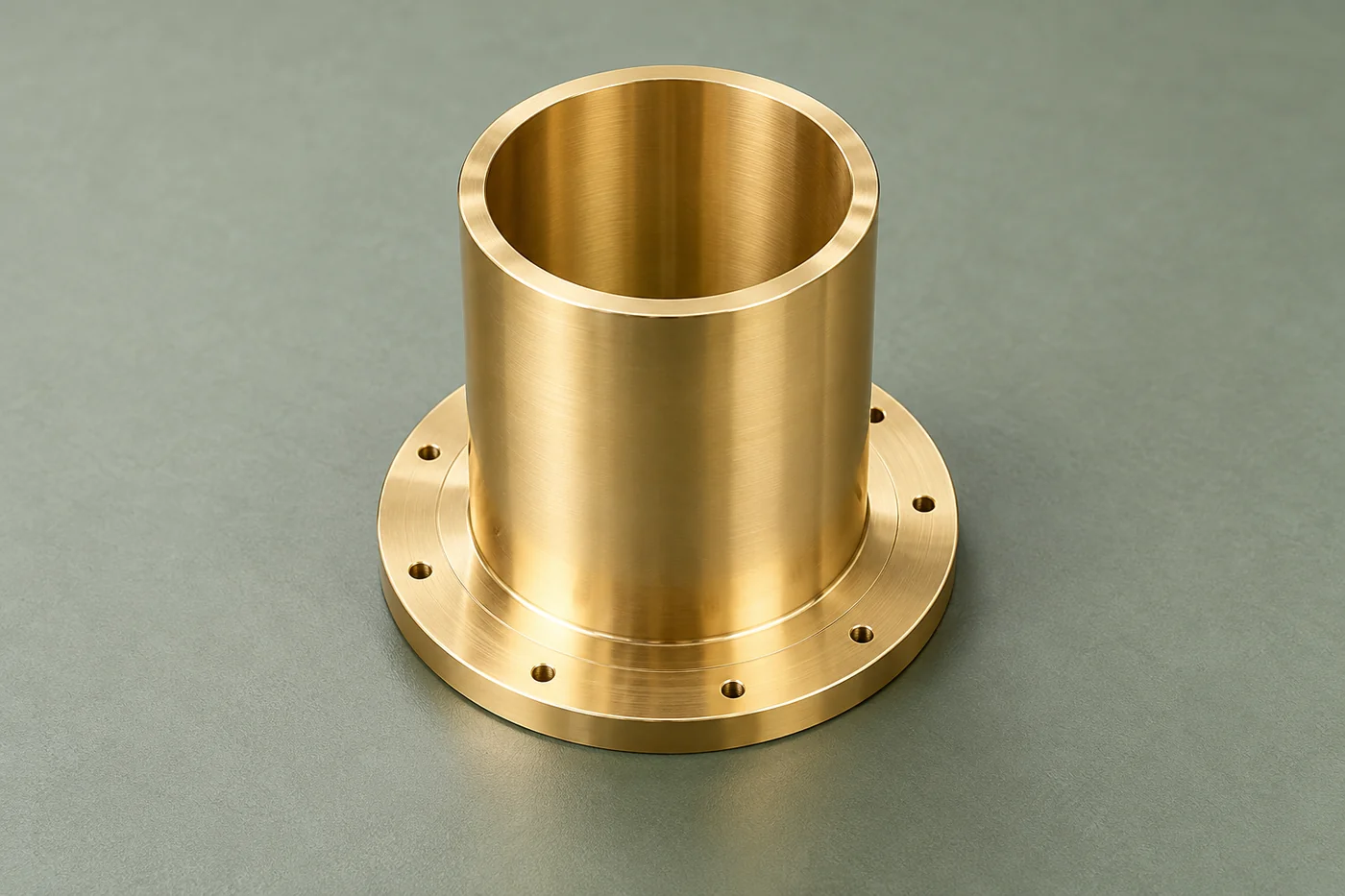
Measure bore, outside diameter, flange thickness and concentric relationships from the drawing. Agree material and hardness evidence without using the listing's implausible hardness field as a design value. Protect the machined surfaces and keep the approved alloy identity with the order.
06 · FIRST PART
Approve the replacement in the intended fit
- Mating assembly
- Review the finished bushing with shaft and housing fits.
- Retained approval
- Record corrections before the replacement becomes the repeat reference.
Review the finished bushing with the relevant shaft and housing requirements. Record accepted corrections before retaining the part as the reference for repeat orders.
07 · PURCHASING
Keep the repeat-order requirement complete
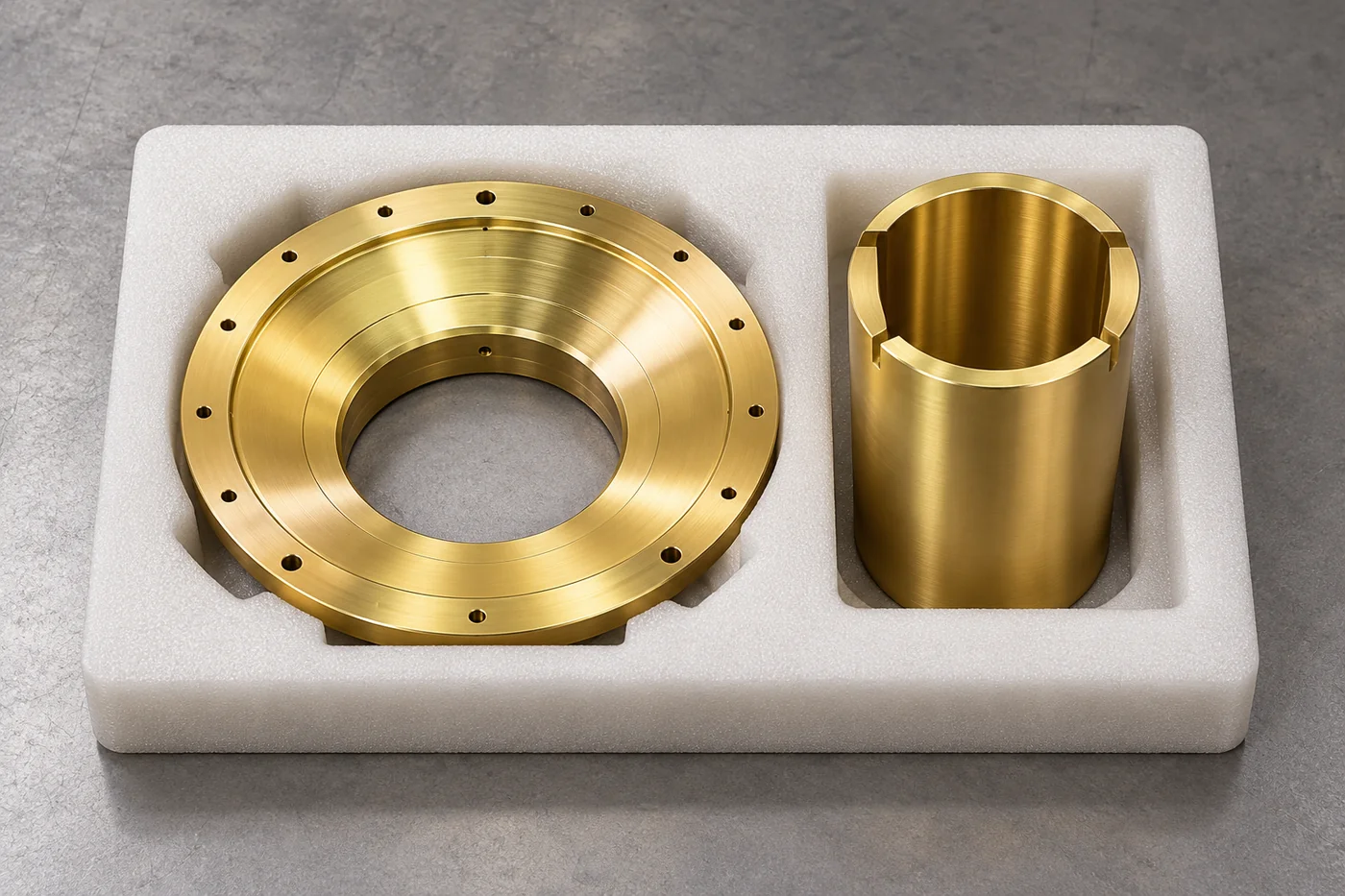
Retain the alloy, drawing revision, surface condition and required records together. Quantity and packing should follow the identified bushing rather than a broad copper-alloy component category.
Technical notes
Provide shaft and housing dimensions, load, speed, lubrication and operating temperature. Include the wear pattern on the current bushing. A sleeve that fits cold can behave differently under heat or with inadequate oil supply, so the working clearance needs an assembly basis.
| Record | Retain |
|---|---|
| Material | Selected alloy and condition |
| Geometry | Accepted drawing and fits |
| Order | Quantity, protection and required evidence |
RELIA · YOUR NEXT PROJECT
Share the original fits and required alloy
Send the bushing drawing, mating information, material specification and quantities. Add wear photos and the relevant duty context. We can review the casting and finish-machining scope for the replacement.
Start with these project details
- Bushing and mating drawings
- Specified copper alloy
- Load, lubrication and wear context
- Quantity and finished-fit requirements
Shuyuan Road, Qingdao, Shandong, China
