
CUSTOM MANUFACTURING · PROJECT REVIEW
From Welded Brackets to One-Piece Cast Components
A one-piece casting can be worth reviewing when a welded bracket needs redesign. Relia assesses the cast geometry, finished interfaces and manufacturing scope with your team, while your design requirements remain the basis for validation.
RELIA · PRODUCT AND MANUFACTURING SUPPORT
Begin with the fabricated assembly as it works today
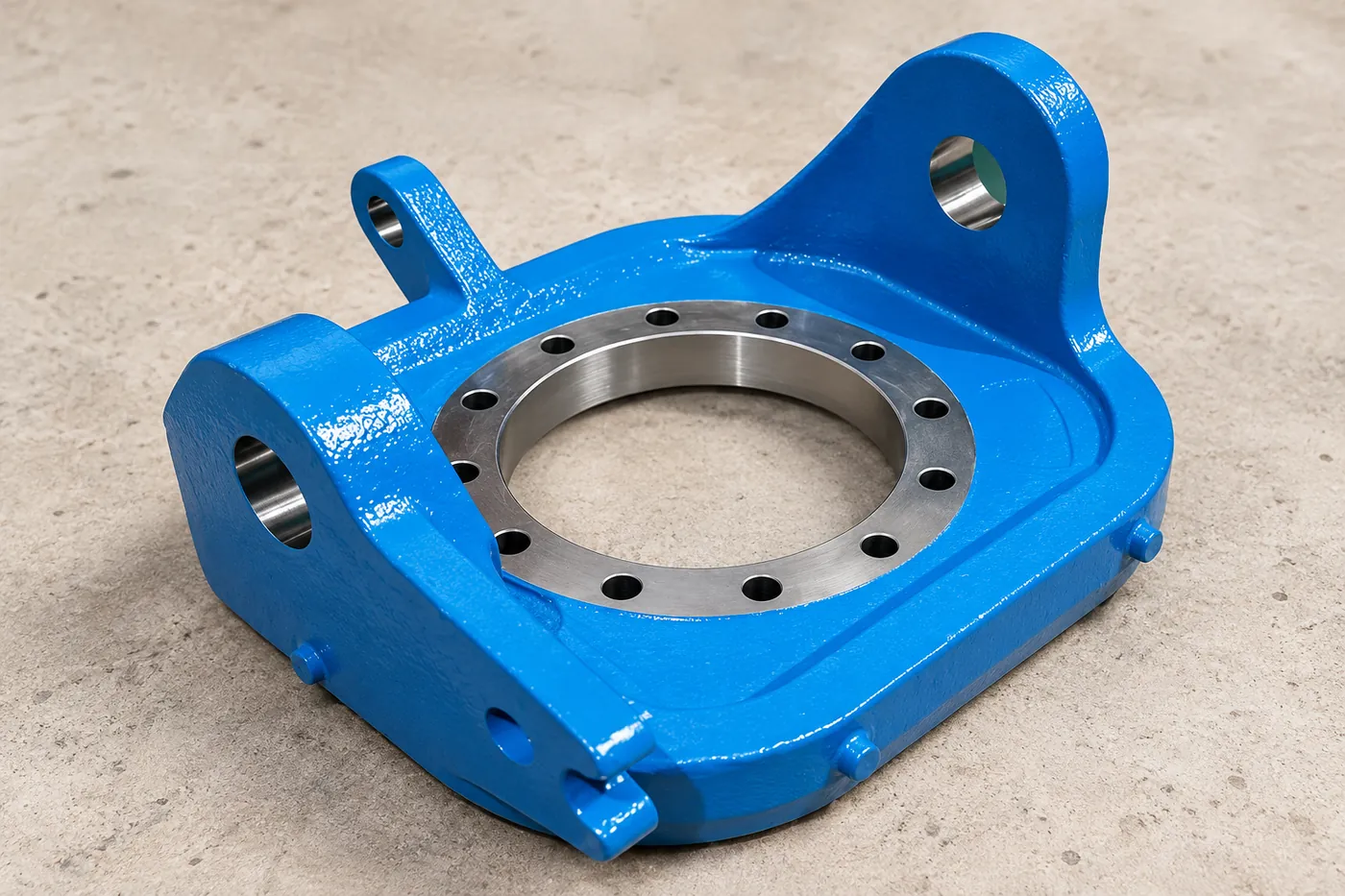
Relia's relevant products include 304/316 investment-cast mounting brackets and carbon-steel construction-machinery connectors with CNC machining. Relia's conversion review connects these process options to your load path and finished mounting geometry. The useful result is a defined component package, with material, machined interfaces and finish considered alongside the removal of fabricated joints.
| Your requirement | Relia product and service scope |
|---|---|
| Stainless route | Investment casting, machining and polishing |
| Carbon-steel route | Investment casting plus CNC; shot/sand-blasted finish |
| Design focus | Load path, fillets, section transitions and mounting datums |
| Decision basis | Finished cost and validated function of the revised design |
02 · FUNCTIONAL GEOMETRY
Preserve the features that carry the duty
- Retained function
- Keep mounting points, clearances and load paths visible.
- Revised form
- Review the proposed casting against those requirements.
The mounting positions and load path need to remain visible as the form changes. Identify the holes, support faces and clearances that your design depends on. Structural design and application approval belong to the responsible project team, with the proposed cast geometry reviewed against those requirements.
Technical notes
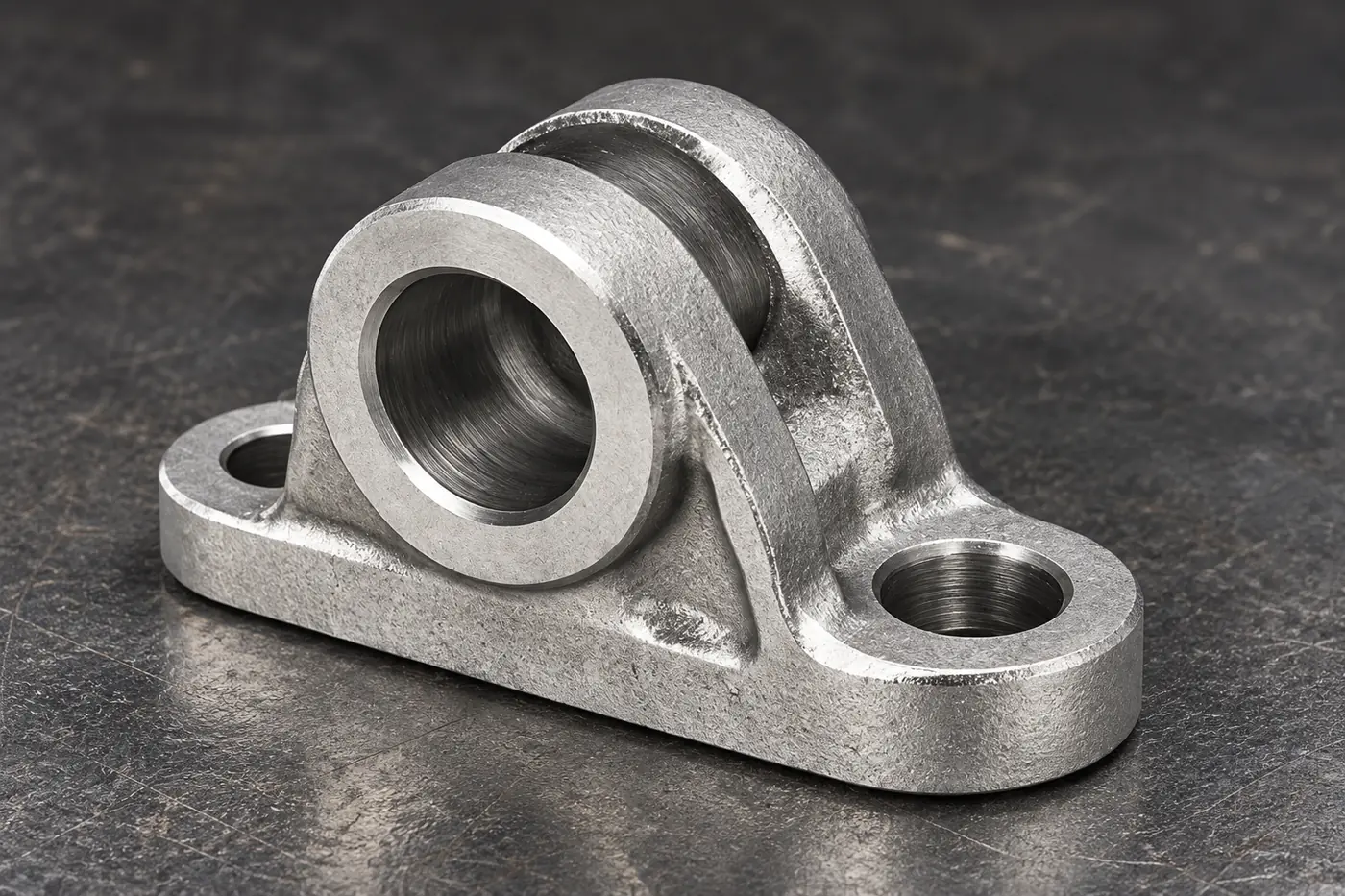
Our carbon-steel connector reference lists investment casting plus CNC machining and a 0.1–0.5 mm tolerance field. The stainless bracket lists CT4–9 casting fields. Neither replaces a drawing-defined hole position or load-bearing fit; reserve closer machining for the interfaces that actually need it.
MANUFACTURING ROUTE · FEATURES AND CONTROL
Replace Welded Joints With Cast Geometry Deliberately
The cast model needs its own transitions and feeding strategy; reproducing weld beads does not create a sound casting design. A sacrificial pattern defines the investment-cast body, ceramic shell forms the mould, and metal casting is followed by cleaning and selected treatment. Relia's machining scope then establishes the pin bores and contact faces. The drawing review must preserve the intended load path while considering thick junctions, abrupt changes and tool access.
- Review the assemblyLoads, joined pieces and functional interfaces
- Redesign the cast bodyFillets, section changes and machining stock
- Cast and finishSelected alloy, cleaning and CNC interfaces
- Validate the designFit and the required load/durability assessment
04 · PURCHASING BASIS
Keep the complete cost scope in the comparison
- Finished-part comparison
- Include tooling, machining, finish and verification.
- Investment decision
- Compare the complete scope at your order quantities.
Compare the work needed to deliver the usable component, including tooling, casting, machining, finishing and acceptance. Some assembly work may change, while new preparation work may be required. A useful quotation makes those differences visible so your team can assess the conversion without relying on a fixed saving percentage.
05 · PROTOTYPE PLAN
Validate the new component as a new design
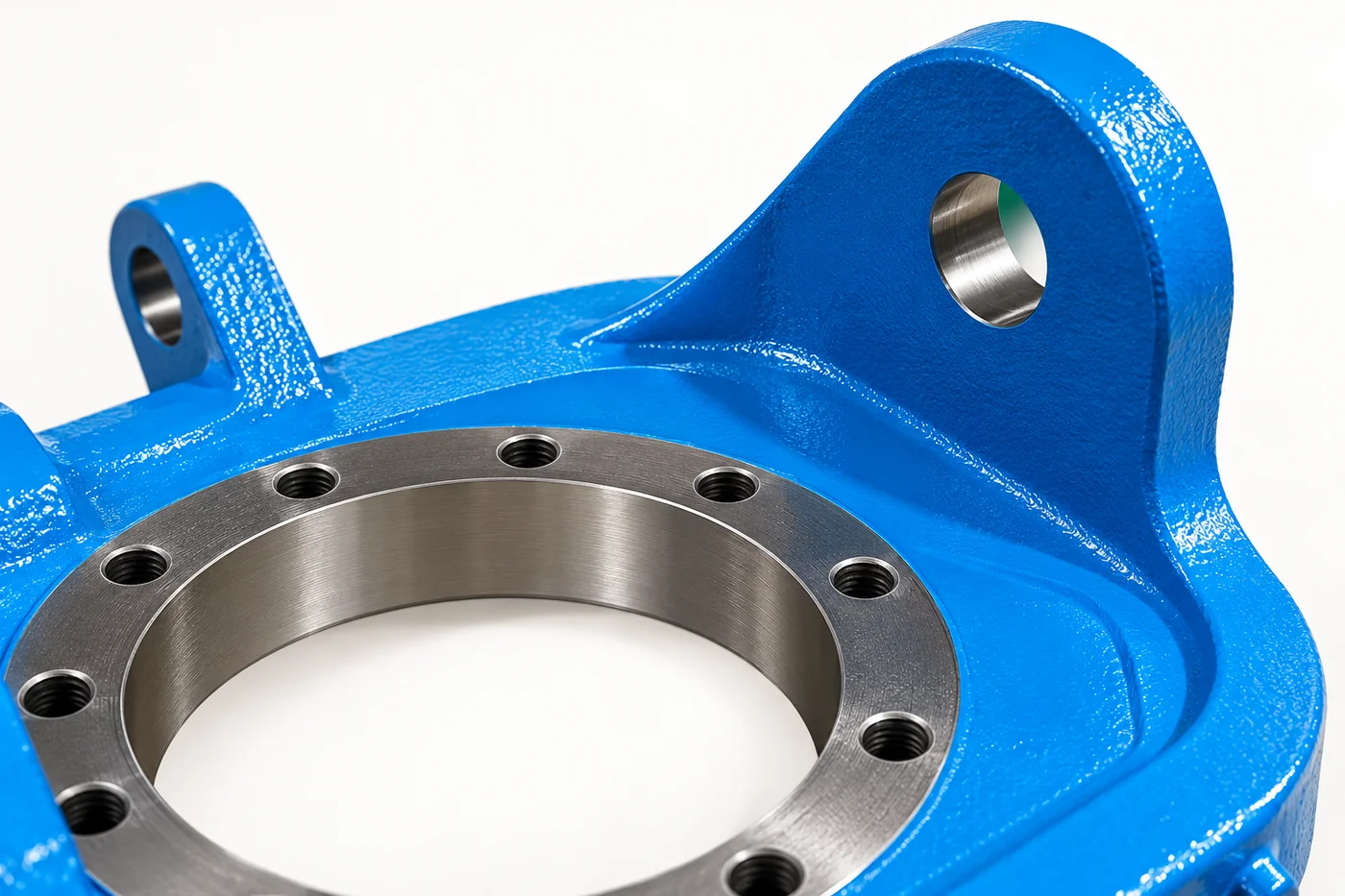
Compare mass, machining time, assembly fit and the intended service checks on an approved sample. A one-piece appearance does not prove higher strength. The design authority should approve changed sections and any fatigue or load validation required for the application.
06 · REVISION CONTROL
Keep design decisions attached to the model
- Accepted changes
- Attach manufacturing decisions to a controlled model.
- Tool release
- Approve revisions before changes reach the tooling.
Record the manufacturing suggestions your team accepts and identify the model they apply to. Tooling changes and later drawing revisions should follow the same visible approval route. Clarifying design ownership and permissions at the beginning helps both teams work from an authorised and controlled technical package.
07 · CONVERSION DECISION
Decide from the project evidence
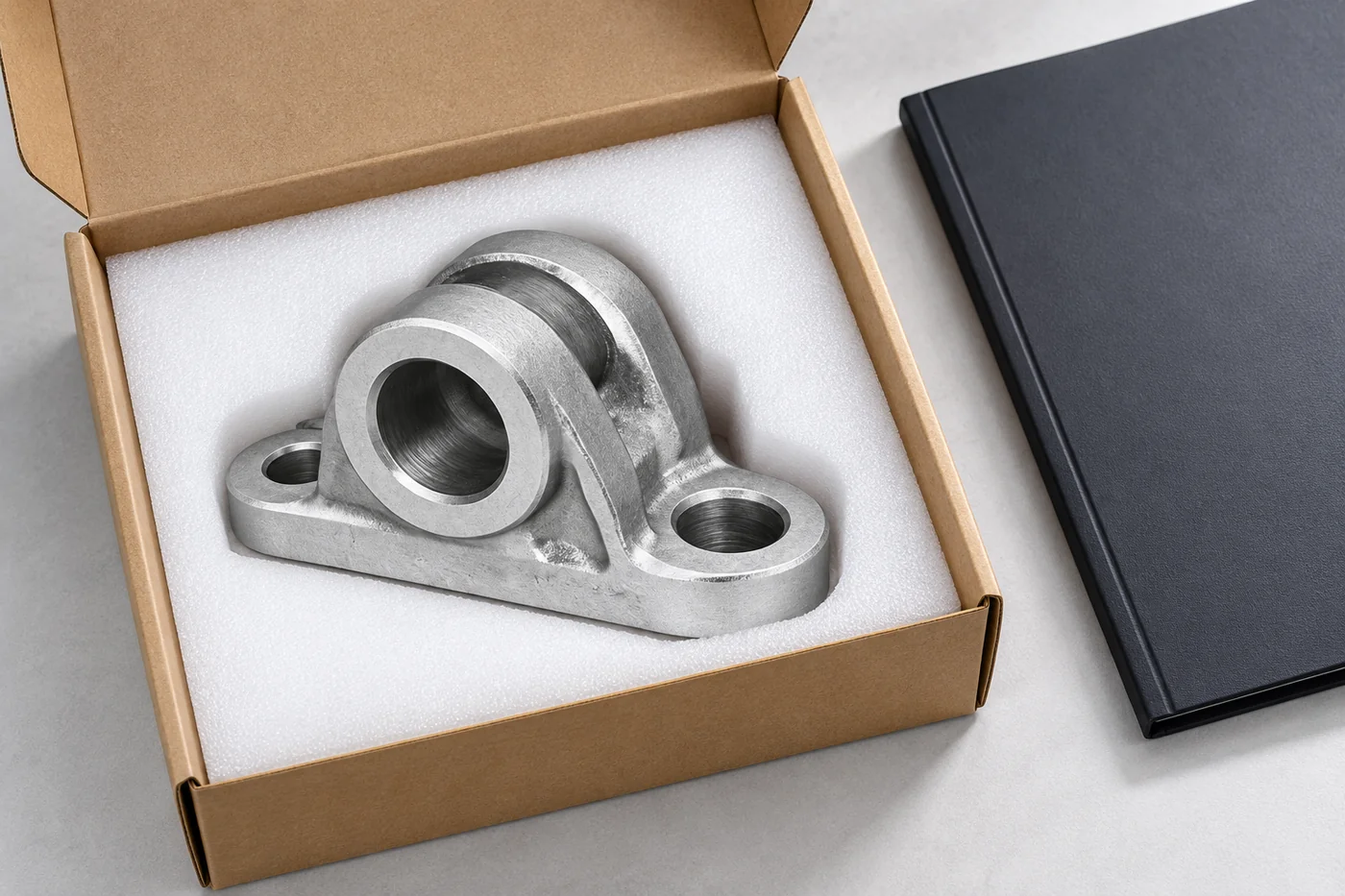
The conversion is useful when it addresses your original objective and meets the accepted requirements. Bring the manufacturing proposal, quotation scope and prototype review together. Your team can then compare the cast route with the current assembly on the basis of the same functional deliverable.
Technical notes
Start with the welded assembly drawing, loading directions and mounting points. Replacing plates and welds with a casting changes wall transitions and local stiffness. Preserve the functional interfaces while reviewing fillets, section changes and access for machining rather than tracing every weld bead into the new model.
| Decision area | Reference to compare |
|---|---|
| Function | Required duty and assembly interfaces |
| Manufacture | Tooling, route and finished features |
| Commercial scope | Complete delivered component |
| Approval | Prototype evidence and accepted revision |
RELIA · YOUR NEXT PROJECT
Share the assembly and the change you want to achieve
Send the current assembly drawing, material requirements, order quantities and the reason for considering a cast version. Highlight the mounting interfaces and validation requirements. We can review the geometry and the proposed manufacturing scope with your engineering and purchasing teams.
Start with these project details
- Existing welded assembly
- Proposed material and quantities
- Mounting and load requirements
- Validation and cost-comparison scope
Shuyuan Road, Qingdao, Shandong, China
