
CUSTOM MANUFACTURING · PROJECT REVIEW
Programmable Burnout Ovens for Defined Jewelry Flask Loads
A burnout oven should suit the actual flask load and material cycle. Relia reviews chamber space, spacing, power and programme requirements, with capacity and any temperature checks defined for the configuration you plan to use.
RELIA · PRODUCT AND MANUFACTURING SUPPORT
Define the flask and material workflow
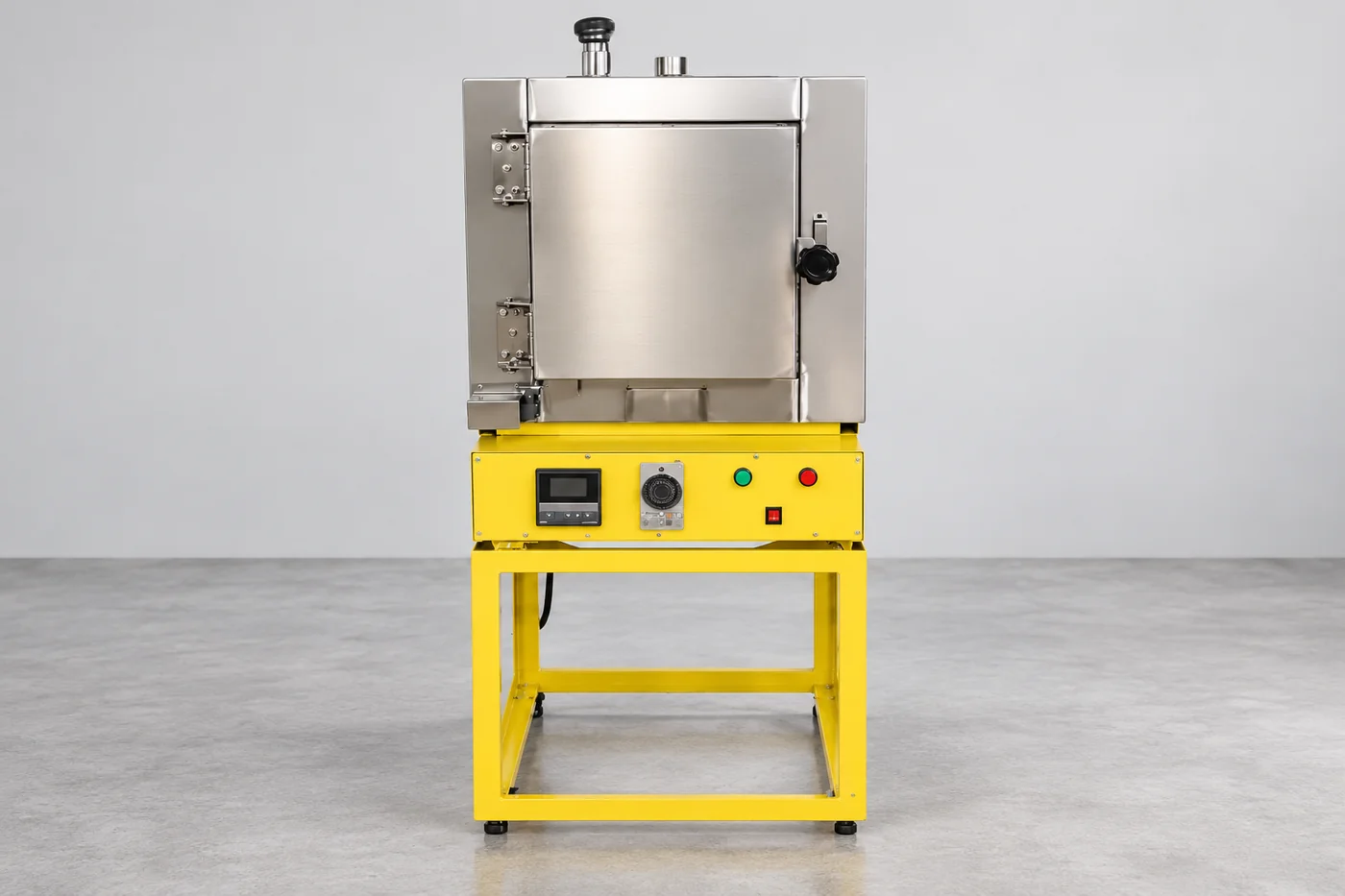
Relia's oven reference lists a 46 × 45 × 55 cm chamber, 9 kW and 380 V, with an 18-flask reference based on 4 × 9-inch flasks. Relia's enquiry connects that configuration to your batch layout, pattern and investment. The 1,100°C maximum-temperature field describes the unit's range and does not replace the powder's approved burnout limit.
| Your requirement | Relia product and service scope |
|---|---|
| Chamber reference | 46 × 45 × 55 cm |
| Utilities | 9 kW; 380 V on the referenced oven |
| Capacity reference | 18 flasks at the listed 4 × 9-inch basis |
| Process control | Material-specific ramp, holds, load spacing and ventilation |
02 · CAPACITY
Compare usable chamber and loading space
- Actual flasks
- Provide dimensions and the intended loading arrangement.
- Usable chamber
- Review spacing instead of nominal flask count alone.
A chamber dimension and a nominal flask count need their loading context. Review flask spacing and the actual configuration instead of assuming that every quoted count applies to your flask size.
Technical notes
Choose controls for the ramp, holds and cooling stages required by the actual investment and pattern material. An oven's maximum temperature is not the recommended burnout temperature. Wax and resin patterns can require different schedules, ventilation and compatible mould materials.
MANUFACTURING ROUTE · FEATURES AND CONTROL
Remove the Pattern With a Load-Appropriate Heating Cycle
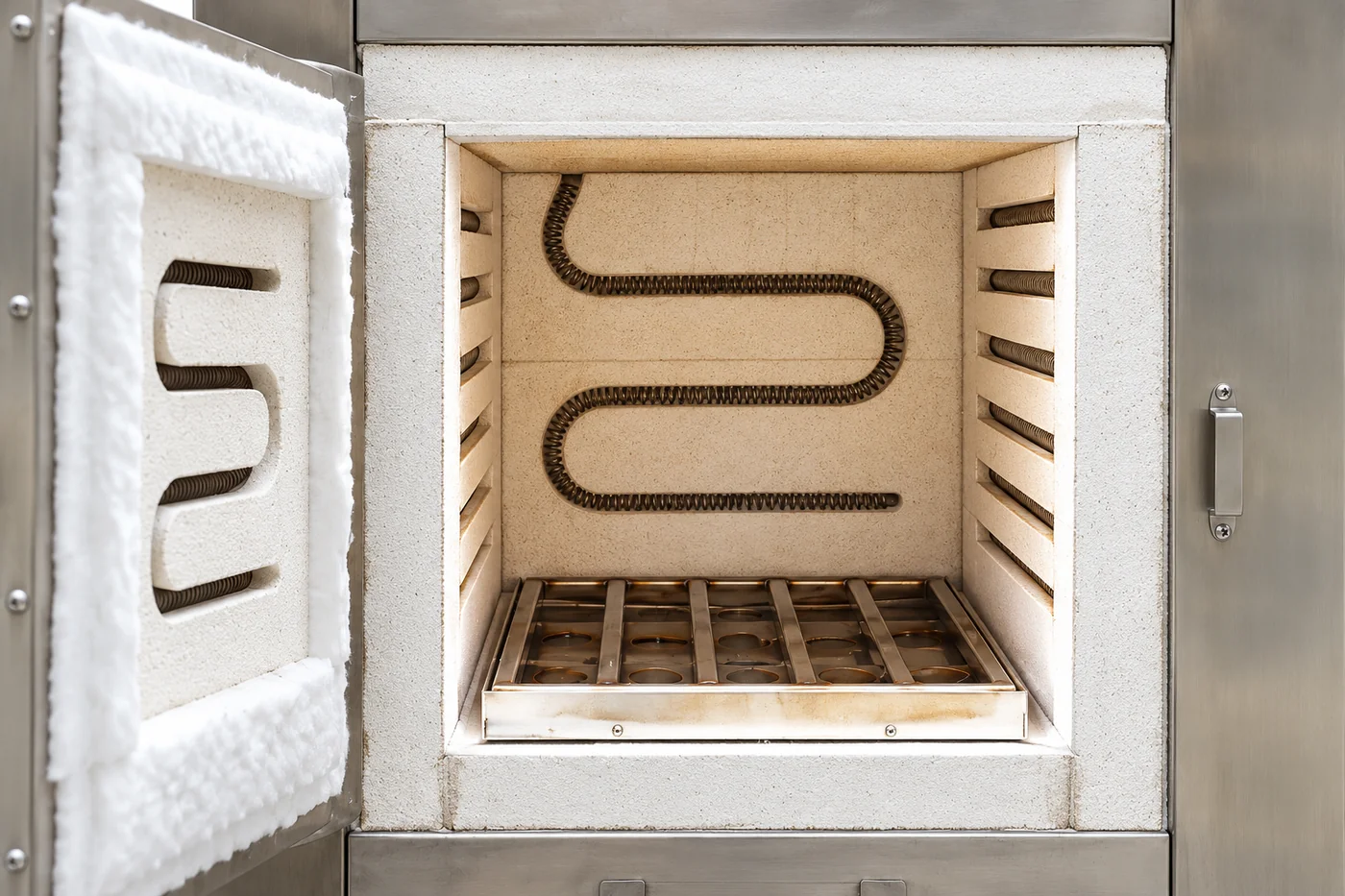
After investing and the required bench setting, the flask follows the selected material's staged heating and holding schedule. Pattern removal and mould preparation must be compatible with the wax or resin, investment and load. Relia's oven review considers chamber spacing, control stages, exhaust requirements and handling between burnout and casting. The mould's condition throughout the load matters more than reaching a displayed maximum. Where uniformity or calibration evidence is required, the acceptance arrangement and limits are specified for the selected oven.
- Define the flask loadDiameter, height, count and circulation space
- Match the material cyclePattern, investment, ramps and holds
- Confirm installationPower, exhaust and hot-flask handling
- Approve the oven scopeRequired controls and load-based acceptance
04 · UTILITIES
Match power and installation requirements
- Site requirements
- Confirm voltage, power, connections and placement.
- Ordered oven
- Retain the selected unit's installation information.
Confirm the exact voltage, power, connections and placement requirements for the ordered oven. Smaller and larger references have different configurations; retain the selected unit’s installation information.
05 · WORKFLOW
Coordinate burnout with the casting station
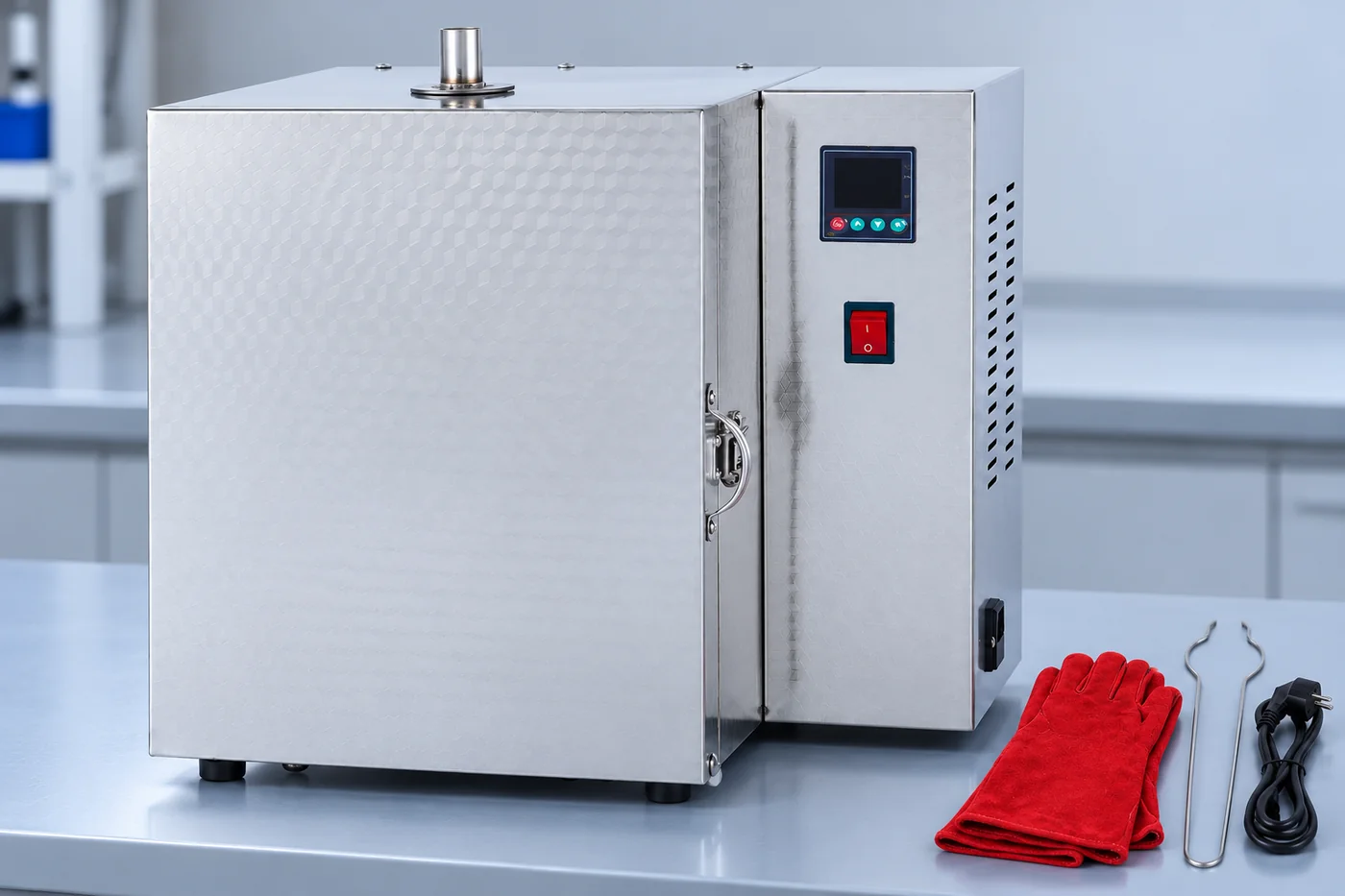
Identify the flask handling and scheduling relationship to the next operation. Keep the selected oven, material programme and downstream equipment requirements visible in one workshop plan.
06 · HANDOVER
Agree machine documentation and acceptance
- Load-based acceptance
- Agree the flasks and operating programme used for checks.
- Required records
- Define any uniformity, calibration or exhaust requirements.
Confirm power supply, exhaust requirements and a load-based acceptance check. If temperature uniformity or calibration records are required, define the test arrangement and limit. The listed 18-flask capacity applies to its stated reference geometry rather than all flask sizes.
07 · PURCHASING
Quote the oven for the intended load
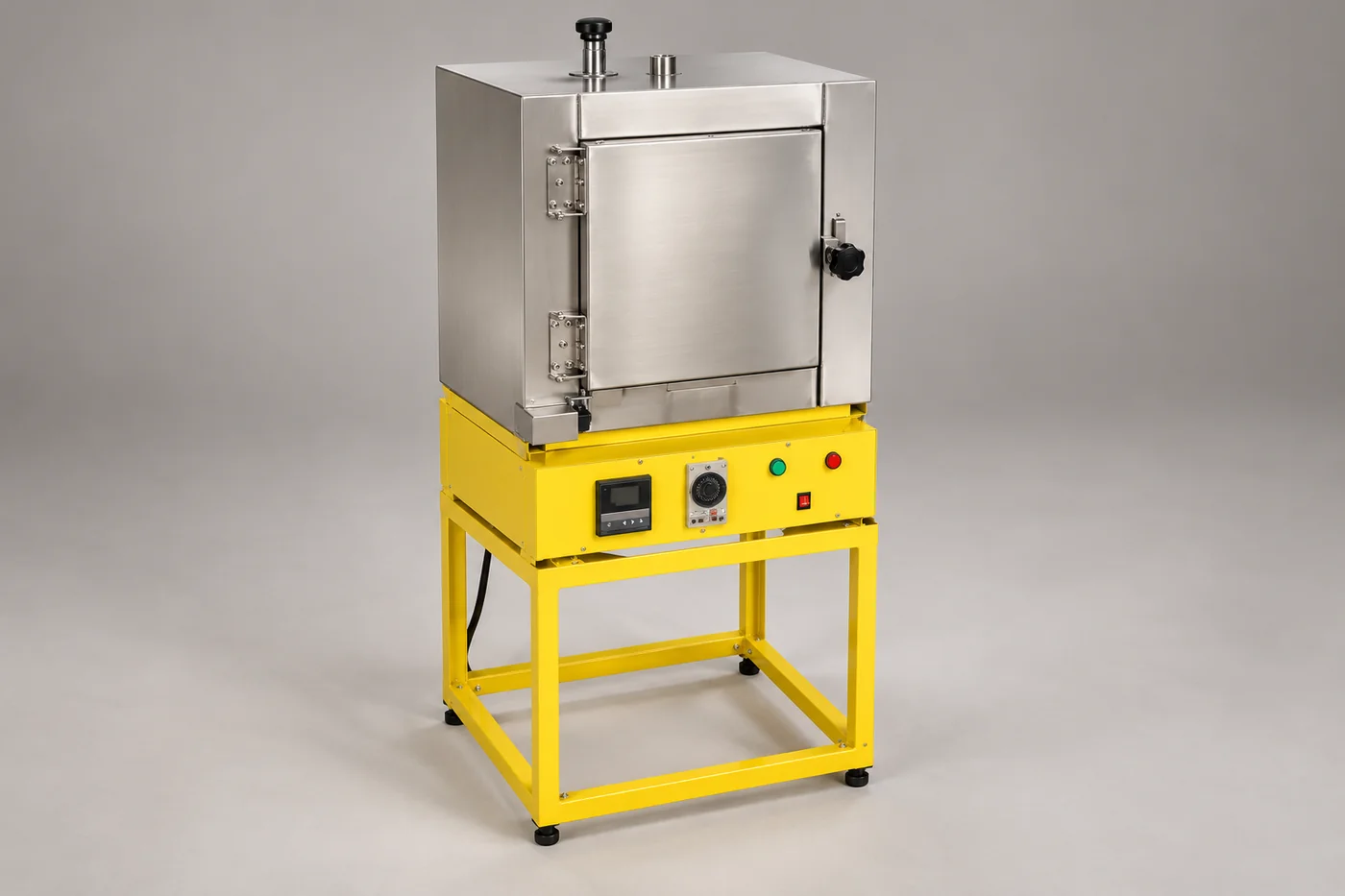
Retain the flask requirement, selected electrical configuration, accessories and acceptance scope together. Clarify open process or installation inputs before the package is agreed.
Technical notes
Provide flask diameter, height, number per batch and pattern material. Leave the required spacing for heat circulation and handling. A chamber that physically fits the flasks may still need a different load arrangement or cycle to achieve the required burnout throughout the batch.
| Package | Retain |
|---|---|
| Capacity | Actual flask and usable-load basis |
| Specification | Selected chamber, controls and utilities |
| Handover | Documents and required checks |
CONNECTED BUYING GUIDES
Continue with the next project decision
Follow the related component and purchasing guides, or open the catalogue reference to carry this requirement into a specific project enquiry.
RELIA · YOUR NEXT PROJECT
Share the flask load and material-process requirements
Send flask dimensions, batch needs, material workflow and available electrical supply. Add the required programme and handover checks. We can review an oven configuration on the actual usable-load basis.
Start with these project details
- Flask sizes and load arrangement
- Material workflow and programme
- Available power and placement
- Handover and temperature checks
Shuyuan Road, Qingdao, Shandong, China
