
CUSTOM MANUFACTURING · PROJECT REVIEW
Custom Graphite Ingot Moulds for Gold and Silver
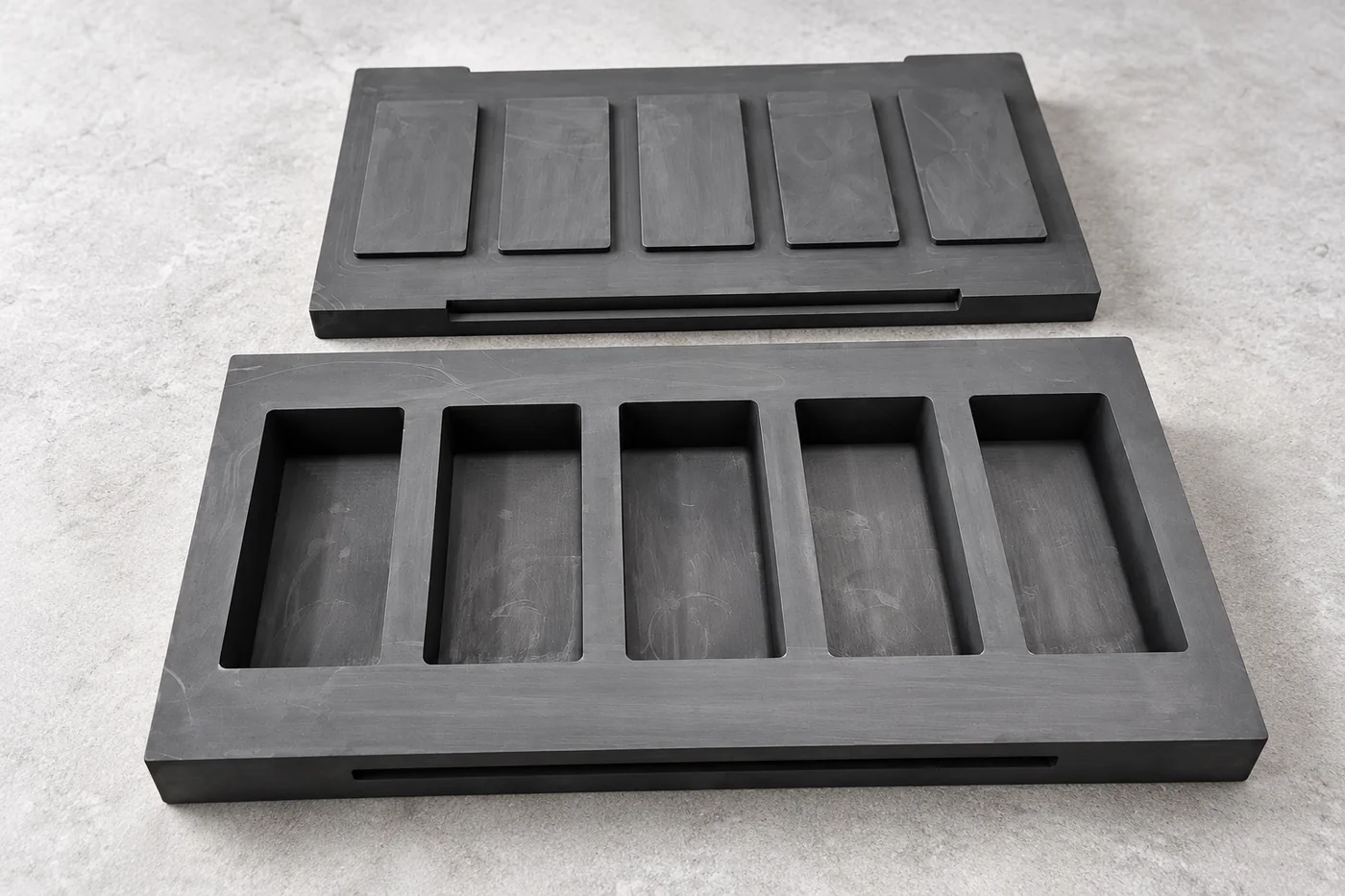
An ingot mould should be defined by its cavity, handling arrangement and intended alloy. Relia reviews custom graphite material and geometry with the lid, acceptance records and packing scope needed for your gold or silver workflow.
RELIA · PRODUCT AND MANUFACTURING SUPPORT
Define the ingot and cavity geometry
Relia's graphite reference identifies high-purity material, custom dimensions, a 325-mesh grain designation and resistivity at or below 14 μΩ·m. Relia connects the selected graphite grade and property sheet to your cavity drawing and use. This keeps the ingot's alloy-based capacity, handling and release requirements visible in the mould quotation.
| Your requirement | Relia product and service scope |
|---|---|
| Material | High-purity graphite; grade to quotation |
| Customization | Cavity size and shape |
| Property references | 325-mesh designation; resistivity ≤14 μΩ·m |
| Capacity basis | Cavity volume and specified gold/silver alloy mass |
02 · MATERIAL
Review graphite requirements against the use
- Graphite specification
- Confirm the selected grade and required material records.
- Intended use
- Review it against the actual mould and casting task.
The references describe graphite material and density fields for particular items. Confirm the selected material and required records rather than treating a catalogue range as a universal mould grade or service-life promise.
Technical notes
Review cavity depth, draft, wall thickness and handling features. The listing contains overlapping density fields, so agree the actual grade and current property sheet. Graphite porosity, surface finish and oxidation conditions can affect use, but they do not establish a fixed mould life for every temperature and process.
MANUFACTURING ROUTE · FEATURES AND CONTROL
Machine the Cavity for Fill, Release and Handling
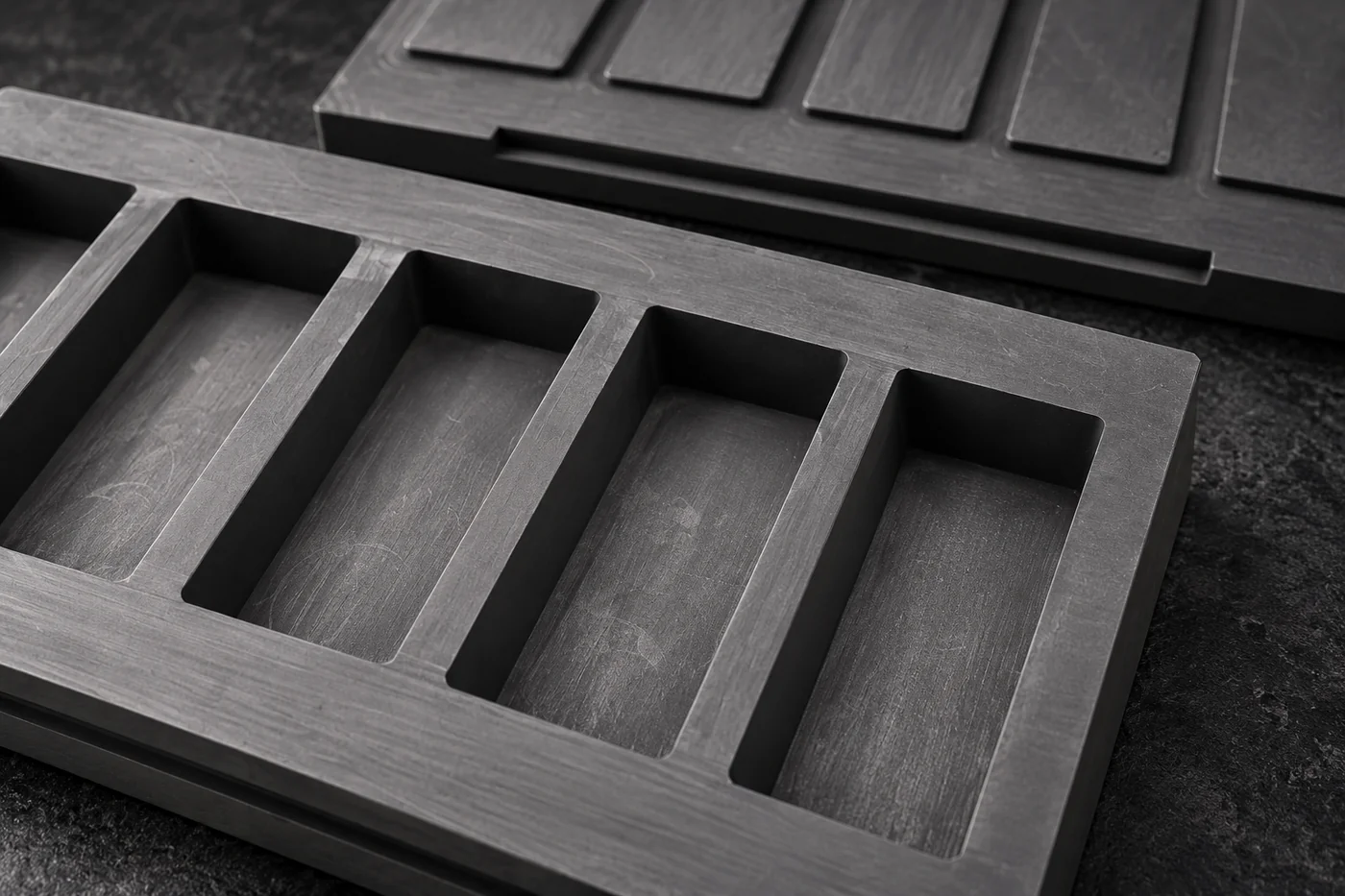
The selected graphite blank needs enough section around the cavity and practical handling geometry. The mould-making scope establishes cavity depth, draft, transitions and the required surface detail, followed by cleaning and careful handling of the machined graphite. Relia's review connects those features to the intended pouring or heating arrangement. The same cavity volume gives different ingot mass for gold and silver, so capacity states the alloy basis. A representative casting then checks the shape and release under the intended process conditions.
- Define ingot and alloyTarget mass, cavity volume and shape
- Select graphite gradeCurrent properties and blank dimensions
- Finish the cavityDepth, draft, transitions and surface detail
- Approve the mould trialIngot result, release and handling
04 · CONFIGURATION
Confirm lid and handling interfaces
- Supplied interfaces
- State lid and handling requirements explicitly.
- Actual geometry
- Confirm which features belong to the ordered mould.
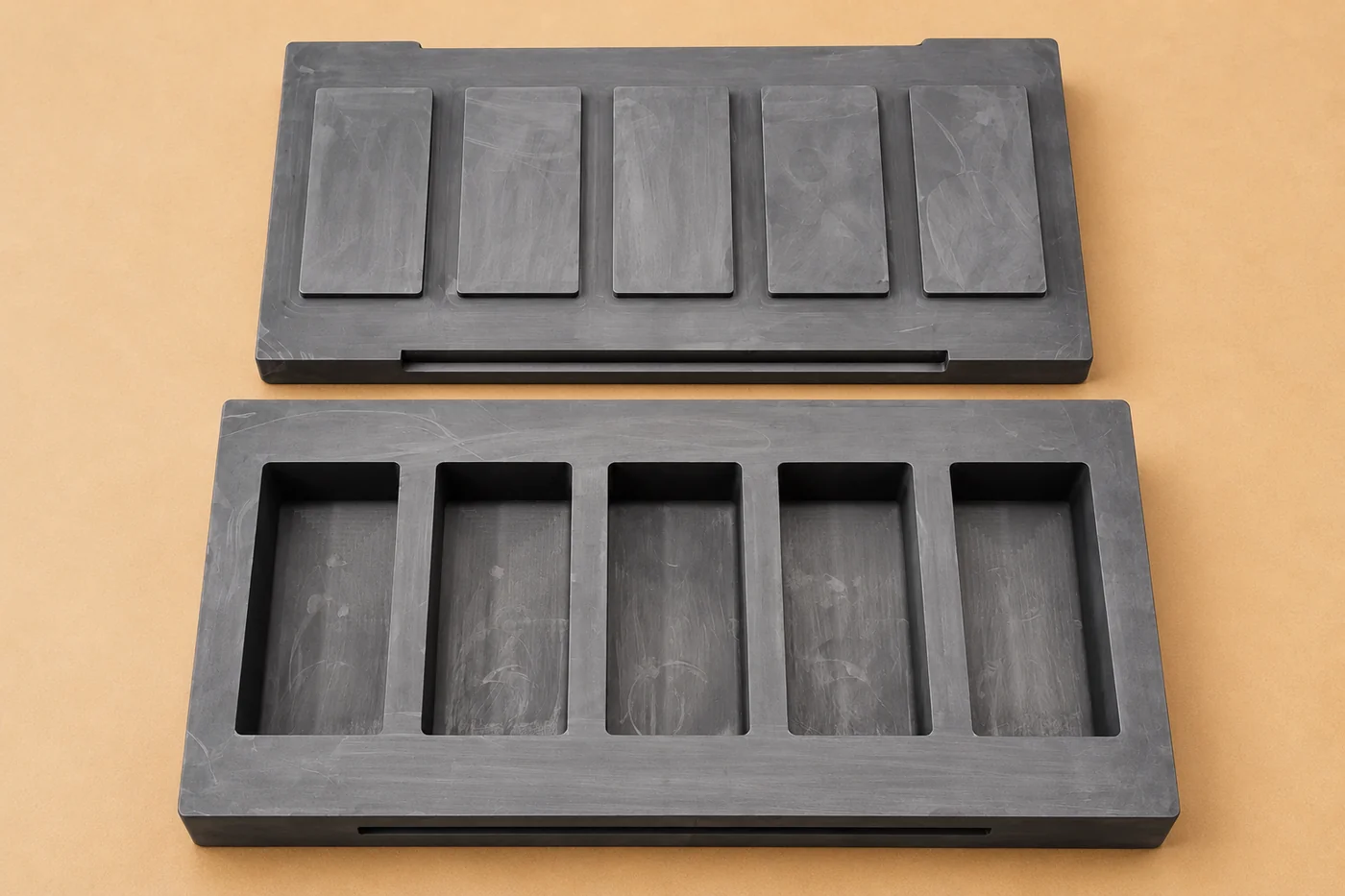
Share whether a lid and other interfaces are required in the supplied package. Review the actual geometry and handling arrangement before assuming every similar mould includes the same features.
05 · ACCEPTANCE
Set an application-relevant sample review
Approve cavity dimensions and a representative casting with the intended alloy. Define surface and edge acceptance and protect the graphite against impact during packing. Capacity should state its alloy basis; a mould's general compressive-strength field is not an operating-temperature or cycle-life guarantee.
06 · PACKING
Protect edges and cavities for delivery
- Fragile surfaces
- Protect cavity edges, corners and separate lids.
- Identified delivery
- Keep item and document references with repeat orders.
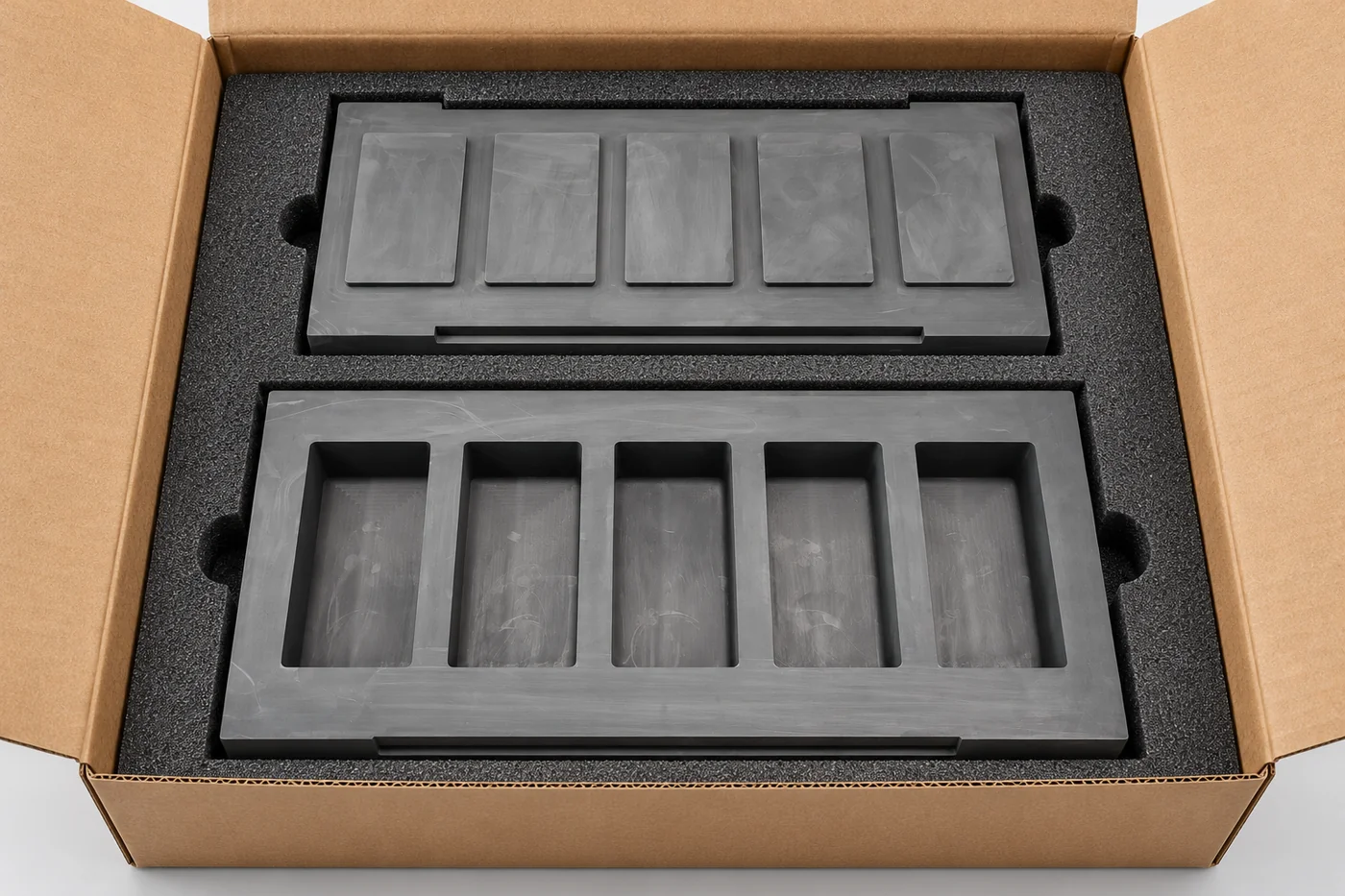
Define protection for the graphite surfaces, corners and separate lid. Keep item identity and required documents connected to the accepted mould when preparing repeat or multi-cavity orders.
07 · PURCHASING
Compare the complete custom-mould supply
Retain the material, drawing, sample approval and packing requirements together. Make cavity count, included items and required inspection records visible in the quotation.
Technical notes
Provide metal, target ingot mass, cavity dimensions and the required marking or shape. Equal cavity volume does not produce equal mass in gold and silver. Include pouring arrangement, release requirements and whether the mould is heated directly or used with separate melting equipment.
| Package | Retain |
|---|---|
| Design | Cavity, lid and drawing revision |
| Material | Selected graphite and agreed records |
| Delivery | Inspection, item identity and protection |
RELIA · YOUR NEXT PROJECT
Send the ingot geometry and mould requirements
Share the intended metal, cavity drawing, lid and handling needs. Add sample, material-document and packing requirements. We can review a graphite-mould enquiry on the actual design and acceptance basis.
Start with these project details
- Intended metal and cavity drawing
- Graphite and material documents
- Lid and handling interfaces
- Quantity, samples and packing needs
Shuyuan Road, Qingdao, Shandong, China
