
CUSTOM MANUFACTURING · PROJECT REVIEW
Inconel Turbine Rotor and Impeller Prototype Enquiries
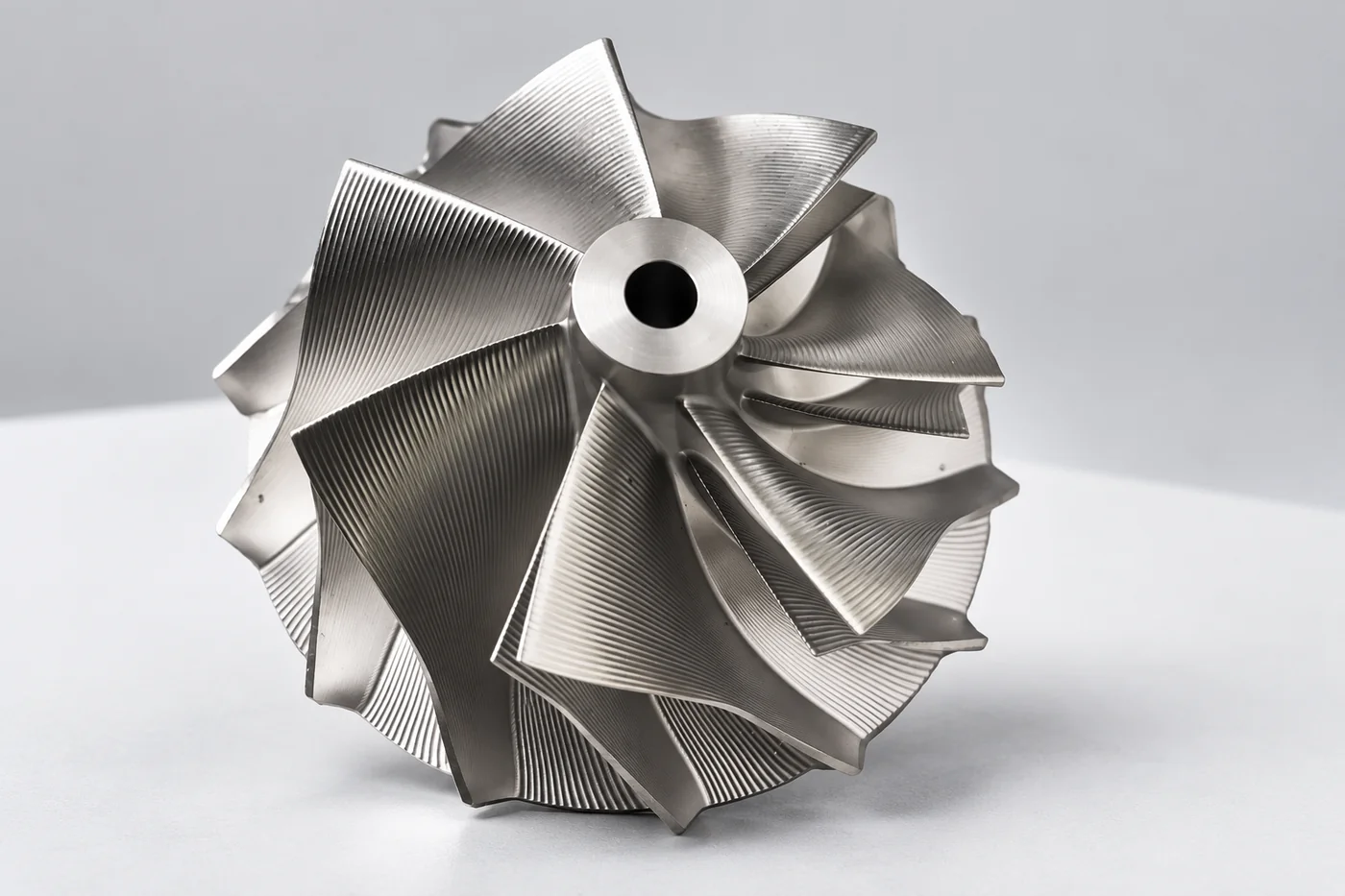
Relia reviews industrial rotor and impeller prototype enquiries against the specified alloy and finished geometry. Define the material condition, shaft interface, inspection and qualification responsibilities clearly before the manufacturing route and prototype scope are agreed.
RELIA · PRODUCT AND MANUFACTURING SUPPORT
Define the industrial prototype requirement
Relia's references include enquiries mentioning 713, 600/625, 718 and other specified alloys, with investment/vacuum casting, CNC work and selected treatment options. Relia keeps these alloy and route choices distinct. Your prototype scope identifies its purpose, shaft connection and required inspection rather than taking broad speed or temperature catalogue fields as a qualified operating envelope.
| Your requirement | Relia product and service scope |
|---|---|
| Alloy enquiries | 713, 600/625, 718 or other explicitly specified alloy |
| Routes to review | Investment/vacuum casting, CNC, specified treatment and optional HIP |
| Critical inputs | Temperature, speed, load/life basis and shaft interface |
| Scope boundary | Prototype manufacture separated from flight/engine qualification |
02 · MATERIAL
Keep alloy and material condition explicit
- Exact alloy
- State the required designation and material condition.
- Technical review
- Assess alternatives against the specified prototype requirement.
Catalogue references include different nickel-alloy and other material options. Inconel 625, 718 and other designations are not interchangeable; state the exact alloy and required condition for technical review.
Technical notes
Do not substitute 625 and 718 by name similarity: their strengthening and heat-treatment requirements differ. Review casting route, machining, any specified HIP and treatment with the selected alloy. HIP is a defined process option, not evidence by itself of defect-free or qualified rotating hardware.
MANUFACTURING ROUTE · FEATURES AND CONTROL
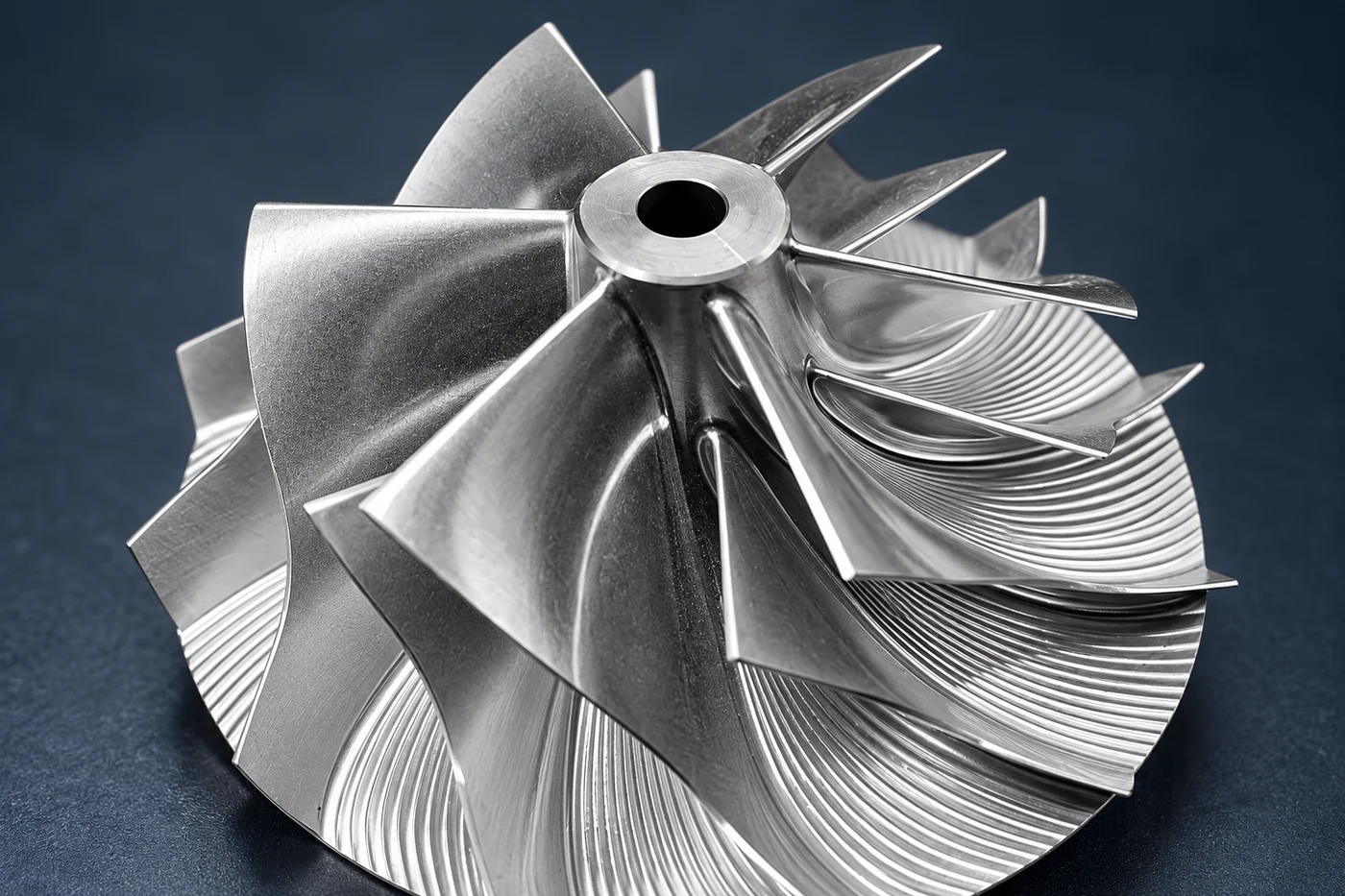
Connect Alloy Processing to the Finished Rotor Features
The selected alloy determines the suitable casting environment and treatment condition. Pattern and mould design must support the rotor geometry and leave the specified finishing stock. After casting and preparation, Relia's CNC/finishing scope establishes the shaft interface and controlled blade or wheel features. Any specified HIP, heat treatment and examination are placed in the agreed route with their acceptance requirements. Balancing and development tests follow the finished configuration. Different alloys such as 625 and 718 therefore require an explicit process decision, not a name-based substitution.
- Define alloy and trialExact grade, condition and development purpose
- Select casting routeGeometry, atmosphere and required treatment
- Finish controlled featuresShaft interface, blades and specified surface
- Review development evidenceRequired examination, balance and validation scope
04 · DIMENSIONAL CONTROL
Review critical geometry with the inspection plan
- Critical geometry
- Connect inspection and traceability to the rotor features.
- Qualification basis
- Define the intended service and required validation scope.
Agree material traceability, critical geometry, internal/surface examination and the required balance or validation scope. Broad catalogue speed and temperature fields are not used as safe operating limits. The design authority must define the qualification basis for the actual rotor and intended service.
05 · QUALIFICATION
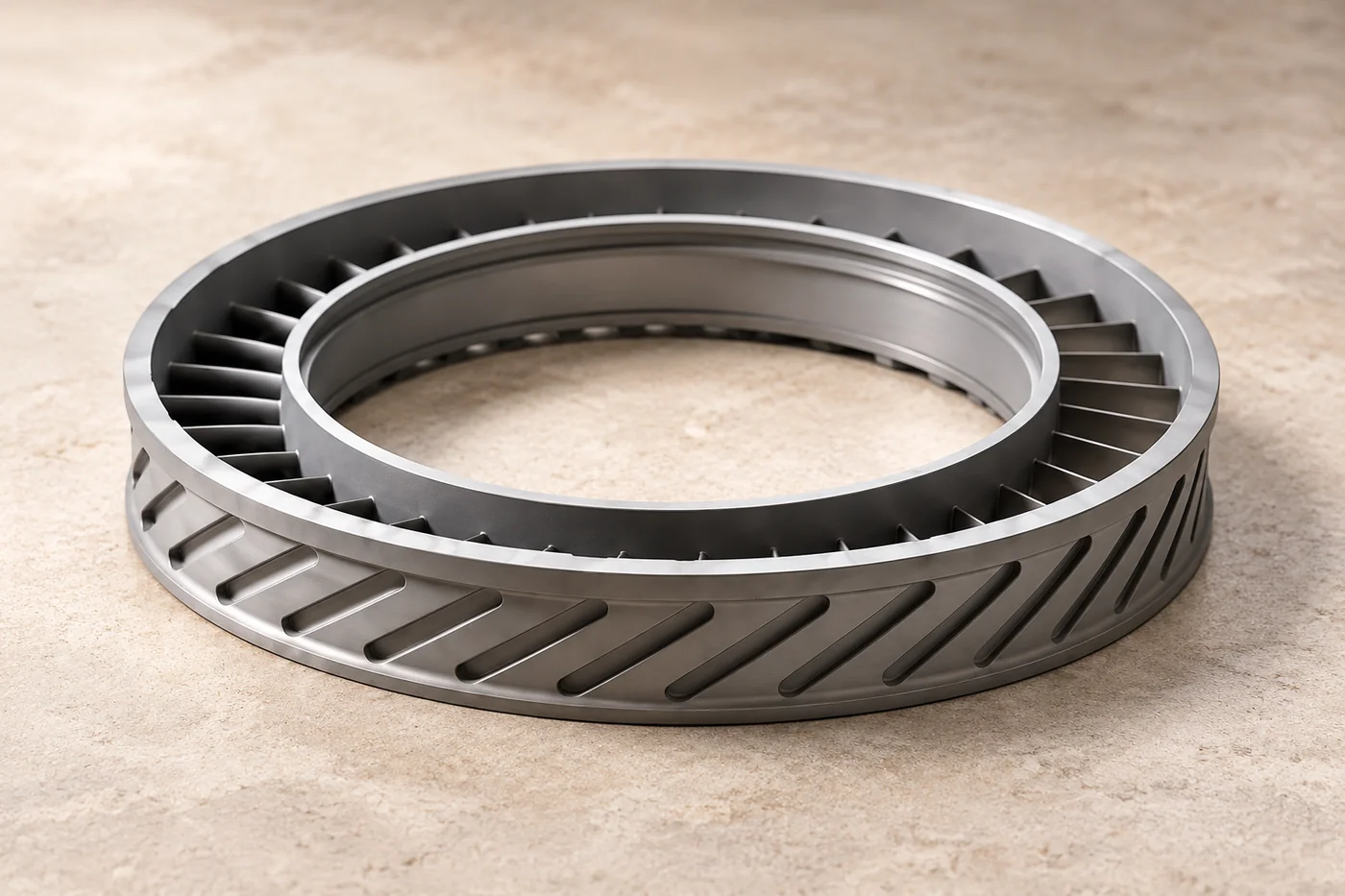
Define acceptance beyond appearance
Specify material records, dimensional checks and any required NDT or balance work. Operating limits and qualification come from the project’s engineering and approval process rather than a generic catalogue speed or temperature.
06 · DELIVERY
Protect prototype identity and geometry
- Protected prototype
- Agree protection for blades and shaft interfaces.
- Identifiable status
- Retain prototype identity, drawing revision and records.
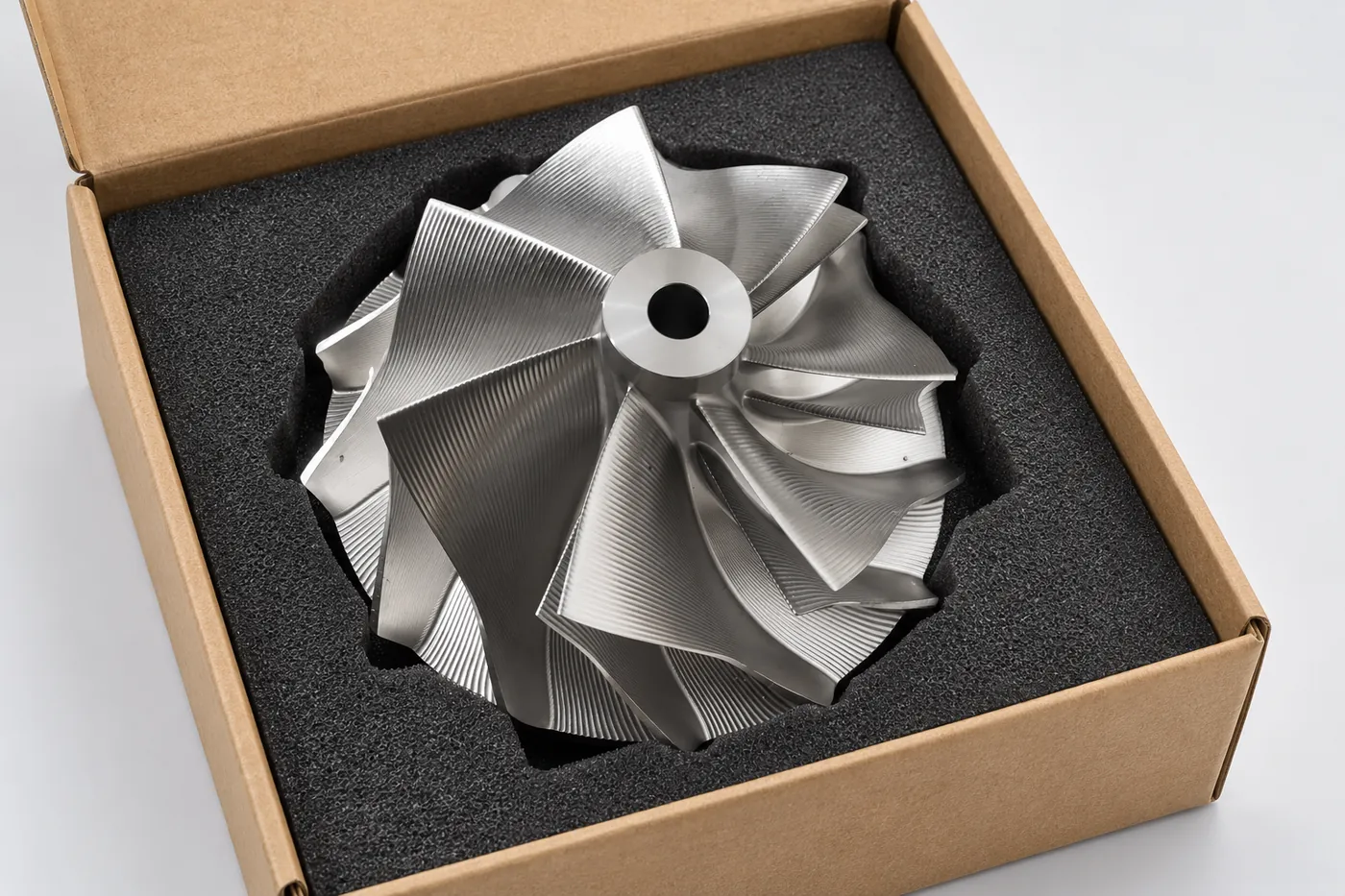
Agree individual protection for blades and interfaces, part identification and the document package. Keep prototype status and drawing revision identifiable through delivery and review.
07 · PURCHASING
Retain open requirements in the quotation
Keep unresolved material, processing or qualification items visible. Compare proposals against the same drawing and acceptance scope so a preliminary prototype quote is not mistaken for an approved operating component.
Technical notes
Provide rotor geometry, operating temperature, speed, stress or life requirements and the intended development stage. Include the shaft interface and whether the sample is for fit, rig testing or another defined trial. A prototype listing does not establish approval for flight or a certified production engine.
| Scope | Retain |
|---|---|
| Part | Drawing revision and supplied state |
| Processing | Agreed finishing and special requirements |
| Acceptance | Records, checks and project approval boundary |
CONNECTED BUYING GUIDES
Continue with the next project decision
Follow the related component and purchasing guides, or open the catalogue reference to carry this requirement into a specific project enquiry.
RELIA · YOUR NEXT PROJECT
Send the drawing, alloy and prototype acceptance requirements
Share the industrial part drawing, material specification and required supplied state. Add finishing, inspection and qualification requirements. We can review the prototype enquiry with responsibilities and approval boundaries clear.
Start with these project details
- Rotor drawing and alloy specification
- Required supplied condition
- Critical geometry and inspection
- Prototype and qualification scope
Shuyuan Road, Qingdao, Shandong, China
