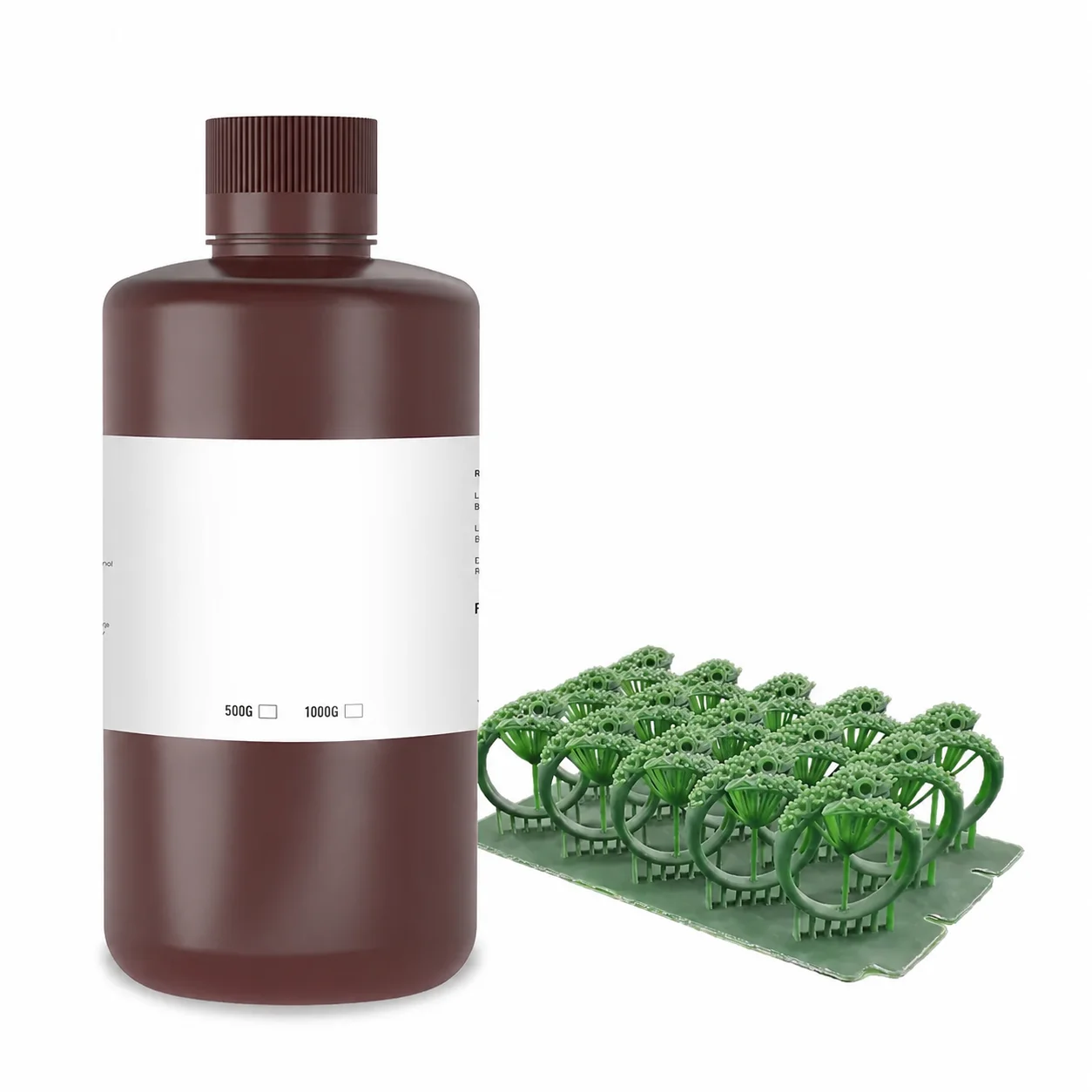
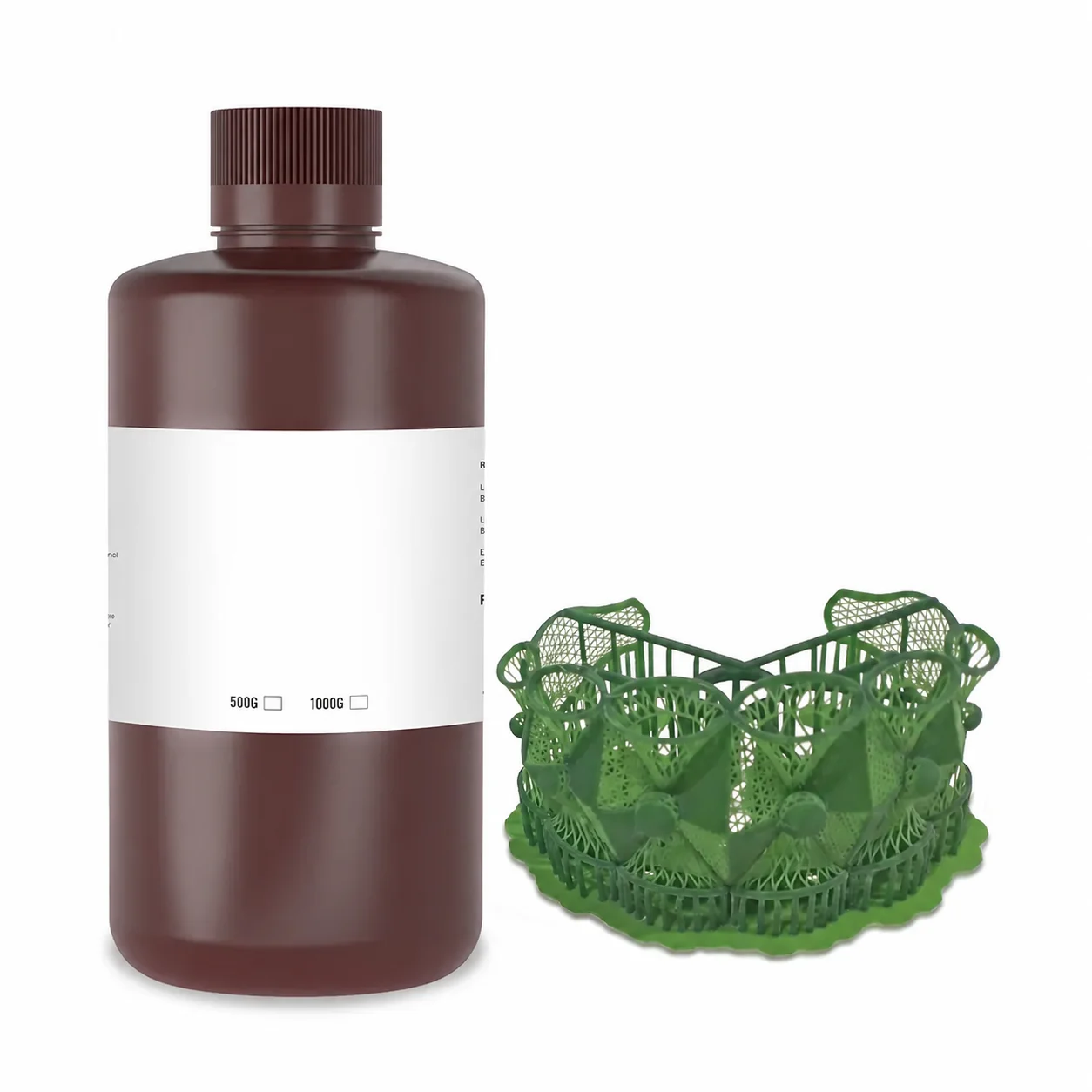
High-Wax Direct-Castable Jewelry Resin with at Least 60% Wax for Lost-Wax Casting
Let’s define your requirement
Send a product link, drawing or short brief. We’ll work through the details with you.
- Confirm the specificationGrade or model, size and intended use.
- Define your orderQuantity, finish or configuration, and samples.
- Agree the quotation scopeIncluded work, key checks and delivery needs.
-
Diameter1.75 mm(0.07in)Printing Temperature200°C, 220°
-
ApplicationJewelry castingWax Content≥60% high wax formula
-
Casting MethodLost wax castingColorGreen
-
Viscosity320 mPa s @ 25°CDensity1.05 to 1.18 g/cm³
-
HardnessShore D 64 to 68Ash ResidueZero ash, clean burnout
-
Surface FinishSmooth, flawless, scratch resistantCompatibilityLCD/DLP 3D printers, 405nm wavelength
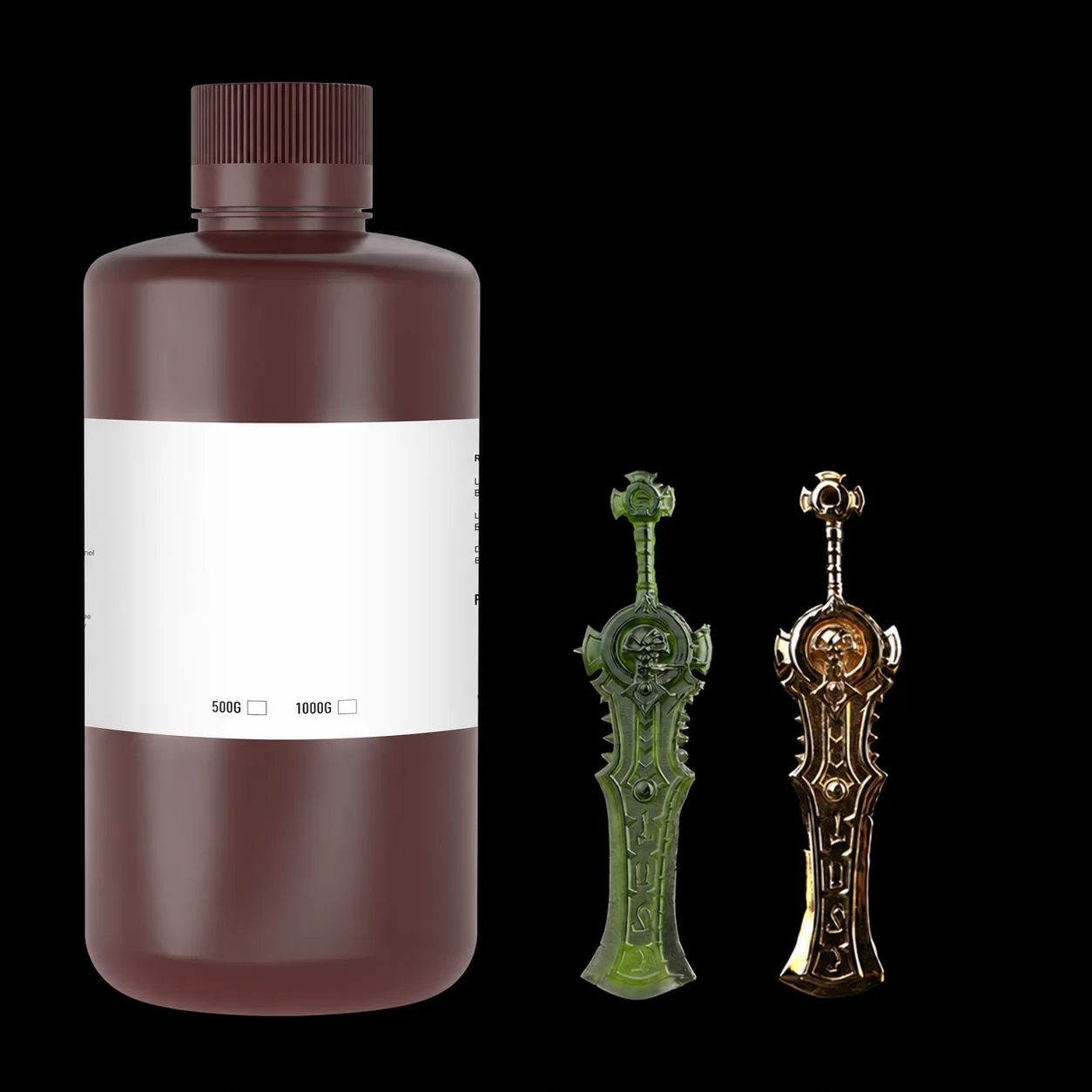
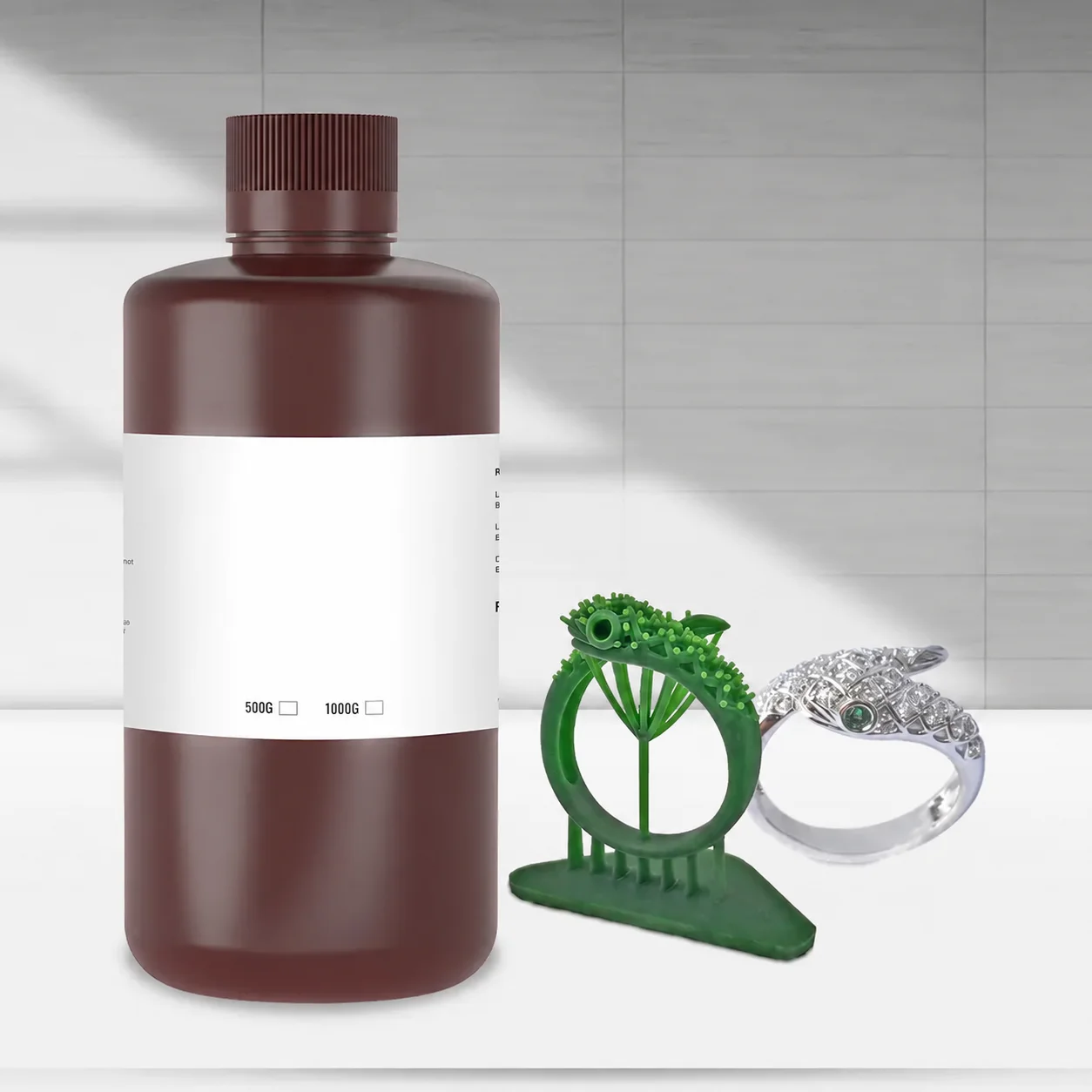
This green direct-castable jewelry resin contains at least 60% wax and is intended for lost-wax casting. It supports 405nm LCD/DLP printing, combining a high-wax formulation with a smooth, scratch-resistant surface. Match the actual printer and resin profile to the jewelry geometry before evaluating the complete pattern-to-casting process.
Compare the physical properties
Viscosity is 320mPa·s at 25°C, density is 1.05–1.18g/cm³ and hardness is Shore D 64–68. Keep the stated temperature condition with the viscosity when comparing material behavior. Use these properties alongside the intended pattern shape and handling requirements, then assess the printed result under the selected resin-processing conditions.
Set up the 405nm printing workflow
Select the correct resin exposure profile for the actual LCD or DLP printer. Follow the applicable resin handling and post-processing instructions, and use a representative jewelry design to assess detail and surface appearance. Review the desired flaw-free pattern condition against that design, including the surfaces that matter to the final casting.
Coordinate clean burnout with the casting cycle
The resin offers zero-ash, clean burnout for its lost-wax casting use. Agree the applicable resin and investment instructions, burnout cycle and casting conditions for the intended job. Evaluate burnout and the accepted casting result together, so that the high-wax material is assessed within the process that will actually be used.
Make the sample review specific
Record the selected printer, resin profile and required jewelry-pattern acceptance before comparing samples. Include surface appearance and the intended burnout result alongside the relevant geometry. This gives the casting team a practical way to review the green resin's stated composition and properties against its own pattern and production cycle.