
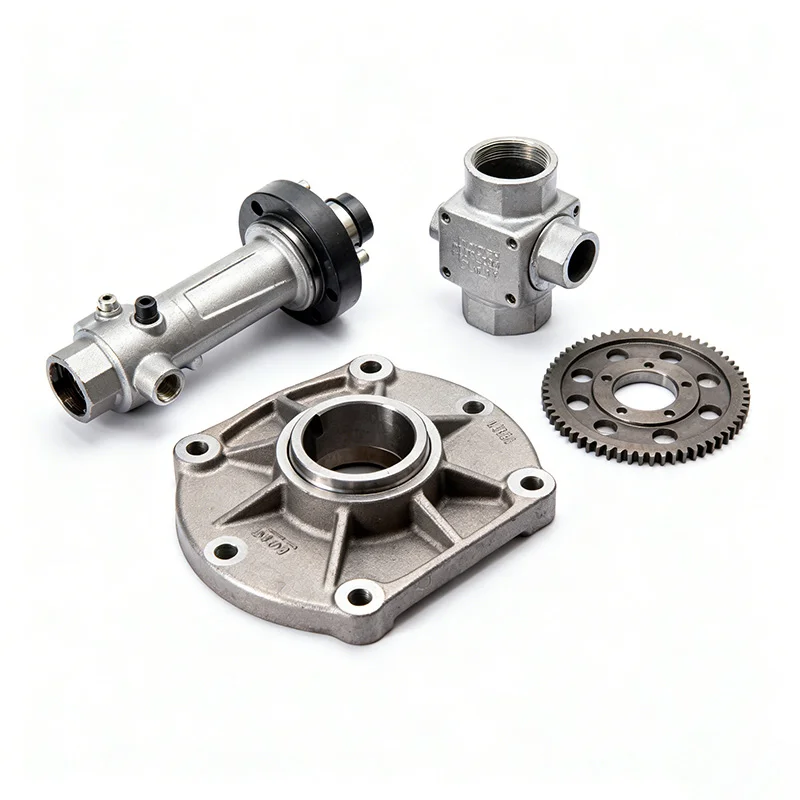
Custom HT250 and QT450 Grey/Ductile Cast-Iron Parts by Sand Casting with Optional Machining
Let’s define your requirement
Send a product link, drawing or short brief. We’ll work through the details with you.
- Confirm the specificationGrade or model, size and intended use.
- Define your orderQuantity, finish or configuration, and samples.
- Agree the quotation scopeIncluded work, key checks and delivery needs.
-
Product nameCustom Casting Parts
-
materialIronspecificationASTM,ANSI,JIS,DIN,EN,GB and etc.
-
Drawing format2D/(PDF/CAD)3D(IGES/STEP)CertificationISO9001:2015
-
ApplicationIndustryProcessCasting +Machining(if Need)+surface Treatment
-
Drawing Format2D/(PDF/CAD)3D(IGES/STEP)SizeCustomized Size
Custom industrial iron parts are offered through sand casting, with HT250 and QT450 as material directions for the inquiry. Grey- and ductile-iron component work supports customized sizes, machining when needed and surface treatment. The requested material and geometry define the part to be reviewed.
HT250 or QT450 for the selected component
Confirm the exact material designation and requirement for the grey- or ductile-iron part. ASTM, ANSI, JIS, DIN, EN and GB are standard-family references, so identify the applicable numbered standard for the chosen component. This connects the HT250 or QT450 inquiry to a specific material acceptance rather than relying on a group of standard names alone.
Sand casting and optional machining
The manufacturing scope includes casting, machining when needed and surface treatment. Define the custom dimensions and identify the component areas that need additional machining after casting. The required delivered surface can be agreed alongside those dimensions, allowing the cast form and any subsequent work to follow the same industrial-part definition.
Two-dimensional or three-dimensional inputs
PDF and CAD are 2D drawing choices, while IGES and STEP provide 3D input directions. Use the appropriate file to describe the selected component, material and customized size. The request can also identify the dimensional acceptance and surface condition needed for the actual part, so the drawing and manufacturing scope stay connected.
- Material decision
- Confirm the exact HT250 or QT450 requirement and applicable numbered standard.
- Component decision
- Define the cast geometry, custom dimensions and machining needed for the part.
- Surface decision
- Agree the required delivered treatment with the selected material and dimensional acceptance.








