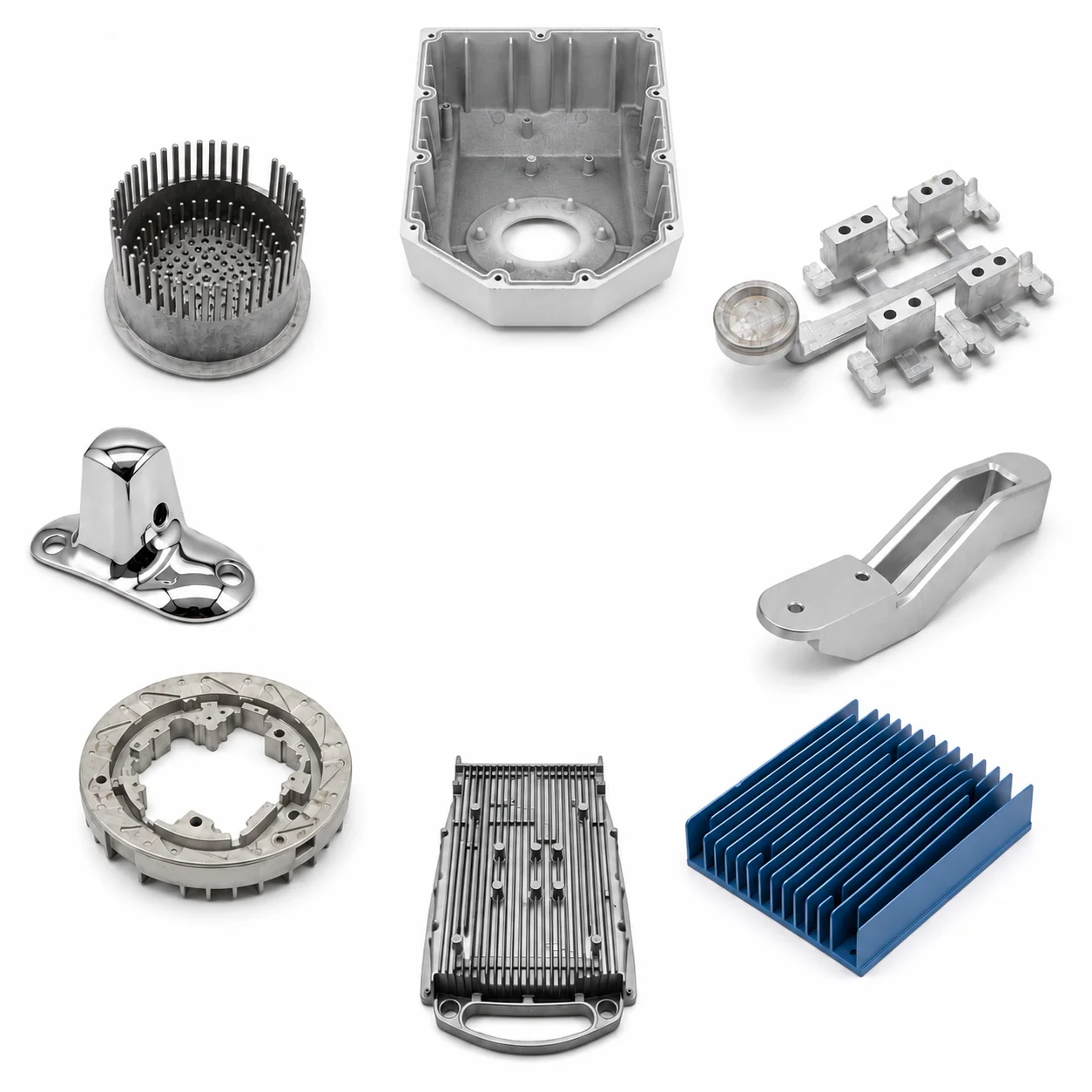
OEM Custom A356 Aluminum Die Cast Components with Powder Coating, 100-Piece MOQ
Let’s define your requirement
Send a product link, drawing or short brief. We’ll work through the details with you.
- Confirm the specificationGrade or model, size and intended use.
- Define your orderQuantity, finish or configuration, and samples.
- Agree the quotation scopeIncluded work, key checks and delivery needs.
-
Surface FinishSandblasted , Shot BlastedAlloy GradeA356 , ADC12
-
SizeOEM, Customer's 2D/3D Drawing
-
Surface TreatmentOEMMaterialsAluminum alloy
-
Product NameA356 Aluminum Die Casting Parts, Custom Aluminum Alloy Die CastingMethodDie Casting
-
CavitySingle or MultipleMaterialADC12,A6061,A356, A390 and so on
-
Mould Lead Time5 weeksMould lifet time50K times
-
FinishPowder Coated, Sandblast, Shot Blast, E-coatingCertificationISO9001:2015
-
MOQ100pcs
These custom aluminum die-cast components are developed around the customer's 2D or 3D drawing. A356 aluminum casting and powder-coated parts are key inquiry directions, with OEM dimensions and a minimum order of 100 pieces.
Set the alloy and drawing together
Material requests can include A356, ADC12, A6061 and A390. Select the grade for the actual component and agree the suitable casting route instead of treating the material names as interchangeable. The drawing should identify the finished geometry and the surfaces or dimensions that matter when the part is installed.
Single-cavity or multiple-cavity tooling
Both single- and multiple-cavity tooling can be discussed. Choose the cavity arrangement with the component geometry and intended order quantity in mind. Agree the tooling scope and the meaning of the mould-life requirement for the selected design, including the operating conditions used for acceptance.
Choose the final aluminum surface
Powder coating, sandblasting, shot blasting and E-coating are available finish directions. Specify the required final surface and any areas that must retain their defined fit or appearance. Confirm which treatments belong in the agreed process rather than assuming every option will be applied to the same component.
- Geometry
- Use the customer drawing to define size and finished dimensions.
- Tooling
- Agree a single- or multiple-cavity layout for the selected part.
- Appearance
- Define the coating or blasted surface required at completion.
A useful OEM inquiry combines alloy, drawing, cavity preference, finish and quantity in one brief. Where IATF16949 or ISO9001:2015 documentation forms part of purchasing approval, confirm the applicable certificate holder and scope for the order before accepting the supply arrangement.