
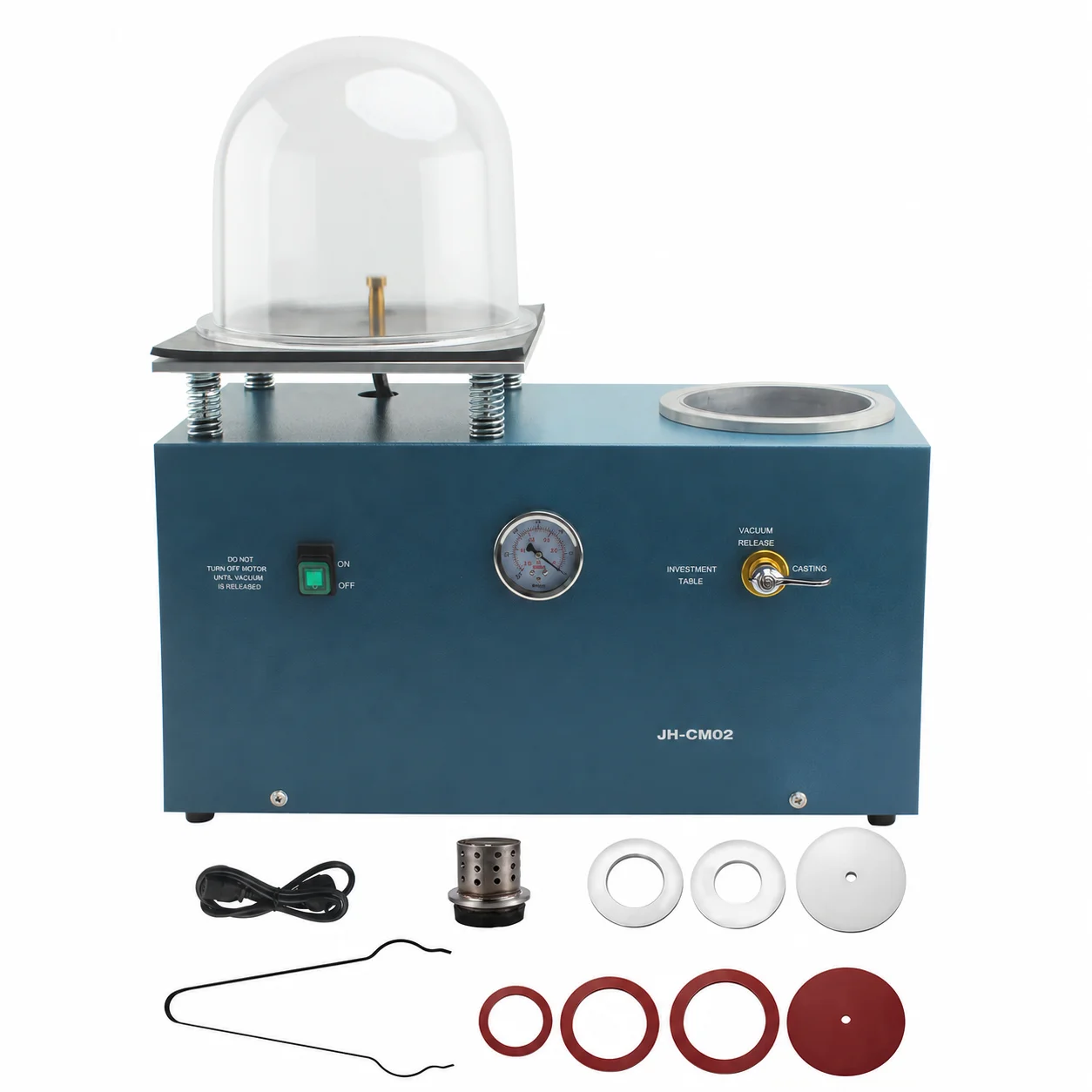
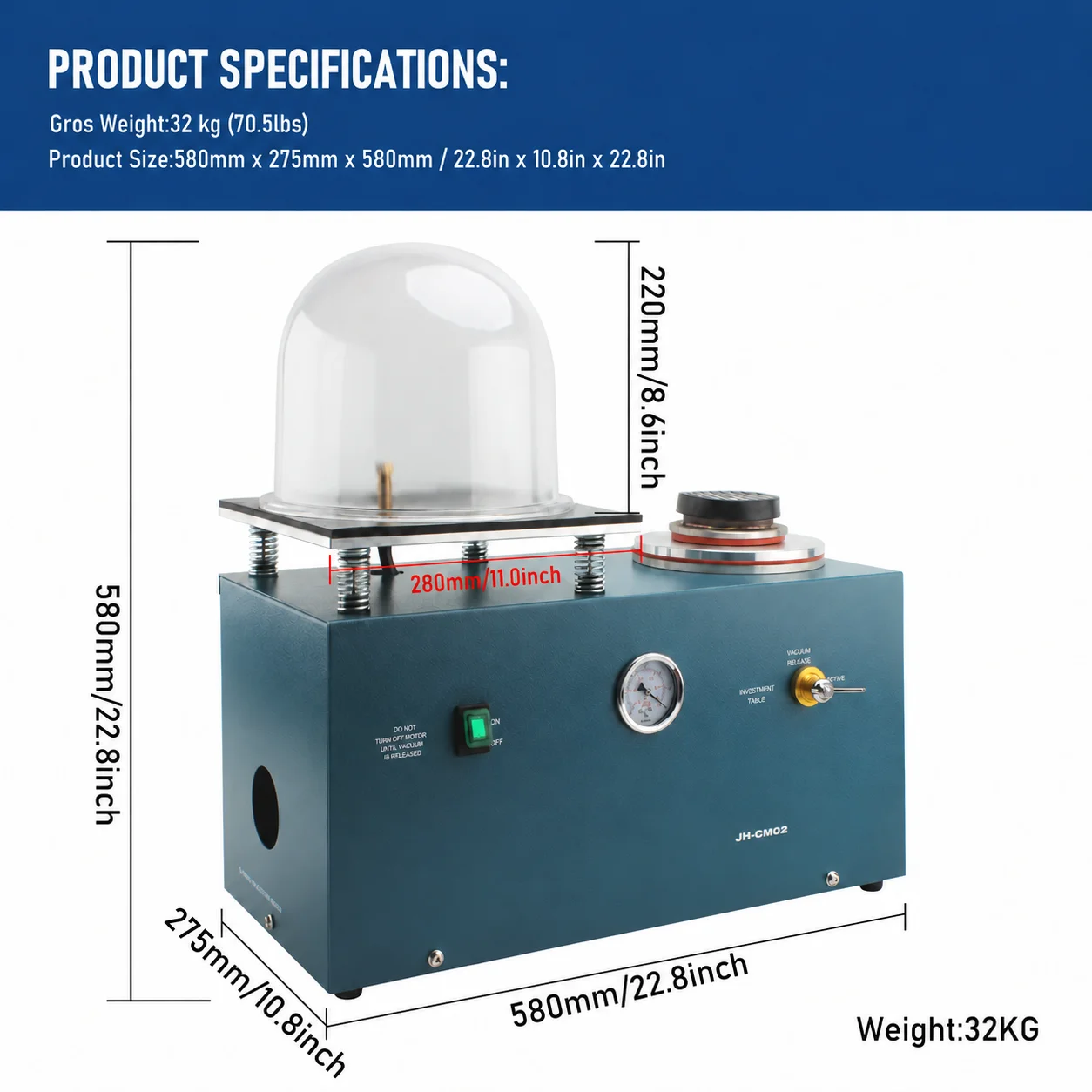
Jewelry Vacuum Investing Lost Wax Casting Combination with Bell Jar, 2L Reference and 110V/220V Choices
Let’s define your requirement
Send a product link, drawing or short brief. We’ll work through the details with you.
- Confirm the specificationGrade or model, size and intended use.
- Define your orderQuantity, finish or configuration, and samples.
- Agree the quotation scopeIncluded work, key checks and delivery needs.
-
UsageFor Necklace Making, For Bracelet Making, For Earring Making, For Ring Making, For DIY
-
Jewelry Tools & Equipments TypeMOLDSApplicationjewelry casting
-
Weight36kg(79.37lb)
Vacuum investing and jewelry lost wax casting combination equipment is offered with a bell jar and a 2 L volume reference. Actual supply choices are 110 V and 220 V. Jewelry directions include necklace, bracelet, earring and ring making, together with DIY work.
Bell-jar arrangement and the 2 L reference
Confirm which component the 2 L volume describes and the usable bell-jar dimensions for the intended work. Agree the flask geometry and how it fits the actual investing/casting arrangement. Use those dimensions to define the working setup for the selected jewelry pattern, keeping the volume reference attached to its confirmed component.
Choose the complete electrical configuration
Select either the actual 110 V or 220 V configuration for the equipment being ordered. Confirm its power, frequency and installation requirements with the complete supplied machine. Agree the actual vacuum specification and operating instructions for that selection so the electrical and process requirements describe the same equipment configuration.
Jewelry workflow and supplied functions
Define the pattern, investment and casting steps needed for the necklace, bracelet, earring or ring project. Agree which functions the selected combination equipment supplies and the accessories included with it. Confirm the working arrangement and process acceptance for the intended pattern and alloy before ordering. Use the actual component-volume and operating specification when checking fit for that job, rather than assuming a metal-charge capacity or heater temperature from the 2 L reference.








