
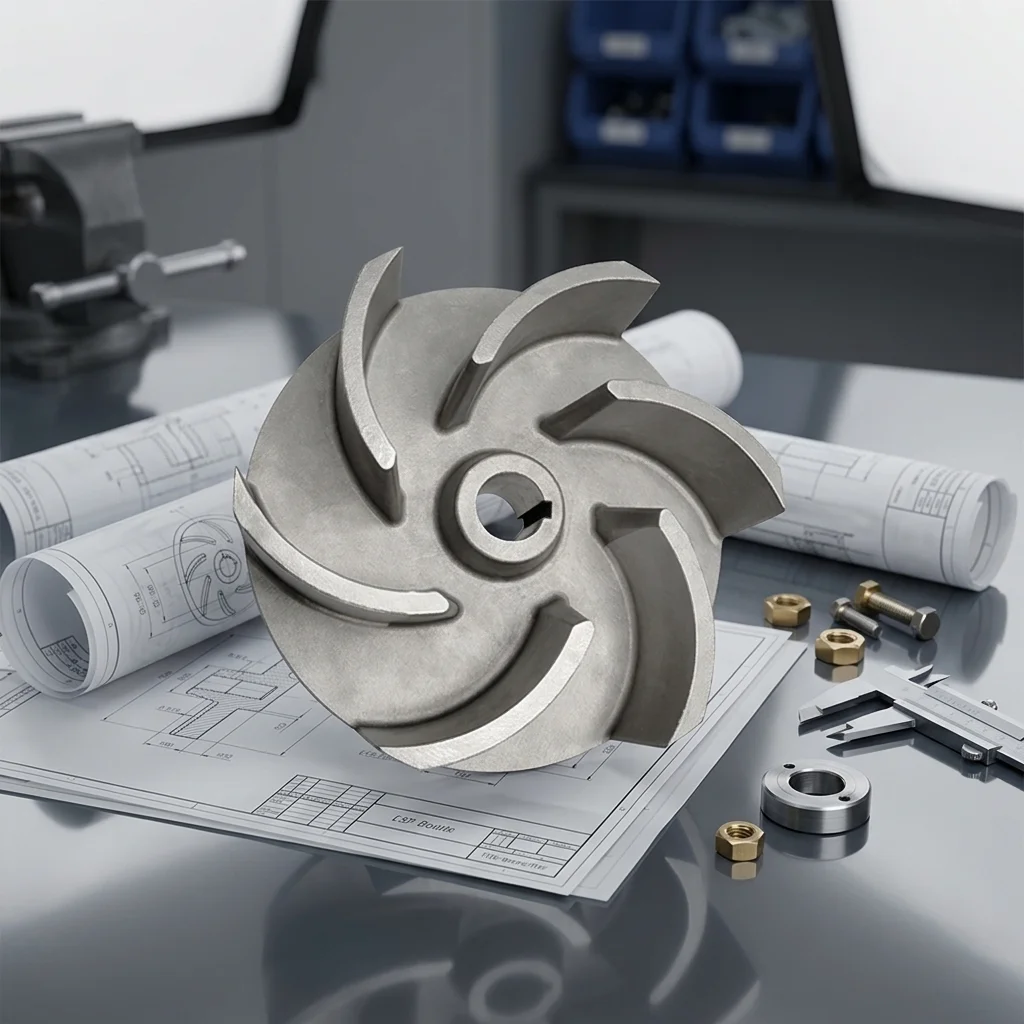
Custom Carbon Steel Hardware Impellers for Auto Inquiries, Precision Lost-Wax Casting and CNC Machining
Let’s define your requirement
Send a product link, drawing or short brief. We’ll work through the details with you.
- Confirm the specificationGrade or model, size and intended use.
- Define your orderQuantity, finish or configuration, and samples.
- Agree the quotation scopeIncluded work, key checks and delivery needs.
-
Component FormImpeller / Rotor
-
NameCustom Hardware Impeller Precision Machining Parts
-
MaterialCarbon steel,Steel SteelCertificationISO9001/TS16949/RoHS
-
Surface treatmentNo cape burr sand holeKeywordStainless steel precision casting
-
Quality Control100% InspectionTolerance0.2mm
-
Machining ProcessLost Wax+CNC MechiningLead Time15-35 Days
-
SurfacePerfect Appearance
Custom carbon-steel hardware impellers are available in a lost-wax investment-casting and CNC-machining direction, including auto-component inquiries. The tolerance reference is 0.2 mm, and quality control includes 100% inspection. Select the actual material grade and impeller geometry for the required component.
Impeller form and CNC interfaces
Define the impeller's shape and the interfaces it must meet in the machinery. Identify which features require CNC work and how they relate to the cast form. Keeping those relationships clear helps the inquiry address an actual impeller and its intended function rather than an unspecified carbon-steel part.
Using the 0.2 mm reference
Relate the 0.2 mm tolerance reference to the drawing features that need dimensional acceptance. Agree the tolerance sign and scope for those features, with the selected carbon-steel grade included in the same component requirements. This establishes a usable precision basis for the cast and machined geometry.
Surface objectives and component verification
Appearance, burr control and sand-hole acceptance are surface objectives for the custom part. Specify observable criteria and the surfaces to which they apply, then connect the 100% inspection scope to the agreed material, dimension and surface checks. The impeller's actual machine fit, operating conditions and rotational requirements should also be defined for the intended use. Together, these decisions give the custom hardware or auto-component inquiry a particular impeller and acceptance scope to review.








