
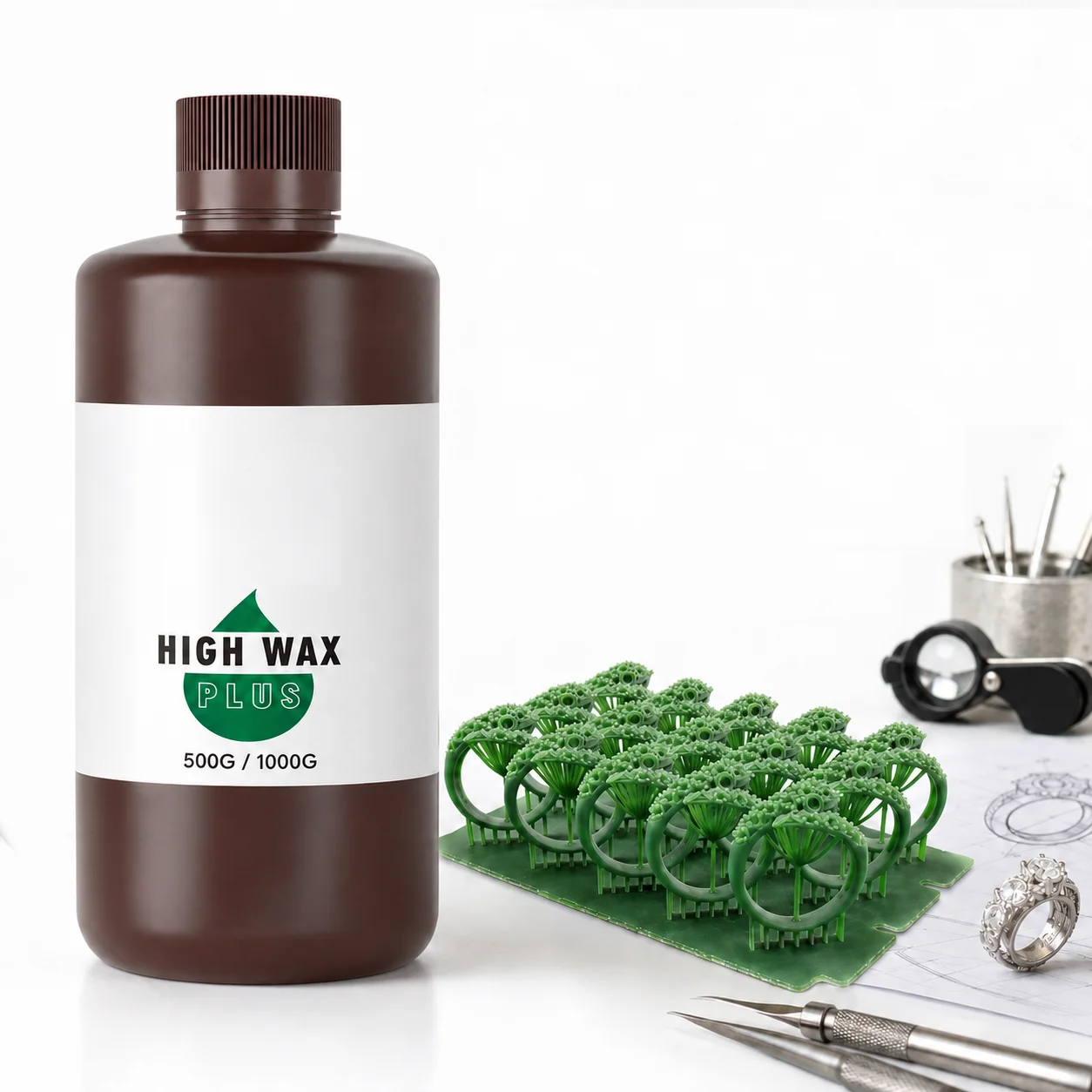
90% Wax 405nm Photopolymer Casting Resin, 99.9% Purity, for Fine-Detail Gold and Silver Lost Wax Jewelry
Let’s define your requirement
Send a product link, drawing or short brief. We’ll work through the details with you.
- Confirm the specificationGrade or model, size and intended use.
- Define your orderQuantity, finish or configuration, and samples.
- Agree the quotation scopeIncluded work, key checks and delivery needs.
-
CAS No.Casting ResinPurity99.9%
-
EINECS No.Casting ResinMolecular FormulaCWIC-10C03
-
Other NamesSynthetic Fibers,Synthetic RubbersProduct TypeSynthetic Resin And Plastics
-
Resin TypeJewelry Castable ResinCasting ProcessLost Wax Casting
-
Wax Content90% Wax ContentApplicationGold, Silver and Jewelry Casting
-
Printing TechnologyDLP / cDLM 3D PrintingWavelength405nm
-
Suitable JewelryRings, Pendants, Earrings, Fine JewelryModel UseJewelry Master Pattern and Casting Pattern
-
Surface FinishSmooth Surface, Fine DetailPrinting FeatureHigh Detail and Accurate Reproduction
-
Target UsersJewelry Workshops, Casting Factories, 3D Printing LabsMaterial CategoryPhotopolymer Casting Resin
-
Production TypeCustom Jewelry and Small Batch ProductionDetail CapabilityFine Features and Intricate Designs
Jewelry castable photopolymer resin combines 90% wax content with a 99.9% purity specification for the material review. It supports 405nm DLP/cDLM 3D printing of jewelry master and casting patterns for gold and silver lost wax work, including intricate designs and fine detail.
Match the printing system to the pattern
Use the actual 405nm DLP/cDLM machine and resin profile when selecting the printing arrangement. The pattern scope includes rings, pendants, earrings and fine jewelry, with smooth surfaces and accurate detail reproduction. Define the geometry, visible detail and dimensional acceptance for the chosen design, then assess the printed result against those criteria.
Keep wax content and purity on their own bases
Review the 90% wax-content requirement separately from the 99.9% purity specification. Confirm the formulation identity and what the purity measurement qualifies when setting material acceptance. Keep those requirements connected to the selected resin and processing instructions so that the two percentages retain their intended meanings in the project review.
Connect printing to lost wax casting
Agree the printing, post-processing and burnout instructions appropriate to the selected pattern and casting cycle. Assess a trial using the design's detail and dimensional requirements, together with the intended casting result. This connects the master or casting pattern to the actual jewelry workflow and provides a basis for selecting the production profile.
Plan custom and small-batch jewelry work
Jewelry workshops, casting facilities and 3D printing labs are target users for this material. Custom jewelry and small-batch production can be reviewed around the chosen design and process acceptance. Keep the actual machine profile, formulation requirements and trial result together when approving the resin for the intended jewelry project.








