
Choose the equipment's job before its headline specification
Before selecting casting equipment, identify the operation you need it to perform and the exact configuration being offered. Electrical supply, nominal capacity, container dimensions and included accessories belong to the selected listing and model. A machine with a familiar appearance may still differ from another configuration in ways that matter to installation and use.
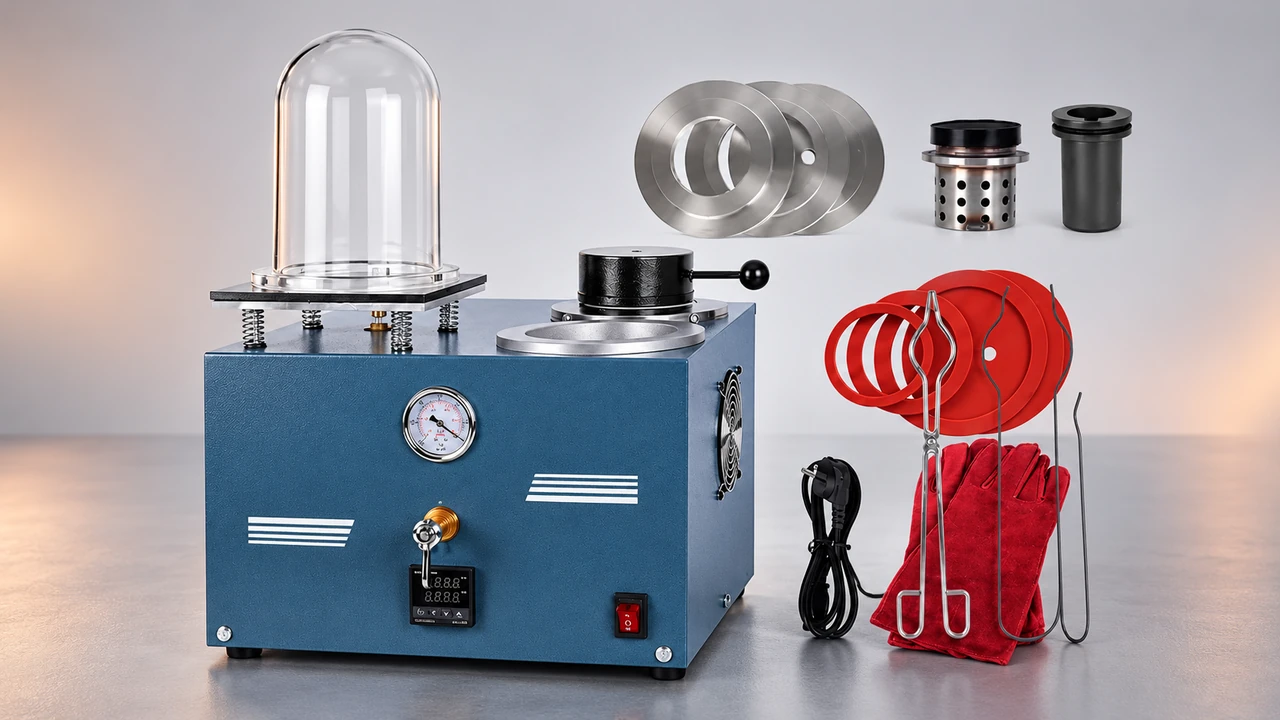
Relia separates complete casting equipment from cast machine components in the catalogue. A housing, bracket or other component is not a complete production machine. Likewise, an equipment photograph that shows several accessories does not establish that every pictured item is included. State the required scope in the enquiry and ask for an itemized configuration.
This guide is a purchasing checklist, rather than operating, installation or electrical modification instructions. Model-specific documentation and the requirements of the actual installation govern those tasks. Use the casting equipment collection to identify a reference and the equipment selection guide to organize the questions that need confirmation.
Map the machine to the intended workflow
Identify whether the requirement concerns wax injection, investment preparation, burnout, melting, casting or another defined step. Do not assume that a unit described for one stage completes every stage of the process. If a listing describes a combined machine, ask which functions belong to the exact model and which additional equipment or supplies are needed for the intended workflow.
A vacuum investing unit and a melting or casting combination should not be treated as interchangeable labels. Describe the operation you plan to perform, the materials involved and the existing equipment it must work with. Ask the supplier to identify the proposed machine's role and configuration rather than selecting it solely because the product title contains the word “vacuum.”
For a wax injector, describe the mould and pattern requirements relevant to the enquiry. Identify the intended wax, pattern dimensions and expected output needs. Ask which controls and accessories are part of the configuration. Do not transfer settings or capabilities from a different injector listing simply because both products belong to the same equipment collection.
For burnout-related requirements, identify the actual investment material and pattern workflow. Request the relevant equipment and consumable documentation. A general purchasing article should not supply a universal schedule for different materials. The proposed combination needs to be reviewed against the instructions and limitations of the exact products involved.
Confirm voltage, frequency and phase together
State the electrical supply available at the intended installation. Include voltage, frequency, phase and relevant connection requirements in the enquiry. A voltage number alone may leave the configuration unclear. Catalogue listings contain different voltage references, so identify the exact option being discussed and ask for its full electrical specification.
Keep single-phase and three-phase requirements distinct. Do not infer the phase from a plug photograph or from the appearance of a similar machine. Ask which configuration is offered for the selected model and have it checked against the installation requirements. The purchase specification should identify the approved configuration rather than relying on an informal description such as “suitable for my country.”
A plug adapter does not by itself establish compatibility of the complete electrical supply. This guide does not provide conversion or rewiring instructions. Where compatibility is uncertain, obtain the model-specific information and have the installation requirements reviewed by an appropriate qualified person before the equipment is ordered or connected.
Keep the confirmed electrical details with the order documentation. If the quotation offers more than one option, identify which option the buyer has selected. Check that the model, option and documentation remain consistent when reviewing the final order. This avoids a technically detailed enquiry being reduced to an ambiguous machine name at the purchasing stage.
Read nominal capacity with its reference conditions
Ask what the quoted capacity describes. It may refer to a particular material, container or working arrangement in the selected listing. Identify the intended metal and required charge or output for your application. A capacity figure stated for one reference metal should not be assumed to establish the usable capacity for every other metal without confirmation.
Distinguish the capacity of a melting container from the requirements of the casting workflow. Identify the crucible, flask or other relevant dimensions and ask how they relate to the proposed configuration. A headline capacity alone may not answer whether the exact container or workpiece arrangement fits the equipment you intend to use.
State whether the requirement concerns an occasional charge, repeated work or another defined production pattern. Ask which operating information is needed to review the application. Do not turn a catalogue maximum into an assumed continuous output or guaranteed production rate. The appropriate working conditions and limitations need model-specific confirmation.
If temperature is relevant to the enquiry, identify the process requirement and ask how the selected model's specification applies. A headline temperature does not define every material, container or duty condition. Request the relevant documentation and clarify the proposed working scope rather than using one number to infer complete process suitability.
Check the dimensions that control compatibility
List the flask dimensions and other physical requirements that matter to the workflow. For equipment involving a bell jar or vacuum chamber, ask for the usable dimensions of the selected configuration. External appearance is not a reliable substitute for the available internal space. If existing accessories must be reused, identify them precisely in the enquiry.
Check connections and supplied accessories as individual items. Ask whether a pump, crucible, container, seals, adapters or other pictured items are included, optional or for illustration. A photograph may help explain the product, but the quotation should state the actual supply. Keep accessory quantities visible when comparing offers from different configurations.
Identify the installation space and any relevant site constraints as questions for review. Request the model-specific installation information rather than inferring requirements from a tabletop photograph. The buyer should confirm what must be prepared at the site and which items or services fall outside the equipment supply.
Use an itemized configuration sheet
Record the machine model, electrical option, capacity reference, relevant dimensions and included accessories in one place. Add the document references used to confirm them. This gives the buyer a practical basis for checking the quotation, order and delivered configuration without depending on a collection of separate sales messages.
Keep consumables and machine selection connected
Identify the intended casting wax, investment powder or mould-related material separately from the machine. These supplies have their own product references and preparation requirements. A machine's suitability for one workflow does not establish compatibility with every consumable in a related collection. Ask about the exact combination you intend to purchase or already use.
Do not copy a powder mixing ratio, wax setting or burnout reference from another listing as a universal instruction. Request the guidance for the selected material and confirm its relationship to the equipment and intended metal. If a consumable is being substituted, identify the current and proposed product and the process information needed for review.
For graphite mould or other mould-related enquiries, identify the required cavity, dimensions and intended use. Do not treat a mould accessory as a complete machine. The foundry supplies collection provides a separate starting point for these items, while the equipment enquiry should remain clear about the machine and configuration requested.
Ask about documents and service before ordering
State the destination and the purchasing or import documentation requirements that apply to your project. Ask which documents are available for the exact model and configuration. Do not infer electrical safety or market approval from a generic image, an unrelated product statement or a symbol on a similar machine. Review the actual documentation required for the transaction.
Ask what installation information, operator documentation, commissioning support or training can be supplied. Confirm the scope rather than assuming that these services accompany every equipment item. Identify any local responsibilities and the language or format of the documents needed by the buyer. Keep these requirements in the quotation discussion so that they are not discovered only after delivery.
Request the applicable spare-parts, warranty and service arrangements for the selected model. Ask how support is requested, what information is needed and which terms apply. This article does not set a website-wide warranty or repair commitment. The order should identify the actual agreed terms and any exclusions relevant to the equipment.
Prepare the product URL, intended workflow, metal, local electrical supply, capacity needs, container dimensions and accessory list. Add the destination and required documents, then send an equipment enquiry. Before confirmation, compare the reply with your configuration sheet and resolve any difference between the proposed supply and the requirement.
Keep a catalogue example in context
One catalogue reference describes a three-in-one, two-litre jewelry vacuum casting and melting machine. Those headline terms identify a product to investigate, rather than a complete installation specification. A buyer still needs the exact electrical option, metal capacity reference, usable container dimensions and included accessories confirmed. Apply the same check to a different machine instead of transferring that example’s features to the whole equipment range.
Retain the confirmed configuration sheet with the purchase order so the delivered model can be checked against the same requirements.
