
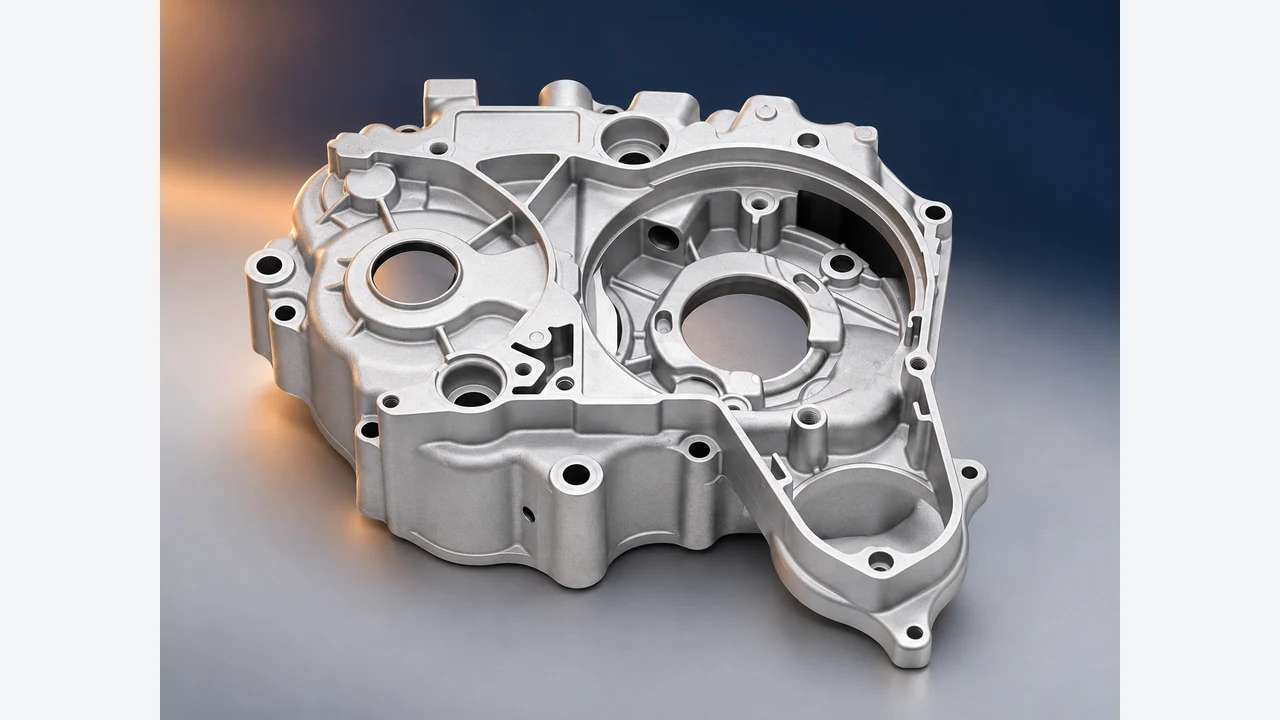
Describe the housing as a component with interfaces
An aluminum casting housing enquiry is most useful when it explains the component's geometry, material, interfaces and required finished condition. A catalogue image can help identify the form you have in mind, but it does not establish the dimensions, sealing requirements or assembly fit of a different part. Start with the current drawing and use the product reference to support the discussion.
Identify whether the request concerns a bare casting, a machined housing, a finished cover or an assembly with additional items. A housing is a component, rather than a complete machine simply because it appears in an industrial machinery collection. State the supply boundary clearly so that the quotation does not depend on assumptions about inserts, fasteners, mating parts or assembly work.
Relia's aluminum casting collection includes housing and component references. This guide helps turn those examples into a procurement brief. It does not establish a universal alloy, production route, dimensional capability or approval for every housing. The actual drawing, quantity and acceptance requirements need to be reviewed for the proposed order.
Control the drawing and model before discussing the route
Give the housing a part number and identify the current drawing revision. State the units explicitly. If a three-dimensional model accompanies the drawing, match its revision and explain which document controls dimensions and notes if a difference is found. Include a simple document list so that an older cover drawing is not mistaken for the current main housing specification.
Show the overall envelope and the internal geometry needed for a review. Identify ribs, openings, mounting bosses, recesses and interfaces that are difficult to understand from one view. Where some geometry is still being developed, distinguish the frozen features from the areas awaiting approval. This gives a process discussion a more reliable basis than an unqualified image or preliminary model.
Explain the relationship to the assembly. Identify the mounting arrangement, mating cover or other connected parts and the features that determine fit. If an assembly image is supplied for context, mark its purpose. It should not silently override the controlled component drawing or imply that every item shown in the assembly is included in the requested supply.
Identify differences from the catalogue example
When referencing a catalogue housing, list the changes needed for your part. These may include a different opening, mounting pattern, thread, alloy, finish or supplied condition. State whether the catalogue part is only a shape reference. A short difference list helps prevent the supplier from reviewing the listed example while the buyer expects a different design.
State the alloy and keep alternatives explicit
Specify the required aluminum alloy and applicable standard where one governs the project. Relevant catalogue listings include references such as ADC12 and A380, but those names should not be treated as automatic substitutes. Confirm the material proposed for the actual drawing and identify any supplied condition or evidence requirement that forms part of acceptance.
If the buyer is open to a material alternative, say which requirements remain fixed and who can approve a change. Ask the proposal to identify the original requirement, suggested alternative and information needed for review. Keep the material decision separate from an informal discussion about price or process. An apparently similar product photograph does not authorize a change in alloy.
Describe operating conditions that are relevant to the material and finished component. These may include temperature, exposure, contact media or installation conditions. Supply known information and identify unknowns honestly. The application description supports a technical review, but a catalogue category alone does not establish suitability for a particular service environment.
Where material records are required, state their purpose and the identification they must carry. Ask which evidence is available for the order and whether it is included. If the purchasing specification needs a link to a delivered batch, describe that link. Do not infer traceability or certification from the presence of an alloy name in a product title.
Request a route review against the finished part
The catalogue includes different casting and machining references. Rather than choosing a route solely from the appearance of a housing, ask for a review against the material, geometry, quantity and acceptance requirements. Identify any route restrictions in the drawing or customer specification. If alternatives are permitted, have the proposed assumptions and any required specification changes stated clearly.
Separate tooling development from production-part supply. State whether the enquiry is for new tooling, use of existing tooling or a part supply discussion whose tooling scope still needs to be determined. Identify expected annual demand separately from the initial order quantity. If variants may follow, describe what is known about them without presenting uncertain forecasts as committed orders.
Ask how sample review would fit into the proposed sequence. Identify the desired sample quantity, required records and approval purpose. Tooling ownership, retention, sample charges and production timing need project-specific agreement. A process heading or catalogue example does not establish those commercial arrangements for a new housing.
Mark the interfaces that need machining
Identify mounting datums, bores, threads, sealing faces and other functional features on the drawing. Distinguish local tolerances from general requirements. State which surfaces may remain as cast and which must be machined. An instruction to provide “CNC precision machining” is less useful than a drawing that shows the finished interfaces and the relationships that control assembly.
For a mating cover or connected component, identify the fit requirements and relevant reference features. If a mating part is needed for an approval check, explain how it will be identified and supplied for that purpose. Do not rely on a single successful trial fit to define all dimensional acceptance unless that is the agreed inspection basis.
Specify surface requirements for the relevant faces. Include roughness requirements and units where applicable, and identify any acceptance method required by the drawing. A smooth-looking product photograph does not provide that information. Where an internal surface or edge needs special attention, point it out explicitly rather than assuming it is obvious from the housing's function.
If later machining will be carried out by the buyer or another party, describe the intermediate condition required at handoff. Identify the features that must already be established and the areas reserved for later operations. Ask for the proposed condition to be reviewed instead of transferring assumptions from another housing design.
Coordinate finish, appearance and protected regions
State the finish specification and the areas to which it applies. If coating, polishing or another treatment is needed, identify protected threads, bores, contact areas and mating faces. Different regions may have different requirements. A finishing option available on one listing should not be assumed to apply to every aluminum component in the catalogue.
Clarify the final acceptance condition. If dimensions must be checked after finishing, say so. If a cosmetic reference governs only visible faces, mark those faces and identify the viewing conditions or approved sample. Keep functional surface requirements separate from appearance preferences so that the quotation and inspection plan describe the same finished housing.
Describe packaging and handling requirements that protect the important surfaces. Identify permitted marking locations and any area that should remain free of marks or contact damage. Ask which arrangements are proposed and whether they are included. Packaging should preserve the agreed finished condition rather than becoming an undefined expectation after production.
Do not infer an enclosure rating
A housing shape, gasket groove or machined face does not by itself establish a sealing or ingress-protection approval. If the application requires a particular test or rating, identify the requirement and request confirmation for the actual component or assembly. Define the relevant configuration and acceptance evidence rather than treating a catalogue appearance as proof.
Prepare the approval and quotation checklist
List the inspection records needed for the housing. Identify critical dimensions, material evidence, appearance criteria and any special test requests. State the drawing revision and sample identification that a first-article review must use. Ask which methods and records can be supplied for the proposed order, and resolve scope or availability questions before release.
Compare quotations on a common basis. Check tooling, samples, casting, machining, finish, required reports, packaging and freight scope. A unit price for an unfinished casting is not directly comparable with a price for a machined and finished housing. Have exclusions stated so that the buyer can see which operations or evidence still need separate arrangements.
For a repeat order or design change, identify the current revision and summarize what has changed. Recheck material, interfaces, finish, records and delivery requirements. If an earlier sample approval or deviation is being reused, state its scope explicitly. Do not let a familiar part name conceal a new requirement.
Use the applications guide to organize the operating brief and the RFQ guide to complete the commercial inputs. Then contact Relia with the product reference, drawing revision, alloy, quantity and the housing features that need review.
Clarify a family of housing variants
If several covers or housing sizes are being considered, identify each variant separately. Mark shared features and variant-specific interfaces, and state which quantities belong to each drawing. A combined demand forecast should not obscure different material, machining or finishing requirements between the parts.
