
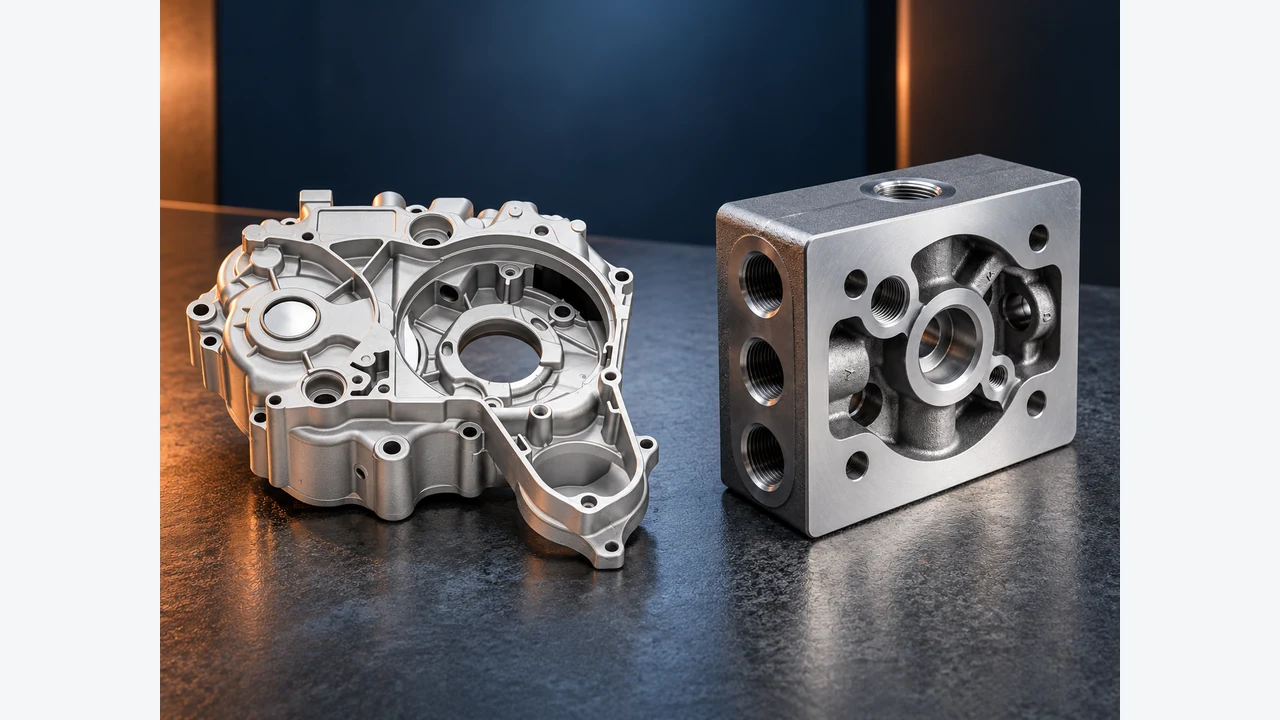
Compare the questions before comparing the routes
Choosing between investment, die and sand casting starts with a defined component requirement. A useful enquiry states the material, geometry, quantity, secondary work and acceptance requirements before asking which route should be proposed. The catalogue provides examples under each process family, but a collection name is not a recommendation for every new part with a similar appearance.
The purpose of this comparison is to help a buyer prepare a process-review brief. It does not rank the routes by a universal cost, tolerance, size or production-volume threshold. Those conclusions need a review of the actual drawing and project conditions. Ask for the assumptions behind a proposed route so that the process decision and quotation describe the same finished component.
Relia's castings and machining page maps the catalogue routes. Use it to find a starting reference, then explain whether the enquiry concerns a finished component, an unfinished casting, tooling development or a combination of these items. Keep prototype work separate when the intended material or purpose differs from production metal parts.
Start with material and finished-part requirements
Identify the exact material requirement rather than selecting a process only from a photograph. A catalogue family such as aluminum, iron or stainless steel needs an item-specific grade and, where applicable, a standard and required condition. If the proposed process review would involve a different alloy, make that a separate approval question. A process proposal should not silently change the material specified by the buyer.
Describe the finished part, not just its external shape. Include internal cavities, openings, ribs, mating surfaces and any areas that must remain as cast. Identify the dimensions that control assembly and the features requiring machining. This information helps distinguish the casting scope from the work needed to turn the casting into an accepted component.
State the operating requirements that affect the technical discussion. Temperature, fluid exposure, loads or installation conditions may be relevant to a particular part. Naming an application such as marine hardware or pump components does not establish its acceptance criteria. Link the application description to the drawing and ask which additional information is needed for the proposed route.
Investment and lost-wax casting enquiries
Investment and lost-wax terminology appears together within the catalogue. Use the investment casting collection to locate relevant component examples, then identify the exact geometry, material and supply condition you need. If a listing names a more specific route, such as silica-sol casting, ask whether that route is being proposed for your drawing rather than applying the term to every item in the collection.
For the RFQ, show the complete part envelope and the features that must be reviewed. Explain any restrictions on part orientation, visible marks or surfaces that cannot be modified. If you have an existing casting drawing and a separate machining drawing, identify the relationship between them. Both documents should use controlled revisions and consistent material requirements.
Ask how the proposed casting route relates to tooling, sample approval and secondary operations. A finished-part quotation may include steps that are not obvious from a product image. Identify the operations you expect and request that excluded work be stated. The route name alone does not define the tooling arrangement, included machining or inspection records.
A focused question for this route
Instead of asking only “Can this be investment cast?”, ask whether the proposed route can be reviewed against the attached material specification, critical features and required finished condition, and which drawing details need clarification before a quotation can be prepared. This creates a usable technical conversation without assuming a guaranteed result.
Die casting enquiries
For a die cast component, identify the alloy, overall geometry, expected demand and tooling scope. Include the machined features and finishing requirements in the initial brief. A request based only on an unfinished casting image may omit the interfaces that determine the final part's usefulness. The die cast parts collection is a source of examples rather than a complete specification for a new project.
Separate the initial order quantity from anticipated annual demand and possible future variants. If the design is still changing, say which features are frozen and which remain under review. Ask how a drawing change would be assessed before tooling work is authorized. Do not assume that an apparently minor change has no effect on the proposed tooling or subsequent operations.
Have tooling and production-part scope identified separately in the quotation request. Ask which assumptions are being made about samples, revisions and approval. Commercial questions such as ownership, retention and maintenance of tooling need explicit agreement; they should not be inferred from a process label or from the presence of a tooling reference in another listing.
Keep finish requirements connected to geometry
Where coating, polishing or another treatment is needed, identify the relevant areas and protected interfaces. State whether dimensions are controlled in the finished condition. This keeps a comparison focused on the same accepted part rather than comparing one route with finishing included against another route with finishing omitted.
Sand casting enquiries
For a sand casting review, include overall dimensions, known or estimated part weight where available, internal features and required machined faces. Identify the information as estimated when it is not confirmed. A similar item in the sand cast parts collection does not establish a factory-wide maximum size or weight for a different component.
Make clear whether the request is for an as-cast part or a finished component. If the casting will be machined elsewhere, describe the handoff requirements and any areas reserved for that work. If machining is included in the enquiry, supply the datum scheme, interfaces and local tolerances. Ask for the relationship between casting and machining requirements to be reviewed rather than assuming a generic allowance.
Appearance requirements also need a defined scope. Identify visible areas, surfaces that contact other parts and any permitted reference condition. A broad phrase such as “good surface” does not tell either party how acceptance will be decided. Where a reference sample is used, identify what it governs and which requirements remain controlled by the drawing.
Compare complete routes on a shared basis
When alternative routes are being considered, keep a common requirement sheet. The material, finished dimensions, quantity, inspection records, finish and delivery scope should remain visible in each proposal. If one route requires a specification change, record the change separately and obtain the relevant approval before treating the resulting quotation as equivalent.
Ask each proposal to distinguish tooling, samples, castings, machining, finishing and required records. Include packaging and freight scope when those items are part of the comparison. A lower unit price may describe less work or a different assumption. The useful question is which proposal meets the agreed scope and what remains unresolved, rather than which process name sounds more economical in isolation.
Consider the approval sequence as part of the comparison. A target delivery date may depend on drawing clarification, tooling approval, sample review and production release. Ask for those dependencies to be explained. Do not convert a requested date into an assumed commitment or rely on a general route comparison to establish a project schedule.
- Is the same drawing revision being reviewed for each route?
- Are alloy, supplied condition and substitution rules identical?
- Are machining and finish included to the same finished-part definition?
- Are sample requirements, inspection records and approval responsibilities aligned?
- Are tooling and delivery assumptions written clearly enough to compare?
Keep machining and prototypes in the right discussion
CNC machining may be a secondary requirement for a casting or the main supply scope for another component. Identify the faces, bores, threads and other features that need it. Do not assume that all listed castings include the same machining package. The CNC-machined component collection and the drawing-based RFQ guide help distinguish process references from the actual ordered condition.
Urethane or vacuum prototype references are a separate catalogue route. A prototype can have a different material, purpose and acceptance scope from the proposed metal production part. State what the prototype is intended to establish, such as a form or assembly discussion, and identify which production requirements it is not being used to approve. Avoid using the word “prototype” as shorthand for a fully qualified production component.
Send the process-review brief
Prepare the current drawing, exact material requirement, quantity, critical features, finish and inspection needs. Add expected demand, target timing and any tooling questions. If you are open to alternatives, state which requirements may be reviewed and which must remain fixed. Send the package description through Contact & RFQ. A useful reply should identify the proposed scope and remaining questions before a route is treated as agreed.
Document why a route was selected
Record the requirements used in the comparison and the scope of the accepted proposal. Keep rejected alternatives and unresolved questions separate from the approved route. If quantity, material or geometry later changes, return to those assumptions and ask which decisions need review. This makes the process choice understandable to a buyer joining the project after the original enquiry, without turning a decision for one component into a general manufacturing rule.
